Red Sox's Bizarre Run: Sacrifice Fly Without Tag-Up Sparks Chaos
Edited by Casualplayhub News Editorial. Source: ABC News Sports. Casualplayhub News adds summary, context, and editorial framing while linking back to the original report.
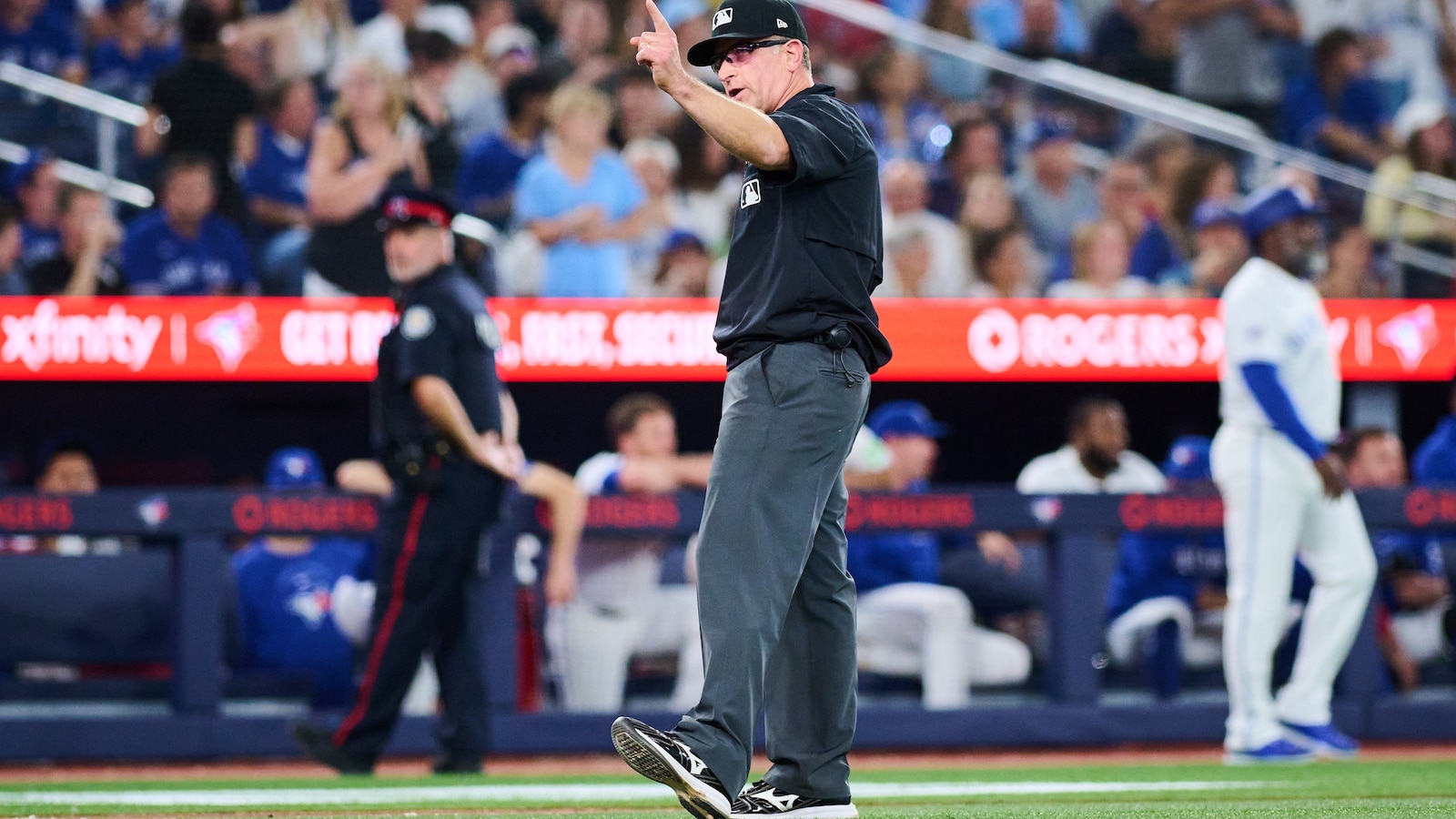
A routine fly ball turned into one of the most confusing plays of the season Monday night at Rogers Centre, as the Boston Red Sox scored a run on a sacrifice fly that violated a fundamental baseball rule — and the umpires let it stand.
With the Blue Jays leading 2-0 in the seventh inning, Boston had one out and Anthony Seigler on third base. Ceddanne Rafaela lifted a fly ball to center field. For reasons still unclear, the scoreboard displayed two outs. Seigler, believing the ball would fall for a hit, broke for home. Nick Sogard, the runner on first, also took off. When center fielder Brett Bateman caught the ball, Toronto quickly relayed to first base, doubling off Sogard. That should have been the third out, and Blue Jays players began heading to the dugout.
But plate umpire Charlie Ramos did not signal the end of the inning. Instead, he waved off the run, sparking confusion. Boston interim manager Chad Tracy said, “We kind of got a break there." Blue Jays skipper John Schneider explained, “Everyone assumed the inning was over when Charlie waved off the run, and during all that confusion, I was never given the opportunity to appeal Seigler not tagging up from third."
Umpires huddled for 17 minutes, consulting with MLB’s replay center. Crew chief Chris Guccione later explained the ruling: “We felt like it was our obligation to correct the error for not scoring the run originally. The rule is the rule." Because Seigler crossed home plate before Sogard was called out at first, and Toronto never appealed the missed tag-up at third before leaving the field, the run counted.
Schneider acknowledged the rule but disagreed with the timing. “Now, if we had just thrown the ball to third instead of first, obviously different story," he said. "After consulting with MLB, they told me that all of my players were across the third base line before Charlie waved off the run, which I 100% disagree with. I don’t know if Vlad is that fast after he got the ball at first."
Some Blue Jays players had already turned toward the dugout when the relay to first was made. Toronto reliever Simeon Woods Richardson and catcher Brandon Valenzuela were walking off the field before second baseman Josh Smith threw to first baseman Vladimir Guerrero Jr. The confusion extended to both sides. Tracy noted, “It was a weird, very weird situation, where the players on both sides seemed to be confused on the outs."
Schneider said, "Going forward, when that play happens again in the next 100 years, if it’s us, we will record the lead out at third. That’s the best I got." The run ultimately did not affect the outcome, as Toronto held on for a 2-1 victory. But the bizarre play will be remembered as a textbook example of how a simple miscommunication can unravel a game.
Article commentary
The chaotic sequence in Toronto serves as a fascinating case study in baseball's arcane rulebook and the human element of officiating. At its core, the play hinges on a distinction between a force play and a timing play. A sacrifice fly is a timing play: the runner must legally tag up after the catch, but if he leaves early, the defense must appeal at the base before the next pitch or, in this case, before leaving the field. Because the Blue Jays threw to first to double off Sogard — a force out on what was initially a live ball — they inadvertently created a world where Seigler's run counted even though he never tagged up. The umpires' decision to award the run after initially waving it off is defensible under the rules, but it highlights a deeper issue: the lack of clarity in real-time communication. The scoreboard error showing two outs likely contributed to the confusion, but it also exposed how quickly a game can spiral when players and umpires are not on the same page. John Schneider’s frustration is understandable — he felt he was not given a fair chance to appeal. Yet the rule explicitly states that an appeal must be made before the defensive team leaves the field. The Blue Jays, by their own admission, did not do that. This incident also raises questions about the role of replay and technology. MLB's replay center was consulted, but the decision ultimately rested on the crew chief's interpretation of the timing rule. Some might argue that the spirit of the rule — penalizing a runner who leaves early — was violated. However, the letter of the law was followed. The fact that the Blue Jays did not throw to third first is a tactical error that will be drilled into every minor league system from now on. From a broader perspective, this play is a reminder that baseball is a game of infinite scenarios. The rulebook, thousands of pages long, cannot cover every contingency. Umpires, players, and managers must rely on their training and instincts. In this case, the instincts of the Blue Jays told them the inning was over. The umpires' training told them to follow the rulebook. The result was a 17-minute delay and a run that neither team expected. Moving forward, expect to see more emphasis on the appeal process. Catchers and infielders will be drilled to always check the runner at third before leaving the field on a fly ball. For the Red Sox, it was a lucky break in a losing effort. For the Blue Jays, it was a costly lesson. But for the game itself, it was a vivid illustration of why baseball remains endlessly unpredictable.