Bryce Harper's Knee Soreness Returns After Outfield Shift
Edited by Casualplayhub News Editorial. Source: 6abc Action News Sports. Casualplayhub News adds summary, context, and editorial framing while linking back to the original report.
Ad eligibility review: sensitive-topic
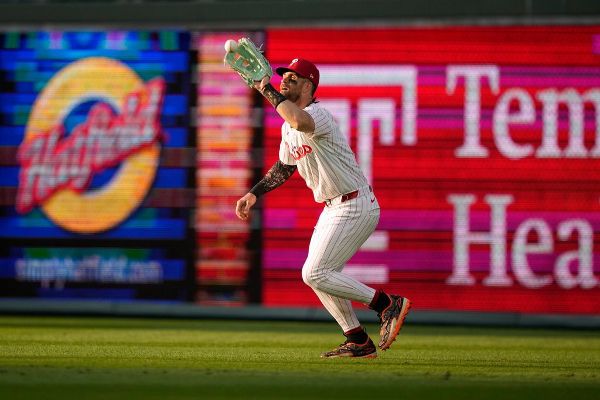
Bryce Harper's recurring left knee soreness has become a point of concern for the Philadelphia Phillies, as the veteran slugger adjusts to playing right field after a four-year absence from the outfield. The discomfort, which first emerged during a game on July 11, seemed to dissipate after the All-Star break. But it returned with a vengeance last week when Harper resumed his outfield duties, a move necessitated by the team's acquisition of Luis Arraez just before the trade deadline.
Harper, now 33, acknowledged the issue on Tuesday, stating, "I was not feeling it. But the more I've ramped it up, I've gotten sore. I think the more I play, I think it'll help me -- just getting in condition more. I feel like I'm in spring training again, trying to get through everything. The more I play, the more my body is accustomed to playing the outfield, I think it'll kind of weasel its way out."
The pain is most pronounced during sudden lateral movements in the outfield, but Harper noted that it does not affect his hitting or running. The Phillies have been cautious, limiting him to designated hitter duties in three of the last four games. He returned to right field for Tuesday's game against the St. Louis Cardinals, indicating the team's willingness to manage his workload rather than shut him down entirely.
Harper's transition back to the outfield comes after years of playing first base and serving as DH following Tommy John surgery in 2022. That procedure forced him to abandon the outfield, where he had built a reputation as a Gold Glove-caliber right fielder earlier in his career. The return to his original position was made possible by the arrival of Arraez, a versatile infielder who can handle first base, allowing Harper to shift back to the grass.
The 33-year-old expressed a pragmatic view of the situation. "Obviously it's bothering me a little bit. But we'll see. I'll take a DH [day] any time I can get it, but I don't think we're at that point yet," he said. This suggests that while the soreness is a concern, Harper believes he can manage it through continued play and conditioning.
The Phillies' medical staff is likely monitoring the situation closely, given Harper's history of significant injuries. The team's decision to ease him back with occasional DH days reflects a long-term view, especially as the season progresses toward the postseason. Harper's ability to stay on the field, whether in the outfield or as a hitter, is critical to the Phillies' success.
The trade for Arraez was a strategic move to bolster the lineup, but it has also placed Harper in a physically demanding position. The outfield requires more explosive movements than first base, and the knee soreness could be a sign of the body's adjustment to unfamiliar stresses. Harper's comparison to spring training is apt: he is essentially rebuilding the conditioning and muscle memory needed for outfield play.
As the Phillies navigate the final stretch of the season, Harper's health will be a key storyline. The team has shown a willingness to be flexible with his role, but the underlying concern remains whether the knee issue will escalate into a more serious problem. For now, Harper is optimistic, trusting that his body will adapt. The coming weeks will test that optimism.
Article commentary
Bryce Harper's return to right field has been a calculated gamble for the Philadelphia Phillies, one that now carries an added layer of concern with the emergence of left knee soreness. The decision to shift Harper back to the outfield after four years was driven by the acquisition of Luis Arraez, a player whose defensive versatility allowed the team to maximize offensive production. But the physical toll on Harper, a 33-year-old with a history of major surgery, raises questions about the sustainability of this arrangement. The knee soreness, first noted on July 11 and then recurring after the All-Star break, is not a new injury but rather a lingering issue that has been aggravated by the demands of outfield play. Harper's own comments suggest he views it as a conditioning problem, a temporary setback as his body readjusts to the lateral movements required in the outfield. This perspective is optimistic, but it also downplays the potential for a more chronic condition. For a player who underwent Tommy John surgery in 2022, any joint or soft-tissue issue warrants careful monitoring. The Phillies' handling of the situation has been measured. By alternating Harper between right field and DH, they are attempting to keep his bat in the lineup while limiting the stress on his knee. This approach is common for aging stars, but it also creates a delicate balance: too much rest could hinder his conditioning, while too little could lead to a more serious injury. The team's medical staff likely has a threshold for when the soreness becomes a red flag, but Harper's desire to play through it complicates the decision-making process. From a strategic standpoint, the trade for Arraez was a bold move that reshaped the infield. Arraez, primarily a second baseman, has been used at first base to free up Harper for the outfield. This alignment gives the Phillies a stronger defensive outfield and a more potent lineup, but it also increases the physical burden on Harper. The question is whether the offensive upgrade is worth the risk to their franchise player's health. Harper's performance at the plate has not suffered, according to his own assessment, but the knee soreness could affect his defensive range and his ability to make quick cuts. In the outfield, even a slight reduction in mobility can lead to missed plays or increased injury risk. The Phillies' outfield defense, which was already a concern, now has an additional variable. Looking ahead, the Phillies will need to closely monitor Harper's condition as the season progresses. If the soreness persists or worsens, the team may have to consider a more permanent move back to first base or DH, potentially altering their defensive alignment. The Arraez trade, while beneficial for the lineup, could become a liability if Harper cannot sustain the outfield role. The broader context is Harper's age and contract. At 33, he is still in his prime years, but the accumulated wear and tear from a decade-plus in the majors is evident. The Phillies have invested heavily in him, and any long-term injury would be a significant setback. The current approach of careful management and optimistic conditioning may suffice for the short term, but the team must have contingency plans. In the end, Harper's knee soreness is a reminder of the physical toll that baseball exacts on its players. The transition between positions, especially after a major surgery, is never seamless. The Phillies are betting that Harper's body will adapt, but the risk remains. The next few weeks will be telling, as the team navigates the remainder of the season and the potential postseason push.