Guilty Verdict in Philadelphia Groping Spree Near Rittenhouse Square
Source: The Philadelphia Inquirer Crime. Casualplayhub News adds summary, context, and editorial framing while linking back to the original report.
A Philadelphia judge on Friday found a 38-year-old man guilty of assaulting seven women in a string of attacks near Rittenhouse Square last year, delivering a verdict that prosecutors described as a step toward justice for victims who were left shaken by the incidents. Common Pleas Court Judge Nicholas Kamau, after a two-day trial, convicted Walker on more than a dozen charges, including indecent assault, forcible compulsion, harassment, and simple assault. However, the judge also acquitted Walker on a similar number of charges—such as unlawful restraint and additional harassment counts—citing insufficient evidence from the prosecution.
The attacks, which occurred in July and August of 2025, followed what Assistant District Attorney Megan Odonnell called a "remarkably similar" pattern. Walker allegedly targeted women who were walking alone in the early morning hours near Rittenhouse Square, approaching them on the street before groping them, exposing himself, or masturbating in their presence. In several instances, he followed his victims before confronting them. One woman was pushed to the ground when she fought back, sustaining minor scrapes to her arms and leg.
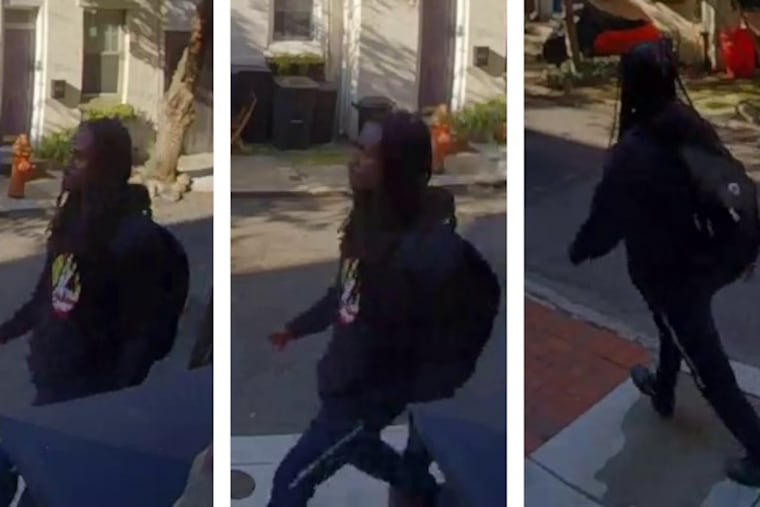
Surveillance footage captured at least three of the assaults, showing a man wearing a distinctive black hooded sweatshirt with a chicken logo on the front. The images were released by police, leading to an anonymous tip that identified Walker as the suspect. Detectives later found photos on Walker’s cell phone showing him wearing the same sweatshirt, strengthening the case. All seven women eventually identified Walker through photo arrays, though the defense challenged the reliability of those identifications.
Defense attorney Ryan Ivins argued that the women’s identifications were tainted by widespread media coverage of the surveillance images. He pointed out that about half of the victims were not completely certain: one told police she was 60% sure Walker was her attacker, while another gave him a seven out of ten chance. Ivins claimed this "casts significant doubt" on the photo arrays and whether the women had been influenced by the news reports.
Before rendering his verdict, Judge Kamau reviewed Walker’s initial interview with detectives. In the video, Walker acknowledged that the man in the news images was indeed him, but he denied committing the assaults. He told detectives he was homeless and often slept in the Rittenhouse Square area because "I felt safe in that area." He added that he was not surprised by the surveillance footage, given his frequent presence there. However, he insisted, "I don’t have any involvement in that. … I wouldn’t get any enjoyment from that."
Walker is scheduled to be sentenced by Judge Kamau in November. The case has drawn attention to the challenges of prosecuting serial sexual offenses, particularly when identification relies on media coverage and photo arrays. Prosecutors expressed satisfaction with the verdict, noting that the convictions reflect the serious nature of the attacks and the trauma suffered by the victims.
Article commentary
The guilty verdict in this case marks a pivotal moment for a spree of groping incidents that unsettled the Rittenhouse Square neighborhood, but it also highlights the complex interplay between media coverage, eyewitness identification, and the justice system. The defendant, Walker, a homeless man who frequented the area, was convicted on multiple counts, yet the judge acquitted him on a dozen others, underscoring the burden of proof required for each charge. This split verdict suggests that while the prosecution met its burden for the most serious offenses, the evidence was insufficient to prove every element of the additional counts. One of the most contentious aspects of the trial was the reliability of the victims’ identifications. Defense attorney Ryan Ivins argued that the widespread release of surveillance images—showing a man in a distinctive black hoodie with a chicken logo—could have contaminated the photo arrays. Research on eyewitness memory consistently shows that pre-trial media exposure can bias witnesses, especially when they are asked to identify a suspect after seeing the same image in the news. The fact that some victims expressed only 60% or 70% certainty raises legitimate questions about the integrity of the identifications, though the judge ultimately found them credible enough to support convictions. Walker’s own admission that the man in the surveillance video was him—paired with the cell phone photos—provided a strong corroborating link. Yet his denial of the assaults and his explanation that he felt safe sleeping in the area introduce a layer of nuance. Homeless individuals often occupy public spaces where crimes occur, and their presence can be misinterpreted. However, the pattern of behavior—targeting women alone, following them, and committing sexual acts—is difficult to dismiss as coincidence. From a broader perspective, this case reflects the challenges of prosecuting sexual offenses that occur in public spaces. The attacks were brazen, occurring in a well-trafficked neighborhood, and the surveillance footage was crucial. But the reliance on photo arrays and media dissemination creates a feedback loop: the public helps identify suspects, but the same publicity can undermine the fairness of identification procedures. Courts must balance the need for effective policing with the right to a fair trial, and this verdict suggests that the judge carefully weighed those factors. The fact that Walker was homeless also raises questions about how society treats vulnerable populations. While he was convicted of serious crimes, his homelessness was a factor in his presence in the area, and his mental health or circumstances may have contributed to the behavior. Sentencing in November will be an opportunity to consider both punishment and rehabilitation, though the case will likely be appealed. Ultimately, the verdict provides a measure of closure for the victims, but it also leaves open lingering questions about the reliability of eyewitness testimony in high-profile cases.