Montgomery and Vargas Lead White Sox to 4-1 Win Over Twins
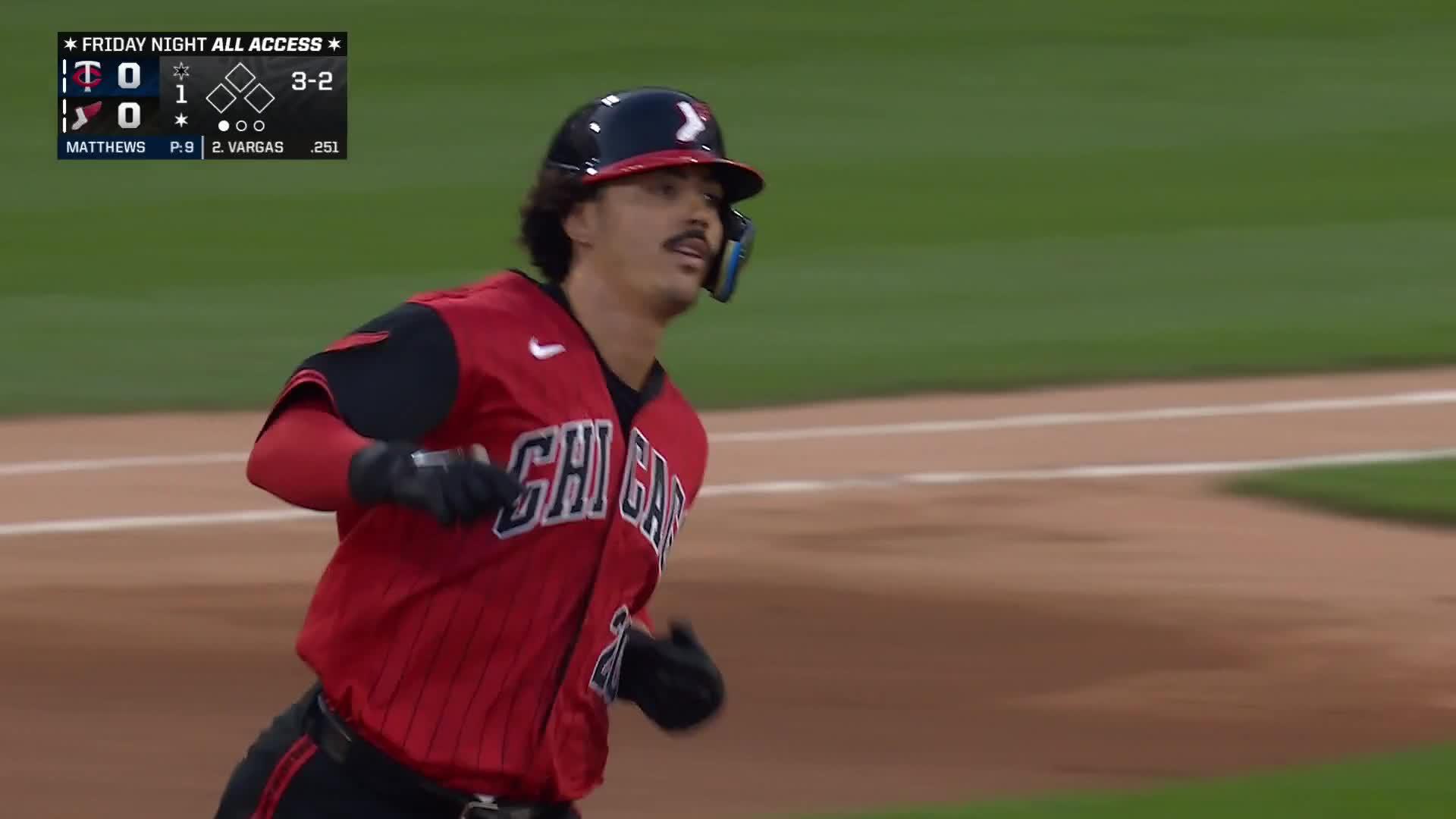
Source: ABC 7 Chicago Sports. Casualplayhub News adds summary, context, and editorial framing while linking back to the original report.
Ad eligibility review: sensitive-topic
The Chicago White Sox reminded everyone why they hold the top spot in the AL Central, powering past the Minnesota Twins 4-1 on a crisp Friday night at Guaranteed Rate Field. With three home runs—including a towering two-run shot from rookie sensation Colson Montgomery—the White Sox bounced back from a rough patch and handed the Twins a frustrating defeat.
Colson Montgomery's drive in the fourth inning was the highlight of the night. After Andrew Benintendi drew a walk, Montgomery took a Zebby Matthews fastball and sent it 416 feet into the right-center field seats. It was the 30th home run of the year for the 23-year-old, matching his teammate Miguel Vargas, who also reached the 30-homer mark earlier in the game. Vargas had already connected in the first inning, a solo shot that set the tone. In the second, Braden Montgomery added another solo blast, making the score 3-0 before the Twins could find their footing.
Erick Fedde, the White Sox right-hander, was in control from the start. Over five innings, he allowed just three hits, struck out two, and walked two. It was another solid outing for Fedde, who had also pitched five innings of two-run ball in a 3-2 win over the same Twins team the previous weekend. His effort lowered his ERA and gave the White Sox the stability they needed after a shaky stretch.
On the other side, Twins starter Zebby Matthews (9-9) had a rare off night. The 26-year-old, who had gone 5-0 with a 2.90 ERA in five August starts, surrendered four hits in five innings. He had faced the White Sox in his previous start and allowed only one run over a career-high 8 1/3 innings. This time, the long ball proved his undoing. Matthews had not lost since July 24, but the White Sox bats were relentless.
Kyle Teel, the White Sox catcher, returned to the lineup after missing games with a sprained left ankle, but he struggled at the plate, going 0-for-3. His presence behind the dish, however, helped guide Fedde through a tricky Minnesota lineup.
The Twins managed to scratch out a run in the ninth inning when Josh Bell led off with his 18th home run of the season off reliever Grant Taylor. Taylor, who had taken over after Bryan Hudson worked a clean eighth, allowed two hits in the ninth but struck out Luke Keaschall to leave two runners stranded. Hagen Smith had pitched two scoreless innings in the middle frames, keeping the Twins at bay.
Kody Clemens was a bright spot for Minnesota, collecting three of the team's eight hits. But the Twins could not string together enough offense to overcome the early deficit. The loss dropped them further behind the White Sox in the division race.
Up next, the Twins will send Taj Bradley (10-6, 3.85 ERA) to the mound on Saturday night, while the White Sox counter with left-hander Anthony Kay (9-7, 4.28). Both teams will look to gain an edge in the series as the postseason approaches.
The White Sox, now 30 home runs each from Vargas and Colson Montgomery, have shown they can win with power and pitching. For the Twins, the challenge is to find consistency against a division rival that seems to have their number this season.
Article commentary
The White Sox's 4-1 victory over the Twins on Friday night was a microcosm of their season: explosive power, solid pitching, and timely hitting. But beyond the box score, this game offers several layers of analysis for both teams as the season winds down. First, the emergence of Colson Montgomery as a legitimate power threat is a story that cannot be overstated. The rookie, who hit 21 homers in his first major league season in 2025, has already eclipsed that mark and now sits at 30. His ability to drive the ball to all fields, especially on a 416-foot blast, shows a maturity that belies his age. Matching Miguel Vargas's 30 homers, the White Sox have a rare one-two punch in their lineup. Vargas, who had a career-high 16 homers last year, has more than doubled that output, suggesting a breakout season that could carry into October. Fedde's performance continues to be a pleasant surprise. After a rocky start to the season, the right-hander has found a rhythm, allowing two runs or fewer in four of his last five starts. His five-inning outings, while not deep, are efficient enough to keep the White Sox in games. The bullpen, anchored by Hagen Smith, Bryan Hudson, and Grant Taylor, has been reliable, though Taylor's shaky ninth inning—allowing a homer and two hits—is a slight concern. The White Sox will need their relievers to tighten up in high-leverage situations as the playoffs approach. For the Twins, the loss highlights a recurring problem: an inability to solve the White Sox pitching staff. Matthews, who had been on a roll, had his worst outing in over a month. The Twins' offense, despite eight hits, could not produce a timely knock. Josh Bell's solo homer in the ninth was too little, too late. Kody Clemens's three hits were a positive sign, but the team's lack of power beyond Bell and the occasional outburst is worrying. The Twins have relied heavily on their rotation, and when a starter like Matthews falters, they often struggle to keep up. Looking at the division race, the White Sox are in the driver's seat, but they cannot afford to relax. The Twins, while trailing, have the talent to make a run. The upcoming matchup between Taj Bradley and Anthony Kay will be crucial. Bradley has been solid for Minnesota, and Kay has shown flashes of brilliance. Both teams will be watching the scoreboard, knowing that every game matters in the push for the postseason. From a broader perspective, the White Sox's power surge is a testament to their player development. Vargas and Montgomery are both homegrown talents, and their simultaneous breakout is a credit to the organization's scouting and coaching. The Twins, meanwhile, will need to reassess their approach against division rivals. They have lost four of five to the White Sox this season, a trend that cannot continue if they hope to contend. In the end, Friday's game was a reminder that in baseball, the long ball often decides the outcome. The White Sox have the power, the pitching, and the momentum. The Twins have the talent but need to find a way to translate it into wins. This series is far from over, and both teams have plenty to prove.