Netflix AI Cuts Documentary Production Time and Cost as Content Spending Nears $20 Billion
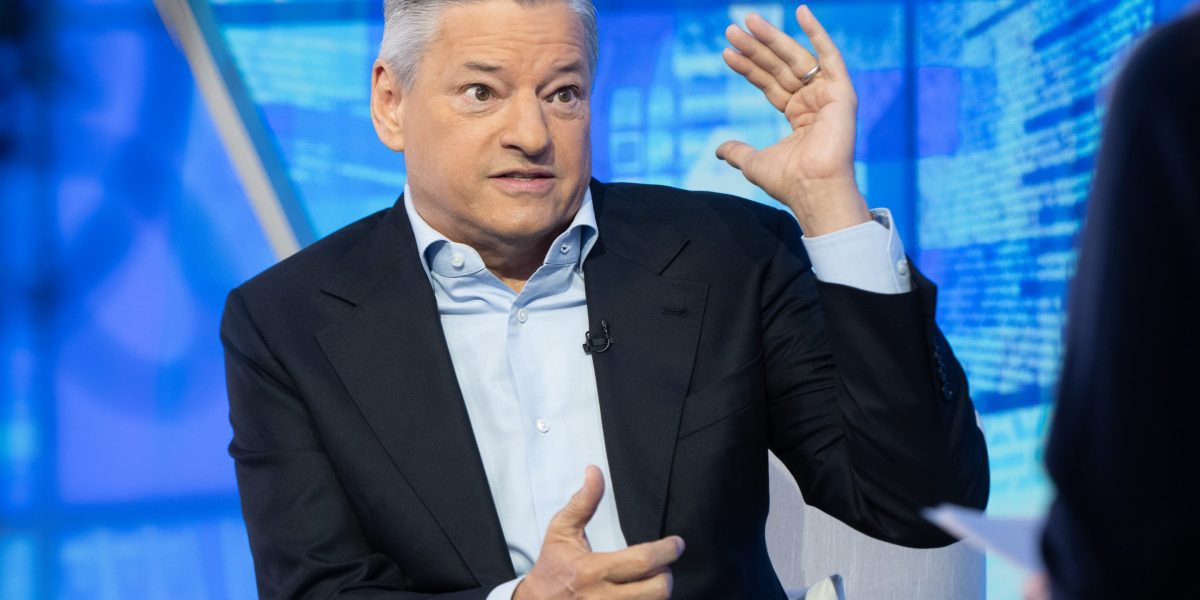
Edited by Casualplayhub News Editorial. Source: Fortune. Casualplayhub News adds summary, context, and editorial framing while linking back to the original report.
Ad eligibility review: sensitive-topic
Netflix is pushing the boundaries of production efficiency with artificial intelligence, as revealed in its latest documentary series "The American Experiment." The five-episode project features 17 minutes of AI-enhanced footage that co-CEO Ted Sarandos says was created "twice as fast and at half the cost." The series brings together an eclectic cast: Martin Sheen lends his voice to George Washington, while former Vice Presidents Kamala Harris and Mike Pence appear alongside other contemporary political figures. This milestone arrives at a critical moment for the streaming giant, which faces mounting pressure to justify its ballooning content budget. Netflix expects to spend up to $20 billion on programming this year, a sharp increase from $16.2 billion in 2024 and $17.1 billion in 2025. Yet investor patience is wearing thin as revenue growth slows from 16% in the first quarter of 2026 to a projected 12% for the third quarter. When Netflix reported second-quarter earnings largely in line with expectations, the stock still tumbled as much as 9% in after-hours trading.
Sarandos framed AI as a tool to extract more value from every dollar spent, particularly in post-production. "By equipping creatives with these tools, we believe they are going to enhance their abilities and we are going to have better and more impact for every dollar we spend on our programming," he said during Thursday's earnings call. So far this year, Netflix reports that its creative partners have employed generative AI workflows in 300 titles, with the bulk of that work happening in post. Without AI, productions would have been forced to scale back key shots and sequences due to budget or time constraints, Sarandos explained. In the investor letter released Thursday, Netflix leaders highlighted how post-production teams used AI to enrich crowd scenes, craft world-building opening shots, and recreate historical battle scenes.
The cost savings from AI are expected to be reinvested into more content, fueling what Sarandos calls a "revenue-profit flywheel." He added, "Content creation timelines can be shortened and quality can be enhanced." However, the company's embrace of AI has not been without friction. During the 2023 Hollywood labor strikes, AI protections for film and TV workers became a central issue, with Netflix among the studios targeted. Filmmaker Guillermo del Toro, who adapted Mary Shelley's "Frankenstein" for Netflix, declared last October that he would "rather die" than use generative AI. Despite such pushback, Netflix has doubled down. In March 2026, it acquired actor Ben Affleck's film technology company InterPositive for a reported $600 million, and in 2025 it consolidated its virtual effects and production operations under the Eyeline studio banner. Sarandos acknowledged that results from the InterPositive acquisition are still "early days," but he expects the cost savings from these investments to become increasingly critical.
The company's content spending growth is accelerating, with a 10% increase projected this year compared to an 8% average over the past five years. Live programming is a key driver, expected to account for 5% of content spend in 2026. Meanwhile, competition for viewer attention has never been fiercer. "Netflix isn't just competing with Disney or HBO," said Bob Lang, founder of Explosive Options, in an emailed statement. "It's competing with online gaming through Microsoft, Sony, and Nintendo. It's competing with TikTok, Facebook videos, YouTube Shorts, and everything people do on their phones." Lang added that while multitasking allows Netflix to play in the background, the content must be compelling enough to command full attention—"That's the real challenge."
Financially, Netflix reported second-quarter revenue of $12.6 billion, up 13% year-over-year, with an operating margin of 33.4%. The company narrowed its full-year revenue forecast to between $51 billion and $51.4 billion, reaffirming a 31.5% operating margin target that implies operating income growth of over 20% for 2026. In a separate move, Netflix announced it will scale back its "What We Watched" engagement report from twice a year to annually starting in 2027. The company also executed its largest quarterly stock buyback ever, repurchasing $4.7 billion in shares, boosted by a $2.8 billion breakup fee from Paramount Skydance after its planned merger with Warner Bros. Discovery fell through in February.
Article commentary
Netflix's strategic embrace of generative AI marks a pragmatic shift in content production, but it walks a tightrope between efficiency and creative backlash. The cost and time savings are undeniable—17 minutes of footage at half the cost—yet the shadow of the 2023 strikes and opposition from figures like Guillermo del Toro highlight lingering distrust. As Netflix competes not just with traditional studios but with gaming and social media, AI offers a path to produce more compelling content faster. However, the deceleration in revenue growth and investor jitters suggest that efficiency gains alone may not sustain momentum. The challenge lies in balancing technological innovation with the human artistry that defines compelling storytelling.