Trump Imposes Double-Digit Tariffs on 60 Nations
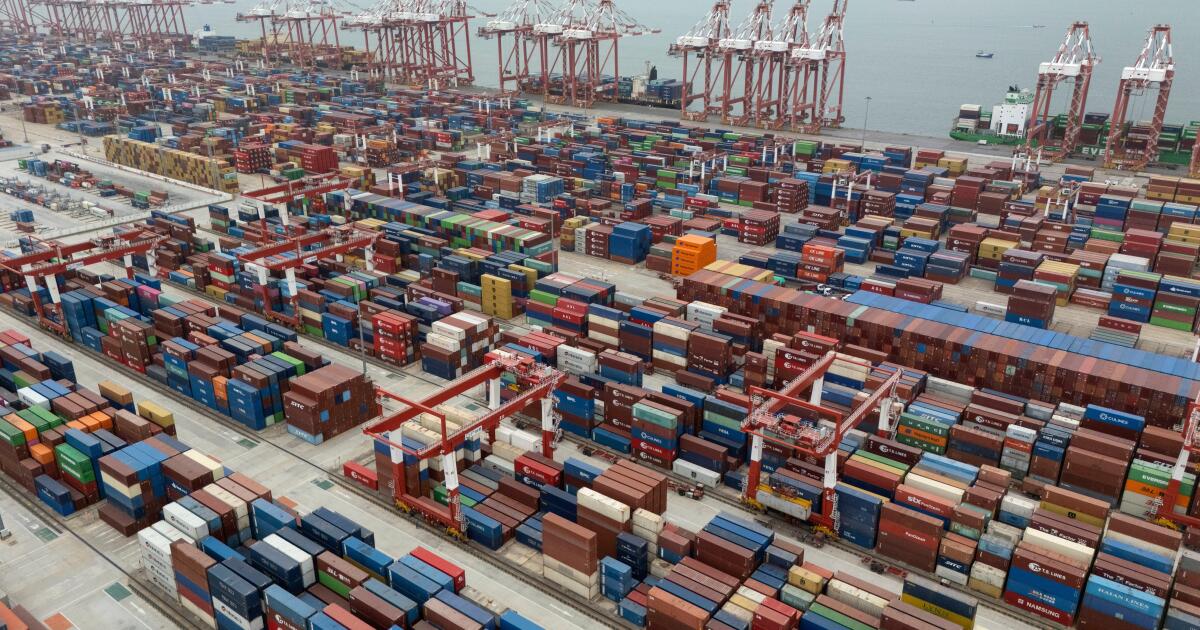
Edited by Casualplayhub News Editorial. Source: Los Angeles Times Business. Casualplayhub News adds summary, context, and editorial framing while linking back to the original report.
Ad eligibility review: sensitive-topic
President Donald Trump has once again tightened the ring of protectionist measures around the American economy, announcing on July 24, 2026, a sweeping new round of double-digit tariffs on imports from 60 U.S. trading partners. The move, unveiled by the White House, targets a broad array of goods, from steel and aluminum to electronics and agricultural products, with rates ranging from 10% to 25% depending on the country and product category.
This latest salvo in Trump's ongoing trade war is ostensibly aimed at nations that the administration claims have failed to take adequate steps to prevent the flow of illegal imports into the United States. While the official statement did not specify the exact nature of the infractions, it is widely understood to refer to issues such as transshipment of Chinese goods, intellectual property theft, and failure to curb the flow of fentanyl precursors. The affected countries include major allies like Japan, Germany, and South Korea, as well as emerging economies such as India, Vietnam, and Mexico.
Speaking at a press conference, Trump framed the tariffs as a necessary measure to protect American workers and industries. "We have been taken advantage of for too long," he said. "These countries are not playing by the rules, and we are going to hold them accountable. This is about fairness and putting America first." The president's language echoed his previous trade actions, reinforcing his belief that tariffs are a powerful tool to reshape global commerce.
The announcement sent immediate ripples through financial markets. The Dow Jones Industrial Average dropped by more than 300 points in early trading, while the S&P 500 and Nasdaq also saw declines. Currency markets reacted as well, with the dollar strengthening against some currencies and weakening against others as traders assessed the implications. In Asia, export-reliant economies like Japan and South Korea saw their stock indices fall sharply. European markets followed suit, with the DAX and CAC 40 both down over 1%.
Trade partners wasted no time in responding. The European Commission issued a statement condemning the tariffs as "unjustified and harmful" and vowed to retaliate with countermeasures on American goods, including bourbon, motorcycles, and agricultural products. Japanese officials expressed deep disappointment, warning that the tariffs could destabilize the global trading system. Meanwhile, China, though not directly named in this round, has been a primary target of Trump's previous tariffs, and analysts expect Beijing to view this as another provocation.
Domestically, the reaction has been mixed. Business groups, particularly those reliant on imported raw materials, voiced strong opposition. The National Association of Manufacturers warned that the tariffs would increase costs for American companies and lead to job losses. "This is a tax on American consumers and businesses," said the NAM's president. "It will raise prices on everything from cars to electronics and hurt the very workers the president claims to protect." On the other hand, some labor unions and domestic steel producers applauded the move, arguing that it would shield them from unfair foreign competition.
Economists are divided on the long-term effects. Some argue that the tariffs will boost domestic production in select industries, while others point to the risk of a broader trade war that could slow global growth. The Peterson Institute for International Economics estimated that the cumulative impact of Trump's tariffs could reduce U.S. GDP by up to 0.5% and cost hundreds of thousands of jobs. The new tariffs are expected to take effect in 30 days, giving affected countries a brief window to negotiate or seek exemptions.
The move also raises political stakes. With midterm elections approaching, Trump is betting that his protectionist stance will resonate with working-class voters in key battleground states. However, the potential for higher consumer prices could backfire, especially if inflation remains a concern. The White House has sought to downplay the economic risks, insisting that the tariffs are a strategic negotiating tool that will eventually force trade partners to the table.
As the world watches, the next few weeks will be critical. Retaliatory measures are likely to escalate, and the global trade system, already strained by years of tensions, faces its biggest test yet. For now, the wall of tariffs around the American economy is higher than ever, and the cost of that wall is still being calculated.
Article commentary
Trump's latest tariff escalation represents a continuation of his aggressive trade policy, but the effectiveness remains questionable. While the move may offer short-term political gains by appealing to protectionist voters, the economic costs could be significant. Higher import duties will likely raise consumer prices and strain supply chains, potentially fueling inflation. Moreover, the broad targeting of 60 nations risks alienating key allies and triggering retaliatory measures that could harm American exporters. The timing, just months before midterm elections, suggests a strategic calculation, but the ultimate outcome will depend on whether the administration can secure concessions or faces a full-blown trade war. The unilateral approach undermines the multilateral trading system, leaving the U.S. isolated on the global stage.