Tech Visionary Balaji Srinivasan Moves Nomad Commune to Kazakhstan After Malaysia Ouster
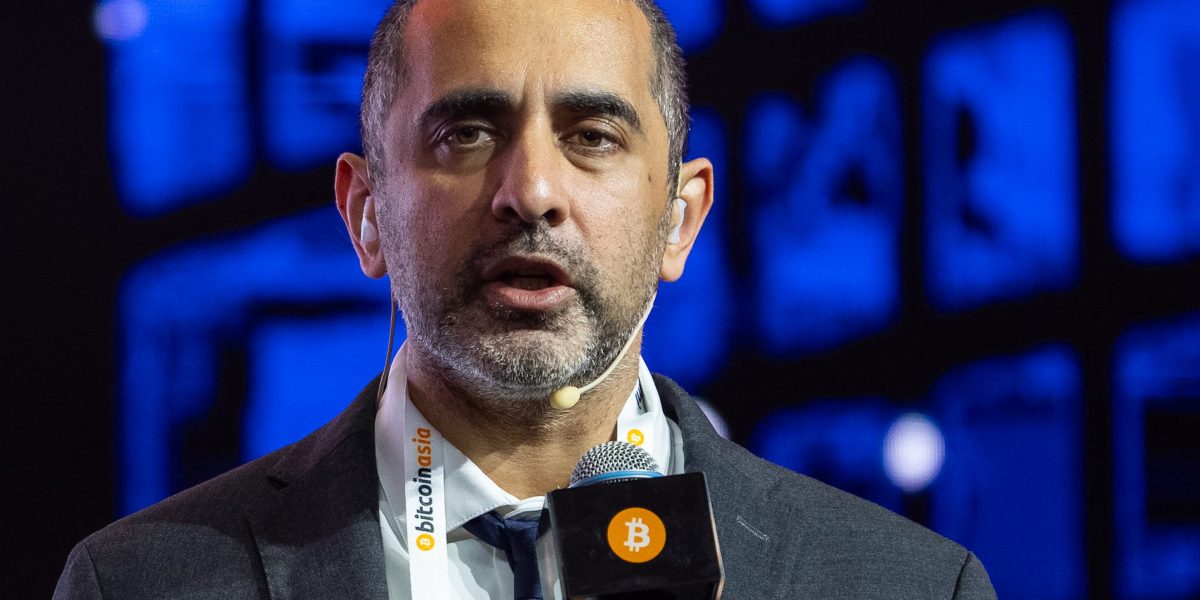
Edited by Casualplayhub News Editorial. Source: Fortune. Casualplayhub News adds summary, context, and editorial framing while linking back to the original report.
Ad eligibility review: sensitive-topic
A controversial figure in tech circles, Balaji Srinivasan has once again uprooted his dream of a stateless education community, this time shifting from Malaysia to Kazakhstan after a regulatory storm forced his exit. The former chief technology officer of Coinbase had found what he thought was the perfect location for his Network School in Johor, Malaysia, on the largely unfinished Forest City complex just across the strait from Singapore. For years, the school operated quietly, hosting around 100 participants for a 90-day pilot in 2024 before expanding to a year-long program in early 2025. But a single, vague social media video changed everything. The clip, which carefully avoided revealing the school's location, caught the attention of online sleuths. Soon, a pro-Palestinian activist group accused the school of bringing Israeli nationals into Malaysia, a country that does not recognize Israel and generally bars Israeli passport holders. Although an investigation found no evidence of travel document violations, the Iskandar Puteri City Council revoked Network School's business and advertising licenses on July 21, citing breaches of licensing conditions and premises-use requirements. The Johor state government fully supported the decision, with Chief Minister Onn Hafiz Ghazi announcing the closure effective July 22, 2026. The fallout escalated into a diplomatic incident: Malaysia's foreign minister ordered a dual U.S.-Israel citizen to leave the country, prompting the U.S. State Department to summon Malaysia's ambassador. Srinivasan, who had tried to arrange a meeting with Prime Minister Anwar Ibrahim and threatened to freeze investments, was left with no choice but to move on. The very next day, he was in Central Asia, signing a five-year memorandum of understanding with Kazakhstan's Ministry of Artificial Intelligence and Digital Development. In a July 22 post on X, he wrote, "Our new campus will become a haven for global techno-optimism, with expedited visas, streamlined redomiciliation, and active recruitment of talent." The ministry echoed the sentiment, stating that the campus would attract leading specialists, technology companies, and investments to Kazakhstan. Network School charged participants $1,500 per month for lodging, meals, gym access, and tech workshops—a bargain compared to similar programs in Silicon Valley or the UAE, which can cost three to five times more. Srinivasan had long championed the school's proximity to Singapore as a key advantage, but that same proximity also drew unwanted attention. A July 10 advertisement highlighting the "man-made island near Singapore" prompted online detectives to pinpoint the location in Johor, leading to the activist group's accusations. Srinivasan's own rhetoric didn't help. In 2023, he used the term "tech Zionism" to describe his network-state strategy—an abstract governance analogy that landed poorly in a country with strong pro-Palestinian sentiment. The Forest City complex itself is a symbol of China's real estate woes. Launched in 2016 by Chinese developer Country Garden with support from the Belt and Road Initiative, the project aimed to house 700,000 people but remains largely unfinished, with only 15% built and 1% occupied. Country Garden has been mired in debt restructuring since 2023, reporting revenue of $22.9 billion last year, down from a peak of $63.6 billion in 2022. Johor has since designated Forest City a special financial zone, hoping to attract international family offices. Now, Srinivasan is betting on Kazakhstan. The country, under President Kassym-Jomart Tokayev, is actively courting foreign tech firms, planning a one-gigawatt data center campus with partners like Nvidia. The MOU between Network School and Kazakhstan's Ministry of AI and Digital Development promises joint projects, hackathons, and a possible Network State conference this year. Srinivasan's vision of a "network state"—a political entity born from tech sector energy—has been a long-standing obsession. He previously urged the U.S. tech industry to move abroad in 2013, published a book on the idea in 2022, and made a short-lived bet that Bitcoin would hit $1 million in 90 days in 2023. Despite the setback in Malaysia, he remains undeterred, now seeking a new foothold in the heart of Central Asia.
Article commentary
Srinivasan's rapid pivot from Malaysia to Kazakhstan underscores the fluidity of tech utopianism in a world of shifting geopolitical and regulatory landscapes. While his network-state concept appeals to those disillusioned with traditional governance, it faces real-world friction when confronting national sovereignty and local sensitivities. The Malaysia episode highlights how easily a vague social media post can trigger a cascade of diplomatic and legal consequences, especially when entangled with contentious issues like the Israeli-Palestinian conflict. Kazakhstan's embrace of Srinivasan reflects its strategic push to become a regional tech hub, but the long-term viability of such a partnership remains uncertain. The Forest City saga also serves as a cautionary tale about the risks of building dreams on unfinished foundations—both literal and metaphorical.