Billionaires' $433M Midterm Haul Tilts Heavily Toward Republicans
Edited by Casualplayhub News Editorial. Source: Fortune. Casualplayhub News adds summary, context, and editorial framing while linking back to the original report.
Ad eligibility review: sensitive-topic
The 2026 midterm elections are still more than a year away, but America's billionaires are already placing their bets—and they are betting big on Republicans. A fresh analysis from the progressive advocacy group Americans for Tax Fairness (ATF) shows that billionaire donors have poured more than $433 million into federal races, with nearly 80 cents of every dollar flowing to GOP candidates and conservative super PACs. The data, drawn from Federal Election Commission filings through March 1, tracks the 50 largest-spending billionaire families. Together, they funneled $344.3 million—about 79%—to Republican-aligned committees. The biggest beneficiary was the pro-Trump super PAC MAGA Inc., which pulled in $89 million. Other top recipients include America PAC ($45.3 million), the Senate Leadership Fund ($36.3 million), and the Congressional Leadership Fund ($30 million), all of which back Republican candidates.
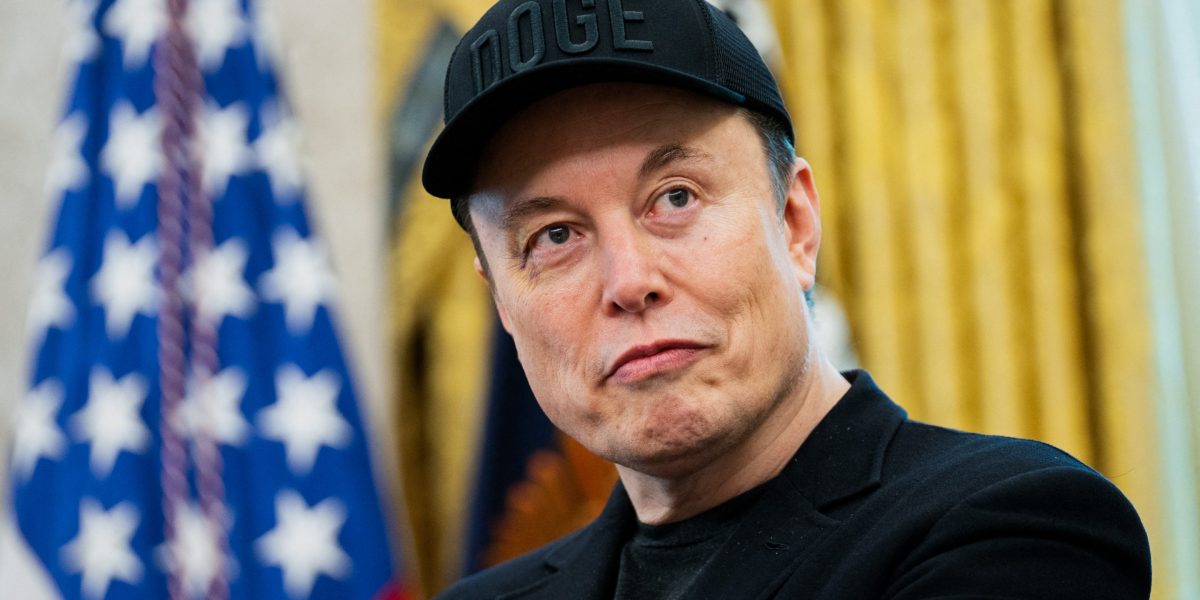
Unsurprisingly, the world's richest person, Elon Musk, leads the individual donor list. ATF's count put his committed contributions at nearly $71 million, but that figure has since risen to at least $90 million by the end of June. Musk's gifts include multimillion-dollar donations to Vivek Ramaswamy's campaign for Ohio governor and Texas Governor Greg Abbott's reelection bid. This spending spree carries a tinge of irony: Musk said in 2025 he would pull back from political giving after a turbulent tenure heading the Department of Government Efficiency. The pause, it seems, was short-lived. Following Musk is Wall Street financier Jeff Yass, cofounder of Susquehanna International Group and a major ByteDance investor, who has given over $55 million.
The rightward tilt in billionaire political giving is not new. In 2024, ATF found that the top 100 billionaire families sent 70% of their political money—roughly $1.84 billion—to committees backing Republicans. To be sure, Democrats have their own wealthy patrons. Investor and Open Society founder George Soros, along with his son Alex, has already channeled about $102.8 million into the 2026 cycle, mostly through the family's Democracy PAC, according to a Washington Post analysis of FEC filings. LinkedIn cofounder Reid Hoffman and former New York mayor Michael Bloomberg also remain reliable Democratic donors. Yet the aggregate skew remains stark: the Post found Republican-leaning donors gave $880 million in the first half of 2026, while Democratic-leaning givers contributed $290 million.
The Supreme Court's 2010 Citizens United decision continues to enable this torrent of money, allowing super PACs to raise and spend unlimited sums. AI-related super PACs have already spent more than $50 million on 2026 races, including a $27 million proxy war between groups aligned with Anthropic and OpenAI over a single Manhattan congressional seat. This spending matters because it historically correlates with winning. OpenSecrets research shows that the higher-spending House candidate prevails more than 90% of the time, and the Senate winner is the bigger spender in about 80% of contests.
But that 90% figure comes with a heavy asterisk. It is inflated by lopsided races where a heavily favored incumbent outspends a token challenger. Campaign finance experts argue that money is more a symptom of a strong campaign than a cause. "Money is an amplifier, not an antidote," said Caroline Welles, a former DNC staffer who now leads The First Ask, a group backing first-time female candidates for state legislatures. "It can't fix a weak candidate, a poor message, or a campaign that's out of touch with voters." She added that the statistic "reflects selection as much as persuasion," because donors gravitate to candidates already showing strength in polling and grassroots enthusiasm. "Campaigns often attract money because they're likely to win, not the other way around."
Christopher Lee, a former DCCC regional political director now at Foresight Strategic Advisors, agreed, calling money "an indicator of viability, not a cause of it." The 90% figure, he said, "mostly measures how good the professional class is at picking winners." Reflecting on his time at the party committee, he recalled: "We didn't fund races to make them competitive. We funded them because they already were. The money followed the polling. The polling did not follow the money."
This perspective is not limited to Democrats. "Money matters immensely in campaign politics, but donor dollars are not destiny," wrote Maggie Paulin, vice president of client services at the Republican firm Campaign Solutions, in an op-ed for The Hill. She noted that in 2020, 2022, and 2024, Republicans were significantly outraised in marquee races and still won. Effective fundraising, she argued, "is often a signal of candidate quality" rather than the engine of victory.
None of this makes the $433 million irrelevant. As Lee put it, money "puts you in the room." It buys the ads, data operations, and field programs that let a campaign compete. What it cannot buy, each expert argued, is a reason for voters to say yes.
Article commentary
The ATF analysis underscores a persistent asymmetry in American political finance: while both parties enjoy billionaire backing, Republicans have a commanding advantage in raw dollars. The sheer scale—$433 million well before the election cycle heats up—raises questions about whether the system has become a plutocratic arms race. Yet the experts' caveats are crucial. Money correlates with victory largely because it flows to already-viable candidates, not because it creates viability out of thin air. That nuance often gets lost in public debate. The Citizens United decision remains the structural backbone of this spending, enabling super PACs to act as conduits for concentrated wealth. As AI-related PACs enter the fray, the 2026 midterms promise to be a laboratory for how money—and the narratives it buys—shapes democratic outcomes.