Clark's 3-Point Fix Could Elevate Timberwolves Role
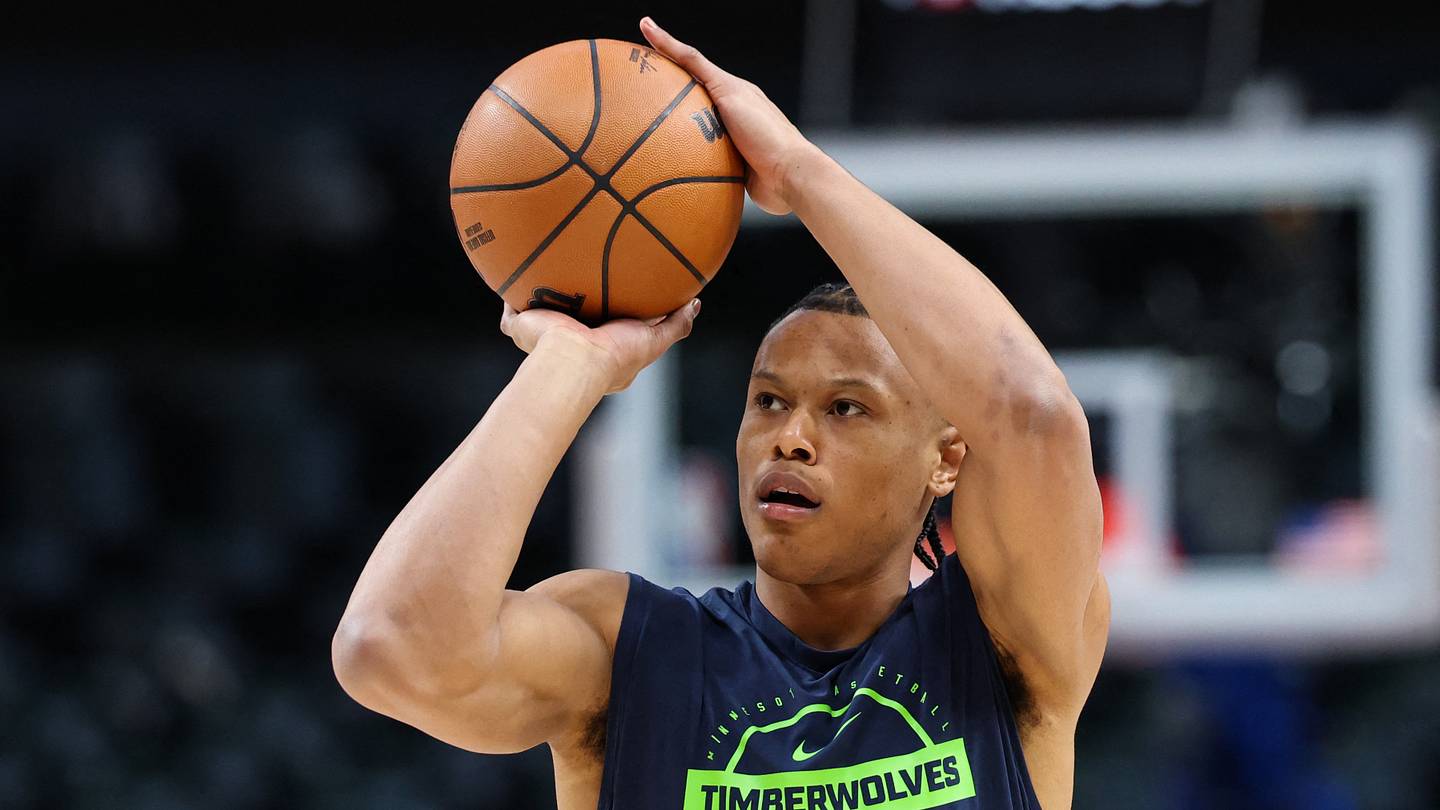
Edited by Casualplayhub News Editorial. Source: SI NBA. Casualplayhub News adds summary, context, and editorial framing while linking back to the original report.
Ad eligibility review: sensitive-topic
Jaylen Clark has a clear roadmap for the upcoming season with the Minnesota Timberwolves, and it starts with a single adjustment: rediscovering his three-point stroke. The 6'3" guard, known for his tenacious defense, signed a three-year, $10 million contract in June, a deal that reflected his growing value. On social media, Clark posted a message that hinted at his intentions: "Time to make a jump! (er)😂🙏🏽🚀 let's get it man !" The link he shared pointed to a clip of him working on catch-and-shoot threes, underscoring his focus.
Over the last two seasons, Clark has carved out a niche as one of the league's most disruptive point-of-attack defenders. His strength, footspeed, and relentless effort make him a weapon that head coach Chris Finch can deploy to rattle opponents. Last season, Clark averaged 13.3 minutes across 63 games, typically off the bench, but his impact was undeniable. The Wolves posted a 20-5 record when he played more than 15 minutes, compared to 20-23 when he didn't. He held opponents to 43.3% shooting, the second-best defensive field goal percentage among Minnesota's rotation players.
Clark's defensive prowess often single-handedly shifted momentum. He'd force a steal, dive for a loose ball, or block a shot, injecting energy into the team. That stretch of play late in the 2024-25 season—where he defended Devin Booker, limited Shai Gilgeous-Alexander to 1-7 shooting, and scored a career-high 17 points against the Rockets—earned him a converted two-way contract into a fully guaranteed two-year standard NBA deal. During that 40-game stretch, he shot 43.1% from three on 1.3 attempts per game, keeping defenses honest.
But last season, that shot abandoned him. Clark connected on just 32.7% of his 1.5 attempts per game. Without a consistent role, he struggled to find an offensive rhythm. He often passed up open threes to drive into traffic, drawing fouls but converting only 65.7% of his free throws. His lack of spacing became a liability, and Clark knows it. This summer, he's been posting clips of himself drilling catch-and-shoot threes, a clear sign of his offseason priority.
The Timberwolves' roster dynamics could open the door for a bigger role. After trading Naz Reid and Julius Randle for LaMelo Ball, the team lost frontcourt depth. Finch has indicated he doesn't see Jaden McDaniels as the starting power forward, leaving a void. Likely candidates to fill that spot are Josh Green and Terrence Shannon Jr., both proven offensive contributors. But if Clark can regain his shooting touch—hitting around 36-40% from deep—he would fit perfectly alongside Ball, Edwards, McDaniels, and Rudy Gobert. He'd take on the primary point-of-attack defensive duties, allowing Edwards and Ball to conserve energy and letting McDaniels patrol the rim as a de facto power forward. Offensively, Clark would operate as an off-ball four, spacing the floor.
Clark doesn't need to become a volume shooter like Donte DiVincenzo. He just needs to be enough of a threat that defenses can't sag off him to load up on Ball and Edwards. His summer work suggests he understands the urgency. If he can translate that into game results, his role with the Timberwolves could expand significantly.
Article commentary
Clark's trajectory mirrors a common NBA archetype: a defensive specialist whose offensive limitations cap his ceiling. His contract extension signals the Timberwolves' belief in his fit, but the 3-point regression is a red flag. Last season's 32.7% from deep is below league average, and the drop from 43.1% suggests inconsistency. However, his age and work ethic provide hope. The roster shake-up, with Ball joining the core, creates a natural niche for a defensive-minded wing. If Clark can stabilize his shooting around 37%, he becomes a valuable two-way contributor. The question is whether one summer of drills can reverse a season-long trend. The Wolves' playoff hopes may hinge on such marginal gains.