Warriors' Durant Pursuit Hits a Wall: His Own Refusal to Return
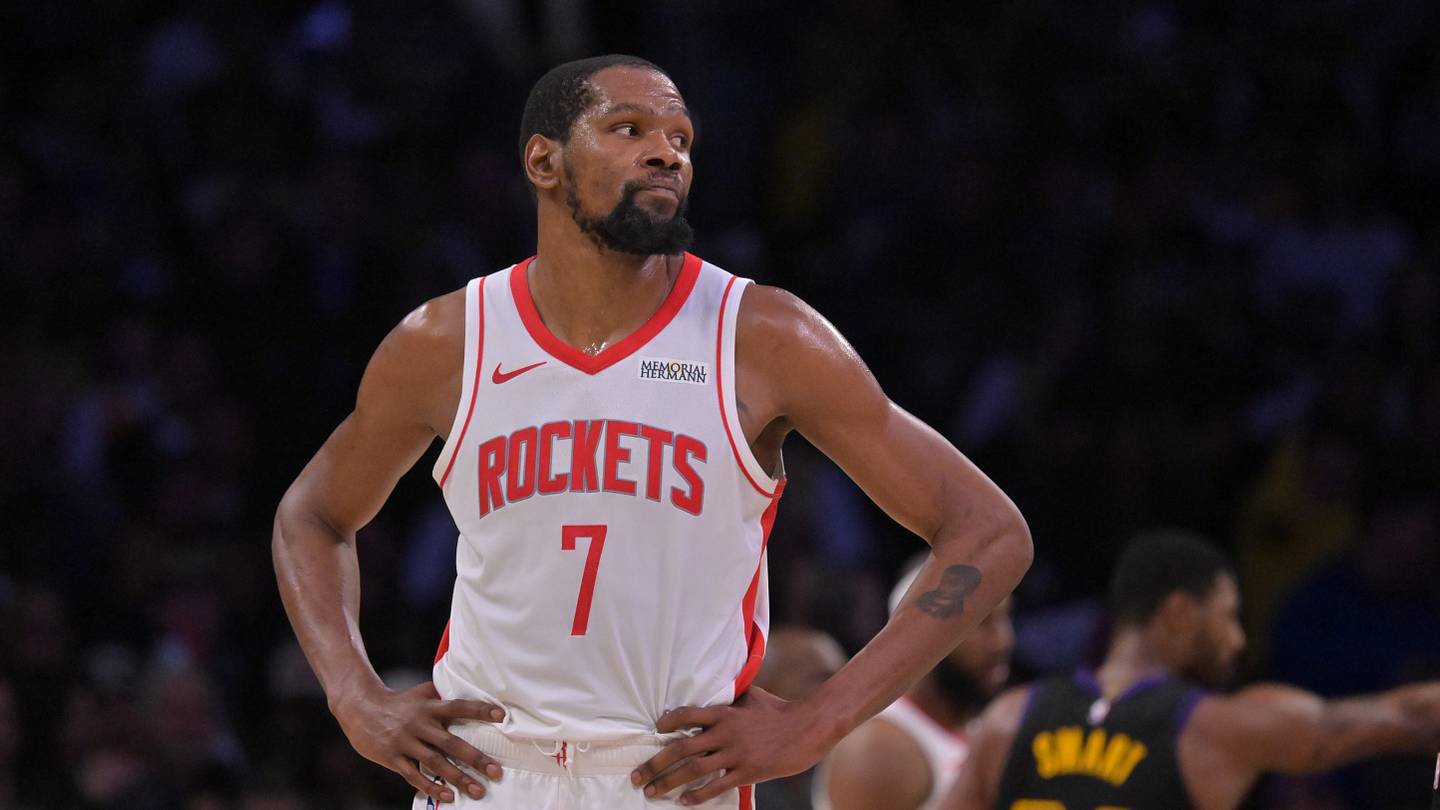
Edited by Casualplayhub News Editorial. Source: SI NBA. Casualplayhub News adds summary, context, and editorial framing while linking back to the original report.
Ad eligibility review: sensitive-topic
The Golden State Warriors are once again circling a familiar name on the trade market: Kevin Durant. Reports from ClutchPoints' Brett Siegel indicate that the franchise is poised to pounce if the Houston Rockets' season goes off the rails, but there's a glaring problem that has nothing to do with trade mechanics or salary cap math. Durant has already said he doesn't want to be a Warrior again.
The Warriors nearly pulled off a deal for Durant when he was with the Phoenix Suns at the 2025 trade deadline. According to Siegel, that transaction was derailed not by a failed negotiation but by Durant himself and his business partner, Rich Kleiman. "The main reasons for Durant halting this trade in the middle of the year were due to his search for stability in Phoenix and simply not wanting to relocate at the time," Siegel wrote. He added that multiple sources confirm there is no friction between Durant and Draymond Green, Steve Kerr, or any other member of the Warriors organization. The unanswered question, Siegel noted, is whether Durant would actually want to return.
But there is an answer. Durant has addressed the issue multiple times, offering politically correct explanations: he didn't want his life uprooted midseason, he disliked how the Suns and Warriors schemed behind his back (though he acknowledged appreciating the Warriors checking with him first), he wanted to finish the season with his Suns teammates, and he didn't want the Warriors to gut their assets for him. Yet a more revealing moment came in October 2025, when a segment of Netflix's "Starting 5" showed Durant's raw reaction. "'Don't send me to the Warriors.' That's what I was telling them," Durant said. "I know if you got to trade me, like, make it somewhere else but the Warriors. ... I didn't want to go back to the storyline, and then I don't want to go and gut the whole team."
Those words cut to the heart of the issue. Whatever the public explanations, there's something about the Warriors that made Durant tell the Suns to trade him anywhere but there. Over a year and a half later, there's no reason to believe that sentiment has shifted. The Warriors' front office, led by Mike Dunleavy Jr., is reportedly betting on the chance that Durant becomes a distressed asset, much like Jimmy Butler did. When Butler forced his way out of Miami, the Warriors snagged him for a low-end first-round pick, Andrew Wiggins, and salary filler. That strategy worked because Butler's trade demand stripped the Heat of leverage.
However, the calculus is different with Durant. He would likely tell the Rockets to trade him anywhere but the Warriors, removing Golden State's leverage and potentially pushing them into a bidding war. Even if the Warriors adopt a patient approach, time is not on their side. Waiting until the trade deadline could leave them buried in the standings. Waiting until next offseason means Stephen Curry turns 39, and his window as a top-10 player narrows. The ideal scenario—where a player the Warriors covet becomes a distressed asset—may never materialize, or they could be outbid. The cost of waiting is steep, which is why the Warriors might need to pay market value for the right player well before the deadline, rather than hoping Durant changes his mind.
Article commentary
The Warriors' pursuit of Kevin Durant reveals a classic tension between ambition and history. Durant's stated reluctance isn't just about logistics or loyalty to Phoenix—it's a deeper aversion to the narrative and roster upheaval that a return would entail. While the distressed-asset strategy worked for Jimmy Butler, Durant is not Butler. He carries more agency and a clearer sense of what he doesn't want. The Warriors' window with Stephen Curry is closing, and waiting for Durant to come around is a gamble that could cost them a season. A more pragmatic approach might be to target a younger, less complicated star who actually wants to be in Golden State.