Texas A&M Fall Coaches Navigate Eligibility Ruling Turmoil
Edited by Casualplayhub News Editorial. Source: KBTX News 3 Sports. Casualplayhub News adds summary, context, and editorial framing while linking back to the original report.
Ad eligibility review: sensitive-topic
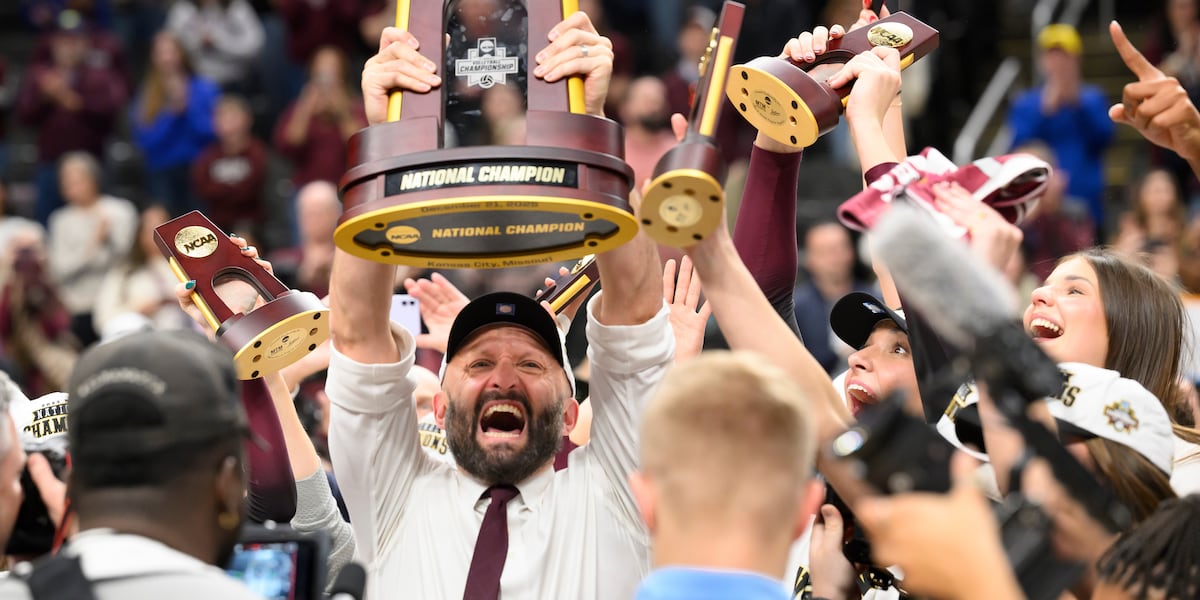
The weekend brought a whirlwind of confusion for Texas A&M’s fall sports coaches after a federal judge’s ruling threatened to upend roster plans. On Friday, Judge Charlotte Sweeney granted a class-wide preliminary injunction that would allow athletes from the 2022 recruiting cycle an extra year of eligibility. The decision immediately spotlighted Texas A&M volleyball head coach Jamie Morrison, whose 2025 national championship roster was built around that very class. Standouts like middle blocker Ifenna Cos-Okpalla and outside hitter Logan Lednicky were among those who could have taken advantage of the ruling. With preseason practice for the 2026 title defense just days away, Morrison faced the possibility of a dramatically altered lineup.
“Welcome to college athletics these days, where you take one step and then the next one you think it’s going to be sturdy ground and all of the sudden things change,” Morrison said. “And I think we’re all living in that world and I think right now everyone’s waiting to see, kind of, what happens.”
The chaos didn’t subside until Sunday, when Judge Sweeney issued a clarification. Combined with separate injunctions from Tennessee and Ohio, the initial interpretation suggested a transfer window for 2022 athletes would open Monday and close Aug. 10. But the clarification narrowed that window to only the plaintiffs in the Tennessee and Ohio cases. For Texas A&M, that meant the entire episode amounted to a massive fire drill with no tangible impact. Approximately 77 former Aggies could have theoretically argued for an extra year under the injunction, though some had already entered professional drafts or signed contracts, complicating their eligibility.
Former Texas A&M men’s basketball player Jacari Lane and women’s basketball player Ny’Ceara Pryor announced plans to enter the portal during the perceived window. But the clarification left them with just one option: return to A&M if the program would have them and if roster space existed under the House settlement limits. A source familiar with the men’s basketball program’s roster strategy said the team has been exploring all possibilities, though it still has one spot open.
Football head coach Mike Elko declined to say whether the program looked into adding players, but didn’t hold back his frustration with the state of college athletics. The injunction came roughly four days before the football team reported for preseason practice. “I thought it was a tremendous symbolic nature of where we are as a sport right now that, as we were getting ready to report, we changed the roster construction rules, but we didn’t really know that we changed them. So then we had to rechange them. Then we rechanged them again, all in the span of about 48 hours. And so, that was tremendously indicative of how this sport is being governed right now.”
Three A&M football players from last season were part of the lawsuit’s class: tight end Amari Niblack, running back Le’Veon Moss, and safety Jerred Kerr. Both Niblack and Moss entered the 2026 NFL draft. Moss signed an undrafted free agent contract with the Miami Dolphins but retired days later, and was arrested July 20 in Baton Rouge on a felony cruelty to juveniles charge after his 2-year-old son accidentally shot himself with an unsecured gun under Moss’s pillow. Before the clarification, Niblack expressed interest in playing another year if he could regain eligibility after entering the draft.
Soccer head coach Bobby Shuttleworth is preparing for his first season leading a college program, with Wednesday’s exhibition match against Incarnate Word. Having spent four years as an assistant, he’s already accustomed to the shifting landscape. “Things change every five minutes these days with the NCAA,” Shuttleworth said Monday. “So, the weekend was no different than what it’s been over the last six months and nine months. Things pop up, it seems like, every little bit here.” His roster has 25 players, three below the sport’s limit. Two A&M soccer athletes—defender Bella Yakel and forward Eloise Descheneaux—would have fallen under the class definition. “Anytime that we can think about adding any good players, obviously, we’ll continue to look and evaluate that,” Shuttleworth said. “But, you know, we feel good about the group that we have here and ready to move forward.”
Morrison echoed that sentiment, noting his team has already turned the page on last season. The 2022 recruits on his roster—Cos-Okpalla, Lednicky, Tatum Thomas, Taylor Humphrey, Ava Underwood, Maddie Waak, and Morgan Perkins—have all moved on to professional careers or other pursuits. Though the volleyball roster sits two below the limit, Morrison isn’t looking to add anyone unless something drastic changes. “This one’s about telling [the 2026 team’s] story and we’re really head down right now, geared towards the 16 athletes that are in our gym and getting to work every single day,” he said. “So, obviously, today is Tuesday. Wednesday, the complete rule set of volleyball could change – is the way we feel about it. We’ll deal with that when it comes.”
Article commentary
The weekend’s injunction chaos underscores the fragile state of NCAA governance, where court rulings and clarifications can upend carefully laid plans within hours. Coaches are left navigating a system that feels reactive rather than proactive, with no clear long-term framework. While Texas A&M avoided real disruption this time, the episode reveals a deeper instability that affects recruiting, roster management, and athlete careers. The lack of uniform eligibility rules, combined with overlapping lawsuits, creates a climate of uncertainty that demands a more cohesive solution—one that balances fairness to athletes with the need for operational certainty in college sports.