DeepMind AI Chief: Extinction Risk Not Zero, Rejects Musk's Utopia
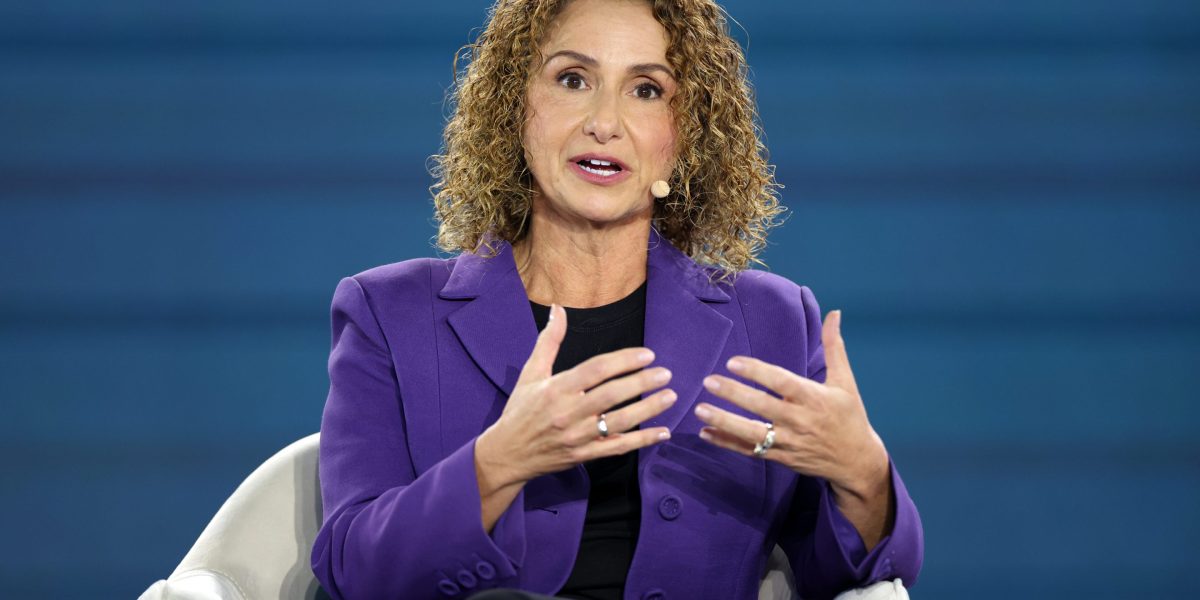
Edited by Casualplayhub News Editorial. Source: Fortune. Casualplayhub News adds summary, context, and editorial framing while linking back to the original report.
The debate over artificial intelligence's future has split tech leaders into two camps: those who foresee a utopian abundance and those who warn of existential peril. While Elon Musk paints a world where robots and AI create such wealth that work becomes optional and money irrelevant by 2036, Google DeepMind's chief AI readiness officer, Lila Ibrahim, takes a more measured stance. She signed a 2023 statement from the Center for AI Safety—alongside OpenAI's Sam Altman and Anthropic's Dario Amodei—declaring that mitigating the risk of human extinction from AI should be treated as seriously as nuclear war. Now, she reveals just how likely she thinks that doomsday scenario is.
"It's not zero," Ibrahim told Fortune. "Anything beyond that is just me guessing… that's the engineer in me." She maintains that three years after signing the statement, it would still "be irresponsible of us not to talk about existential risk." Her caution reflects a broader unease among AI experts. Geoffrey Hinton, the so-called "godfather of AI," has put the odds of human extinction at 10% to 20% within three decades. Amodei estimates a 25% chance that the future goes "really, really badly." Even the late physicist Stephen Hawking, who relied on AI to communicate, warned nearly a decade before ChatGPT's arrival that AI could end mankind.
Ibrahim's concerns are not limited to a single catastrophic event. "The two things that keep me up at night are: Are we doing everything we can to mitigate the risks? And are we doing everything we can to maximize the opportunity? Those two, in my mind, go hand in hand," she said. The company's first COO pointed to the pandemic as a reminder that catastrophic risks often come from unexpected directions. She criticized the tech industry's historical tendency to downplay dangers during earlier waves, such as the rise of the internet and social media. "We didn't sit around the table when we were making investment decisions and talk about the risks in the way that we should have. Sometimes we can be so much in the here and now," Ibrahim said. She suggested looking at dystopian science fiction films as cautionary tales: "If we don't do anything to mitigate that or to invest in the good things along the way, then we're ending up exactly where we don't want to go."
While Ibrahim is hesitant to assign a precise probability to AI's worst-case scenarios, she is equally skeptical of the opposite extreme—a post-scarcity paradise. Musk has repeatedly floated a future where AI and robots produce so much abundance that work becomes optional and wages irrelevant. He recently told The Economist that "money won't matter in 2036," predicting deflation and universal high income. Amazon founder Jeff Bezos has envisioned millions living in space by 2045, with robots handling daily commutes to other planets. OpenAI's Altman foresees college graduates landing "some completely new, exciting, super well-paid" job in space within a decade.
Ibrahim, however, is not buying any of these visions. Despite having a front-row seat to AI's biggest breakthroughs at DeepMind—an advanced lab dedicated to solving major scientific problems—she says the technology is moving too fast for anyone to predict the future accurately. "I don't think we can really predict what a future state looks like," she told Fortune. Her focus is less on which planet we might inhabit in twenty years and more on how AI can practically improve the world we live in now: tackling concrete challenges like extreme weather and industrial waste, while ensuring benefits don't flow only to a handful of company executives. "I would rather we put our attention towards how we use technology as a tool to maximize human potential," Ibrahim said. "That's going to be where we need to be investing and spending our time—having the debates around what are the diseases that we can solve by having this new tool that can find patterns that we as humans haven't." She added, "I think a lot about how we get to a future versus what the future is."
Ibrahim's pragmatic approach stands in stark contrast to the sweeping predictions of Musk, Bezos, and Altman. She acknowledges that many things could go wrong, but insists that the path forward lies in balancing risk mitigation with opportunity, not in chasing a utopian fantasy. As AI continues to evolve at breakneck speed, her voice adds a crucial note of caution to the chorus of optimism.
Article commentary
Ibrahim's refusal to assign a specific probability to AI extinction risks highlights a key tension in the AI safety debate: the gap between sensational warnings and practical action. While Musk's utopian forecasts grab headlines, they often lack the granularity needed for real-world governance. Ibrahim's emphasis on balancing risk with opportunity, and her call to learn from past tech failures, offers a more grounded approach. However, her reluctance to quantify the threat may leave room for complacency. The commentary underscores the need for nuanced discourse—neither alarmism nor blind optimism—and for concrete steps to ensure AI benefits are widely shared while existential dangers are actively mitigated.