AI Data Center Boom: Four Routes to Invest in the Buildout
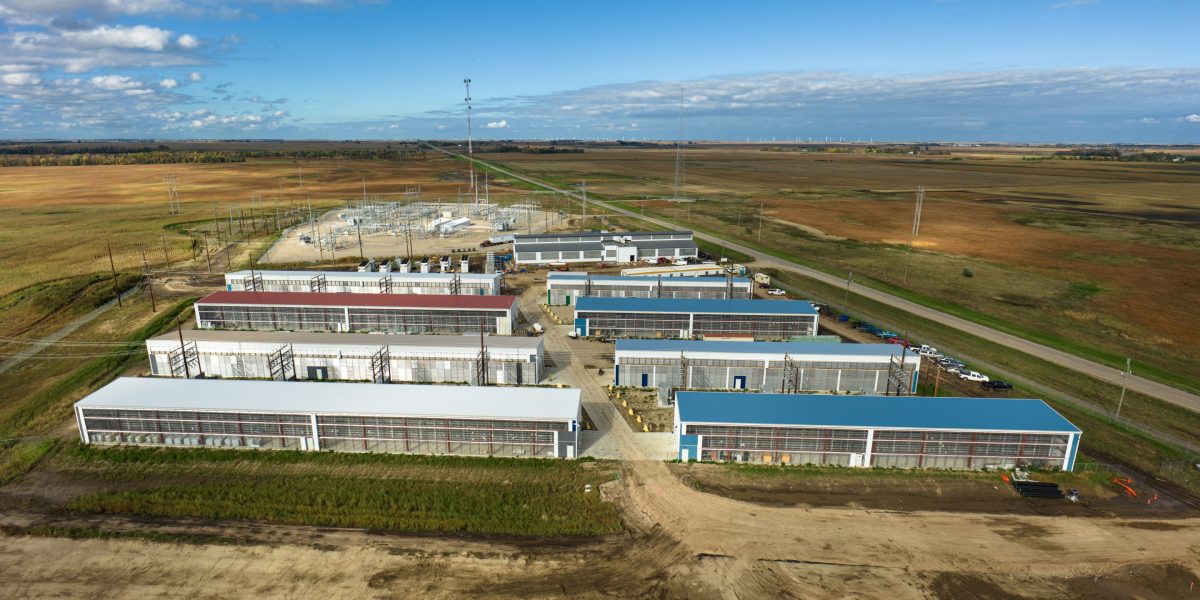
Edited by Casualplayhub News Editorial. Source: Fortune. Casualplayhub News adds summary, context, and editorial framing while linking back to the original report.
The artificial intelligence frenzy is not just about chatbots and image generators—it's fueling a massive infrastructure buildout. Major cloud providers, including Google, Meta, Microsoft, and Amazon, are locked in a spending race that shows no signs of slowing, even as stock markets wobble and fears of an AI bubble persist. The scale is staggering. John Mowrey, chief investment officer at NFJ Investment Group, notes that hyperscalers could spend between $750 billion and $800 billion annually, with some forecasts reaching a trillion dollars—roughly 2.5% to 3% of U.S. GDP. A significant portion of that money will flow into data centers, offering investors a pick-and-shovel play on the AI wave.
Fortune has identified four distinct entry points into the data center economy: semiconductors, real estate, energy, and cooling. Each category comes with its own risks and rewards, and experts weighed in on standout stocks.
**Semiconductors: The Brain of the Operation**
No data center functions without chips, and demand for processors that run AI workloads has far outstripped manufacturing capacity. Craig Ellis, senior semiconductor analyst at B. Riley Securities, calls this the most acute bottleneck in the buildout. For investors, undersupply is a double-edged sword—it pressures prices but also signals sustained capital expenditure growth. Ellis advises shifting focus from chip giants like Nvidia, AMD, and TSMC to the companies that supply the equipment to make those chips. Applied Materials, the world's largest semiconductor equipment company, derives about 73% of its revenue from its Semiconductor Systems division, which sells tools for computing, logic, and memory chips. Its breadth means nearly every advanced chip passes through its machines, spreading exposure across the ecosystem. Lam Research, a narrower play on memory and storage chip equipment, is also well-positioned, with B. Riley Securities raising earnings estimates by 25% on expected capacity investment. Marvell Technology stands out in networking—the plumbing that links thousands of chips inside a data center. Though less famous than Nvidia, Marvell commands a market value of roughly $195 billion, with Amazon Web Services as its largest customer. Ellis sees that concentration as an opportunity: if Marvell diversifies its client base, profit margins could expand significantly.
**Real Estate: The Body That Houses the Brain**
Chips need physical space, and real estate investment trusts (REITs) provide the climate-controlled, high-connectivity environments required for round-the-clock operations. Patrick Wilson, a portfolio manager at CenterSquare Investment Management, highlights that the industry is shifting from training AI models to inference—running models for daily queries. Inference works best in urban data centers close to users, where established REITs already control scarce, carrier-dense land. Equinix, a major landlord for internet and cloud computing, hosts servers for thousands of companies, including AWS and Google Cloud. Digital Realty, with over two decades of experience, benefits from supply that still lags demand, allowing rent increases. Wilson notes that these REITs are tax-efficient, as they must pay out 90% of taxable income as dividends to avoid corporate taxes. However, risks include rising interest rates, which raise borrowing costs, and potential competition from new entrants. Yet Wilson argues that REITs are safer than heavily indebted AI infrastructure firms that could struggle if short-term customers vanish.
**Energy: Powering the Boom**
AI data centers consume enormous amounts of electricity, reshaping the energy sector. Andrew Bischof, utilities analyst at Morningstar, explains that U.S. electricity demand was stagnant for decades, growing only 0% to 0.5% annually. Now, AI has supercharged forecasts, turning utilities from low-growth yield stocks into growth vehicles. American Electric Power, a utility serving 5 million customers across 11 states, plans to invest $78 billion from 2026 to 2030 to meet data center demand. Morningstar expects 9% annual earnings growth from that spending. Bischof also recommends DTE Energy, Alliant Energy, and Evergy, which operate in regions with strong regulatory alignment. For a contrarian play, David Trainer of New Constructs suggests fossil fuel refiners like Valero and HF Sinclair. He argues that green energy cannot yet deliver the high-intensity power needed, leaving traditional energy stocks undervalued—the market treats them as if profits will permanently decline 30% to 40%.
**Cooling: Keeping the Factories from Melting**
Data centers generate intense heat, and standard air conditioning cannot handle it. Nick Lieb, industrials analyst at Morningstar, sees cooling and power equipment as a stable AI trade. Vertiv, a longtime provider of precision cooling, owns the original Liebert brand, which invented computer room air handling units in the 1960s. Over 80% of Vertiv's revenue comes from data centers, making it highly concentrated but also deeply embedded. For broader exposure, Lieb points to Eaton, where only a quarter of sales tie directly to data centers; the rest comes from commercial buildings and the electrical grid. Eaton produces transformers and switchgear needed for both new data centers and upgrades to an aging U.S. grid.
**Risks and the Long View**
Despite the optimism, the sheer scale of spending raises concerns. Lieb notes that hyperscalers' capital expenditures are starting to exceed the cash they generate, forcing them into debt and equity markets. Trainer calls the market a crowded trade, warning that many firms cannot sustain their spending rates. Yet Mowrey remains bullish: AI adoption is still in its early innings, with enterprise applications in healthcare, manufacturing, and finance taking years to unfold. The data center buildout, he argues, is laying the backbone for a technology shift that will touch every corner of the economy.
Article commentary
The data center boom driven by AI is unlike any infrastructure cycle in recent memory. The sheer volume of capital being deployed—potentially 2.5% to 3% of U.S. GDP annually—signals a structural shift that goes beyond typical tech hype. Yet investors must navigate a landscape where the obvious picks, like Nvidia or direct land owners, may already be priced for perfection. The four categories outlined offer varying risk profiles, and each requires careful consideration of sector-specific dynamics. Semiconductor equipment makers like Applied Materials and Lam Research benefit from a bottleneck that is unlikely to resolve quickly. The chip shortage is real, and the need for advanced manufacturing tools will persist as long as AI demand grows. However, the cyclical nature of the chip industry remains a threat. Geopolitical tensions, particularly around Taiwan and export controls, could disrupt supply chains. Marvell's networking focus is intriguing, but its heavy reliance on Amazon Web Services is a double-edged sword—losing that contract would be devastating. Investors should watch for client diversification. Real estate investment trusts offer a more stable income stream, but they are not immune to interest rate risks. Rising rates increase borrowing costs and can depress property values, which is a headwind for REITs. Equinix and Digital Realty have strong moats, given their control of urban carrier-dense land, but if AI demand slows or shifts to edge computing, their premium pricing power could erode. The tax efficiency of REITs is attractive, but the sector's correlation with interest rates means timing matters. Energy is perhaps the most polarizing category. Utilities like American Electric Power offer regulated growth, but the massive capital expenditures required to build new grid infrastructure could strain balance sheets. The regulatory landscape varies by state, and some regions may push back against rate increases that fund data centers. Fossil fuel refiners like Valero and HF Sinclair are contrarian bets that rely on the assumption that green energy cannot scale fast enough. While this may be true in the near term, the long-term energy transition could eventually reduce demand for oil, making these stocks a short- to medium-term play. Investors should also consider the environmental, social, and governance (ESG) risks associated with fossil fuels. Cooling and power equipment, represented by Vertiv and Eaton, may offer the most resilience. Their technology changes slowly, and the need for efficient cooling and grid upgrades is a multi-decade trend. Vertiv's concentration in data centers is a risk, but its established brand and long history provide a buffer. Eaton's diversification into broader electrical infrastructure gives it a hedge, and the aging U.S. grid is a tailwind that extends beyond AI. However, these stocks are not cheap, and any slowdown in hyperscaler spending could hit them hard. The biggest risk across all categories is that the AI buildout may not deliver the expected returns. History is littered with examples of overinvestment—the dot-com bubble's fiber optic glut, for instance. Today's capital expenditure is so large that even a modest slowdown could cause cascading effects. Yet the difference is that AI is already generating real revenue and productivity gains, and the technology is still in its early stages. The shift from training to inference will require more distributed infrastructure, which could sustain demand for years. For investors, the key is to avoid chasing the hottest names and instead focus on companies with durable competitive advantages, reasonable valuations, and exposure to multiple growth drivers. Diversification across the four sectors can mitigate company-specific risks. The commentary from experts suggests that while the trade is crowded, the underlying trend is genuine. The data center buildout is not a speculative bubble—it is a foundational investment in the next era of computing. But as with any boom, the winners will be those who can withstand the inevitable volatility and stay focused on the long horizon.