Hawks' Playmaking Gap: Can They Support Jalen Johnson?
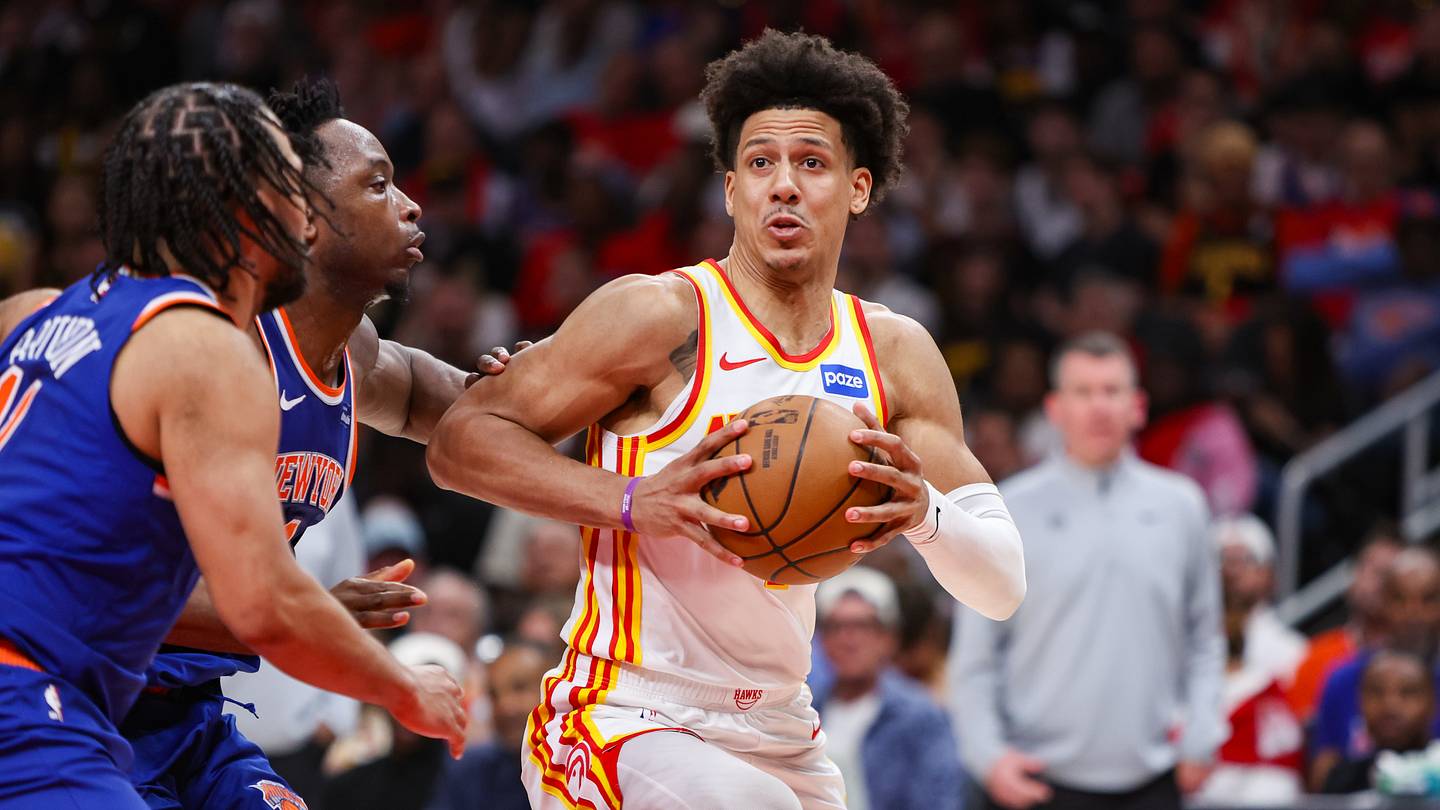
Edited by Casualplayhub News Editorial. Source: SI NBA. Casualplayhub News adds summary, context, and editorial framing while linking back to the original report.
Ad eligibility review: sensitive-topic
Last season, the Atlanta Hawks posted elite passing numbers that would make any team envious. They led the NBA in assists per game, ranked third in assist-to-turnover ratio, fourth in assist percentage, and surprisingly kept turnovers to a modest 10th in the league. By traditional metrics, they were one of the best distributing teams in basketball. Yet a closer look reveals a troubling dependency: the quality of playmaking beyond Jalen Johnson remains a critical question mark for the Hawks' ceiling in 2026-27.
Atlanta has worked to add more ball-handlers. They re-signed CJ McCollum, drafted rookie point guard Kingston Flemings, and brought in Devin Carter to replace Keaton Wallace as the fourth point guard. Growth from Dyson Daniels and Nickeil Alexander-Walker could further bolster the backcourt. But the real challenge is whether anyone can step up to support Johnson as a secondary creator, especially in the halfcourt when defenses tighten.
The Hawks' offense revolved around Johnson, and for good reason. He ranked in the 94th percentile among forwards for points created and rim assists per game, carrying a staggering assist percentage of 33.5%. He dictated possession with an on-ball rate of 27.8%, also in the 95th percentile. Johnson proved he can handle the lead playmaker role. But durability is a concern. After playing only 92 games in the two prior seasons, he managed 72 last season. If he misses time, the guards must carry the load. And the playoffs showed that when Johnson is neutralized, the offense grinds to a halt.
Who else can step up? Dyson Daniels, nominally the starting point guard, ranked in the 80th percentile in assist field goal percentage but fell to the 47th percentile in rim assists and 40th in potential assists. His bad pass turnover percentage sat at 9.6%. Daniels is only 23 and has room to grow, but he must also improve his shooting to stay on the floor in crunch time. CJ McCollum and Nickeil Alexander-Walker offer more experience. NAW posted a career-high 3.7 assists per game and ranked in the 91st percentile for rim assists, flashing impressive reads. McCollum averaged 3.9 assists and an eye-popping 12.1 potential assists per 100 possessions, suggesting he was unlucky with conversions. But his turnover percentage was 11.6%, and he has never been an elite passer. Rookie Kingston Flemings could develop, but rookies typically struggle with NBA speed. The Hawks may need time before he contributes reliably.
Regular-season stats paint a decent picture, but the playoffs tell a different story. In six postseason games, the Hawks ranked 10th in assist-to-turnover ratio and 11th in turnover percentage. Among 91 players with over 20 minutes per game in at least four playoff contests, McCollum and NAW ranked 89th and 80th, respectively, in assist-to-turnover ratio. Their assist percentages dropped to 11.5% and 11.6%. Until someone proves otherwise, Atlanta lacks a reliable halfcourt passer who can complement Johnson when defenses get physical and jump into passing lanes.
The Knicks exposed this vulnerability, and the rest of the Eastern Conference has only gotten tougher. New York kept its standout perimeter defenders. Miami added Giannis Antetokounmpo, one of the most versatile defenders of his generation. Philadelphia brought in Jaylen Brown and Dean Wade. Toronto is expected to add Kawhi Leonard to a team already featuring Scottie Barnes and Collin Murray-Boyles. Even Boston, despite injury concerns, added Paul George. The Charlotte Hornets improved with Royce O'Neale and Naz Reid. The Hawks face a gauntlet of elite defenders who can limit Johnson's playmaking.
There is a pathway for Atlanta to become less reliant on Johnson. Development from Daniels, consistency from McCollum and NAW, and integration of Flemings could create multiple options. This is not about Johnson holding the team back; it is about raising the ceiling. If the Hawks want to be a dangerous postseason threat, they need more than one orchestrator.
Article commentary
The Atlanta Hawks find themselves in a familiar trap: a team with elite regular-season metrics that fail to translate in the playoffs. Their passing numbers were outstanding, but the reliance on Jalen Johnson as the sole creative hub is a structural vulnerability that opponents will continue to exploit. The offseason moves — re-signing McCollum, drafting Flemings, adding Carter — show awareness, but they may not be enough. Dyson Daniels is the most intriguing development piece. At 23, he has the physical tools and defensive instincts to grow into a solid playmaker, but his shooting remains a liability. If he can become a 36% three-point shooter, his value as a passer will skyrocket. However, that improvement is not guaranteed. McCollum and Alexander-Walker are capable but not transformative. McCollum's high potential assists suggest he can create, but his turnover rate and lack of size hurt him against aggressive defenders. NAW showed flashes but was inconsistent when it mattered most. The real concern is the Hawks' postseason sample. In six games, the drop-off was stark. When Johnson was pressured, no one else could reliably break down the defense. The Eastern Conference has only gotten more defensive-minded. Adding Giannis, Brown, Leonard, and George to already formidable teams means Atlanta will face swarming perimeter pressure every night. The Hawks cannot simply hope Johnson stays healthy for 72 games again; history suggests that is unlikely. There is a strategic question here: should the Hawks consider a trade for a more established secondary playmaker? Or do they trust internal development? The front office seems to be betting on growth, but the window is narrowing. Trae Young is gone, and the team is built around Johnson as the centerpiece. If the supporting cast does not elevate, the Hawks risk being a perennial first-round exit. From a broader perspective, this analysis highlights the difference between regular-season stats and playoff execution. The Hawks' passing numbers were inflated by a system that funnels everything through Johnson. In the playoffs, teams scheme to take away that option. Without a Plan B, the offense stagnates. The solution is not to replace Johnson but to surround him with players who can create their own shots and make reads when the defense collapses. Ultimately, the Hawks' 2026-27 season hinges on whether Daniels, McCollum, NAW, or Flemings can step up. If one of them becomes a reliable secondary playmaker, Atlanta could surprise. If not, they will remain a team that passes the eye test in the regular season but fails when it matters most. The front office must monitor this closely, because the margin for error in the East is shrinking fast.