Teague's Hot Take: Harden Still Edges Doncic as Pure Scorer
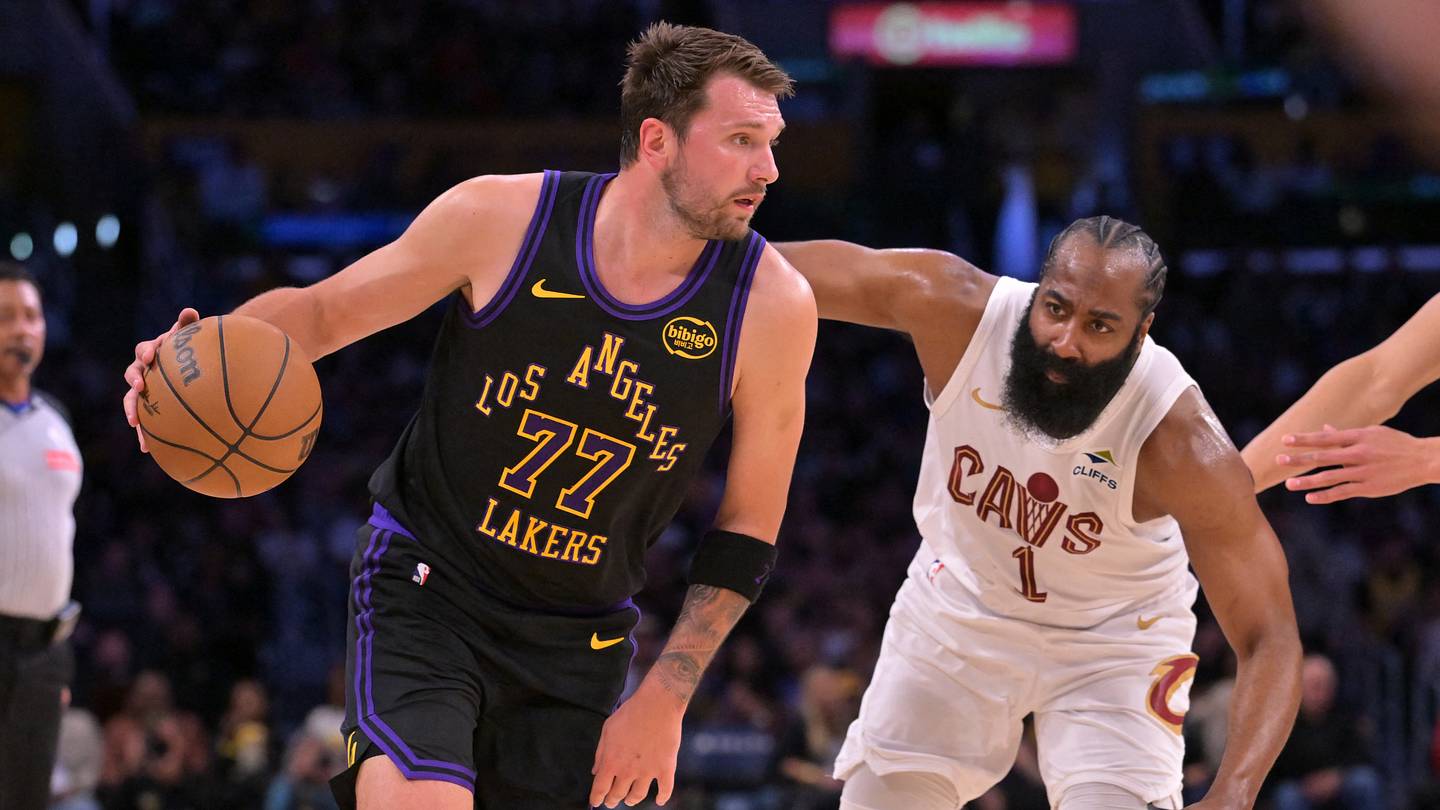
Edited by Casualplayhub News Editorial. Source: SI NBA. Casualplayhub News adds summary, context, and editorial framing while linking back to the original report.
Luka Doncic has spent the past year proving that his arrival in Los Angeles was no fluke. The Lakers superstar guard, fresh off his first full season with the storied franchise, dominated the league by securing his second career scoring title. He averaged 33.5 points, 7.7 rebounds, and 8.3 assists per game, shooting 47.6% from the field and 36.6% from three-point range. For many, those numbers cement Doncic as one of the elite scorers of his generation. But former NBA guard Jeff Teague is not fully convinced.
Appearing on the Club 520 Podcast, Teague laid out a clear hierarchy: James Harden, in his prime, was a more dangerous scorer than Doncic. “I think James scored easier than Luka,” Teague said. “Luka scores easy as hell too. They both hold the ball the whole time, but James is just able to manipulate the defense way easier. You had to foul him or he was going to make a layup, pretty much, or he was going to shoot a step-back three. It’s like you really couldn’t stop him.”
Teague’s argument taps into Harden’s extraordinary run with the Houston Rockets, where he averaged 29 or more points per game for six consecutive seasons. During that stretch, Harden was a perennial MVP candidate, deploying a mix of step-back jumpers, crafty drives, and an uncanny ability to draw fouls. His style, while sometimes polarizing, was undeniably effective. Now 36, Harden has shifted into a secondary role with the Cleveland Cavaliers, playing alongside Donovan Mitchell. He remains an unrestricted free agent, but expectations are strong that he will re-sign with Cleveland before the 2026-27 season.
Doncic, by contrast, is just entering his prime. The 27-year-old has less than a decade of NBA experience compared to Harden’s nearly 15 years. Yet the Slovenian has already amassed a resume that includes five All-NBA selections and a Western Conference Finals appearance. With LeBron James now in Philadelphia, the Lakers are officially Doncic’s team. He and Austin Reaves will carry the offensive load, supported by new additions like rising center Walker Kessler. The pressure is on for Doncic to elevate his game further, especially as the Lakers aim to compete in a loaded Western Conference.
Teague’s take is not a dismissal of Doncic’s talent. Rather, it highlights a difference in style. Harden’s scoring came with a certain relentlessness that forced defenses into impossible choices. Doncic, while equally ball-dominant, relies more on pace changes, body control, and isolation post-ups. The debate over who is better may never be settled, but it underscores a deeper truth: both players have redefined what it means to be a primary scorer in the modern NBA.
For now, Doncic has the opportunity to silence doubters. He has the green light in Los Angeles, a supporting cast designed to maximize his strengths, and a long runway ahead. Whether he can surpass Harden’s legacy as a pure scorer will depend on his ability to maintain consistency, improve his efficiency, and lead the Lakers back to championship contention. The 2026-27 season will be a critical chapter in that story.
Article commentary
The comparison between James Harden and Luka Doncic is more than a barbershop argument; it’s a window into how scoring prowess is evaluated across different eras of the NBA. Jeff Teague’s comments, while subjective, carry weight because they come from a player who guarded both men. His observation that Harden “manipulates the defense way easier” touches on a subtle but crucial skill: the ability to bend defensive schemes without relying solely on athleticism. Harden’s prime was a statistical freak show. From 2014 to 2020, he averaged 29.6 points per game, with a true shooting percentage of 61.0% — numbers that rival the greatest offensive seasons in history. His step-back three became a signature move, and his foul-drawing ability was so refined that it forced the NBA to adjust rule interpretations. However, critics argue that Harden’s style was often one-dimensional, relying on isolation plays and a high usage rate that sometimes stagnated team offense. Doncic, on the other hand, has a more varied toolkit. He can post up, shoot off the dribble, and facilitates at an elite level. His assist numbers (8.3 per game last season) reflect a willingness to involve teammates that Harden, at his peak, sometimes lacked. Yet Doncic’s scoring efficiency has not matched Harden’s peak. Last season, Doncic posted a 58.6% true shooting percentage, solid but not transcendent. His reliance on step-back threes and contested mid-range shots can lead to cold streaks. Teague’s argument also highlights the importance of era-appropriate context. Harden thrived in a system designed around his strengths — four-out spacing, relentless pick-and-rolls, and a green light to shoot from anywhere. Doncic operates in a similar environment but with less consistent shooting around him. The Lakers’ roster construction, especially after LeBron’s departure, will test whether Doncic can elevate average teammates the way Harden did in Houston. Another layer is longevity. Harden sustained his scoring dominance for nearly a decade. Doncic has five seasons of elite production, but maintaining that level into his 30s is no guarantee. Injuries, rule changes, and defensive adjustments could all impact his trajectory. What Doncic has going for him is his basketball IQ and frame — he is bigger and stronger than Harden, which may allow him to adapt as he ages. Ultimately, the debate may never yield a definitive answer. Both players are generational talents whose scoring styles reflect their distinct personalities. Teague’s take is a reminder that the NBA’s rich history of scoring greatness is not a linear hierarchy. It’s a mosaic of different approaches, each with its own merits and flaws. For Doncic, the goal should not be to outscore Harden in a hypothetical matchup, but to lead the Lakers to titles. If he does that, the scoring debate will take care of itself.