Warriors GM: Curry on Track to End Career with Golden State
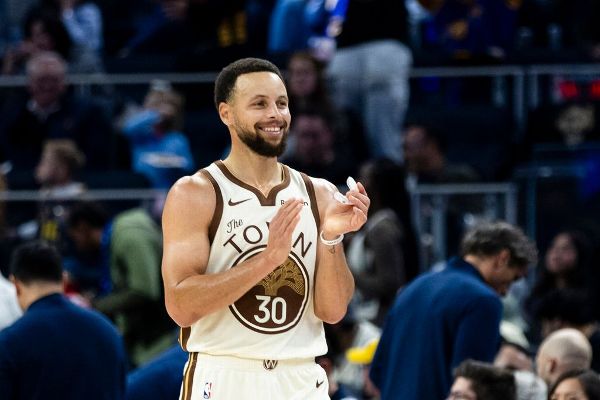
Edited by Casualplayhub News Editorial. Source: ABC30 Fresno Sports. Casualplayhub News adds summary, context, and editorial framing while linking back to the original report.
Ad eligibility review: sensitive-topic
SAN FRANCISCO -- With Stephen Curry's contract extension eligibility just three weeks away, Golden State Warriors general manager Mike Dunleavy has once again voiced strong confidence that the superstar guard will spend his entire career in a single jersey. Speaking during a virtual media session Tuesday, Dunleavy dismissed any notion that Curry might leave the franchise that drafted him in 2009.
"He hasn't said any different," Dunleavy said. "That's always been the message. That's always been what he's discussed. I think that's tracking quite well."
Curry is entering the final season of his current contract, a $62.5 million pact that will be his 18th in the NBA. On August 29, he becomes eligible to sign a two-year extension worth up to $136.7 million. Team and league sources have consistently indicated that both sides are optimistic about reaching an agreement that keeps Curry in Golden State for the foreseeable future.
Publicly, Curry has maintained his desire to play at least a couple more seasons and to finish his career with the Warriors. Dunleavy acknowledged that the decision ultimately rests with the player.
"Ultimately it's his call, his decision, whether that's allowing his contract to run out and move on," Dunleavy said. "Look, if he comes to me and wants to be moved, Joe and I will talk it through. We wouldn't love it. But he's earned the right to do what he wants. But as far as the messaging or any idea that he'd be anywhere else, that's not a thing we're looking at or he's looking at."
The Warriors have experienced a relatively quiet offseason, highlighted by a failed pursuit of LeBron James at a bargain price. Instead, the front office opted to reassemble the core, re-signing Draymond Green, Kristaps Porzingis, Al Horford, De'Anthony Melton, and Gary Payton II to short-term contracts. The team's two starting wings, Jimmy Butler and Moses Moody, both suffered significant knee injuries last season and are expected to miss large chunks of the upcoming campaign. This creates immediate attrition for a roster already populated by older players with injury histories.
"Constructing the roster, we had to make a decision between talent and availability," Dunleavy said. "There was no perfect solution in terms of the combination of the two. We leaned a little bit more toward talent... We are taking on some risk there, but I think we value the talent over maybe finding guys that were perfectly healthy."
Porzingis was limited to only 32 games due to a lingering illness and Achilles tendinitis. Horford missed 37 games with a calf strain and sciatica. Melton spent the first half of last season rehabbing a torn ACL. Curry himself missed 39 games because of a persistent right knee issue that caused swelling and dull pain. Dunleavy said the team plans to challenge its veterans to play more often this season, while acknowledging the delicate nature of managing Curry's workload.
"My hope would be he plays more than the 43 games he played last year," Dunleavy said. "We'd expect that. It's on the radar. It's something we have to be mindful of. It's delicate. It's delicate for him and delicate for the rest of the guys on our team."
The stagnant summer has only fueled growing angst about the Warriors' ability to contend in the final stages of the Curry, Green, and Steve Kerr era. Both Kerr and Curry have emphasized the need to reestablish culture and identity rather than obsess over a championship. Dunleavy set an internal goal of simply making the playoffs, expressing a belief that if Butler and Moody return healthy, and if the team can use its flexibility and assets to add pieces midseason, there is a path back to contention.
But regardless of the short-term outlook, Dunleavy remains steadfast in his belief about Curry's long-term future.
"There's two things I'm confident about with Steph," Dunleavy said. "He really, really wants to win and he wants to finish his career as a Warrior. I don't think that changes tomorrow, August 29th, start of the season, middle of the season, end of next season. Those things are going to be consistent."
Article commentary
The Warriors' front office is walking a tightrope between loyalty to a generational talent and the harsh realities of an aging roster. Mike Dunleavy's public display of confidence in Stephen Curry's commitment to finish his career in Golden State reinforces what has long been assumed: Curry is the rare superstar who values legacy over chasing more rings elsewhere. Yet the subtext of Dunleavy's remarks reveals a team grappling with the consequences of diminished flexibility and a win-now window that is rapidly closing. Curry's eligibility for a two-year, $136.7 million extension on August 29 is a significant milestone. At 38 years old, he remains an elite offensive force, but his durability has become a legitimate concern. Missing 39 games last season due to a knee issue is a red flag for a player whose game relies on quick cuts, constant movement, and shooting off the dribble. The Warriors' decision to prioritize "talent over availability" in their roster construction further compounds the risk. Re-signing injury-prone veterans like Porzingis, Horford, and Melton while relying on the return of Butler and Moody from knee surgeries creates a fragile lineup that could unravel quickly. Dunleavy's admission that the internal goal is simply to make the playoffs, rather than contend for a championship, signals a shift in organizational expectations. The dynasty that won four titles in eight years appears to be in a transitional phase, where the focus is on extending Curry's career rather than maximizing the remaining years of his prime. The failed pursuit of LeBron James underlines the team's limited financial flexibility and the difficulty of adding a star without sacrificing the core. Financially, committing to Curry at nearly $70 million per season through 2028-29 would lock up a significant portion of the salary cap for a player whose production may decline. But the Warriors' brand and marketability remain tied to Curry's presence. Letting him walk would be a public relations disaster and could devalue the franchise. The emotional and commercial calculus likely outweighs purely basketball considerations. Looking ahead, the Warriors must navigate a delicate balance between giving Curry the support he needs to remain competitive and preserving long-term assets. The team's young players, such as Moses Moody and Jonathan Kuminga, will need to develop rapidly to offset the aging core. Dunleavy's comment about challenging veterans to play more often suggests a hope that better health management and a more disciplined approach can keep the roster afloat. Yet the attrition of the past season—combined with the uncertainty of Butler and Moody's returns—makes that hope feel like a gamble. Curry's legacy is secure regardless of how the next two years unfold. But the Warriors' path forward is anything but clear. The organization is betting that Curry's loyalty and competitive fire can overcome the mounting physical and structural challenges. Whether that bet pays off will depend on health, roster development, and a bit of luck. For now, Dunleavy's words serve as a reassurance to fans: the face of the franchise isn't going anywhere, even if the championship window is narrowing.