Kings' Center Logjam: A Short-Term Pain or Long-Term Problem?
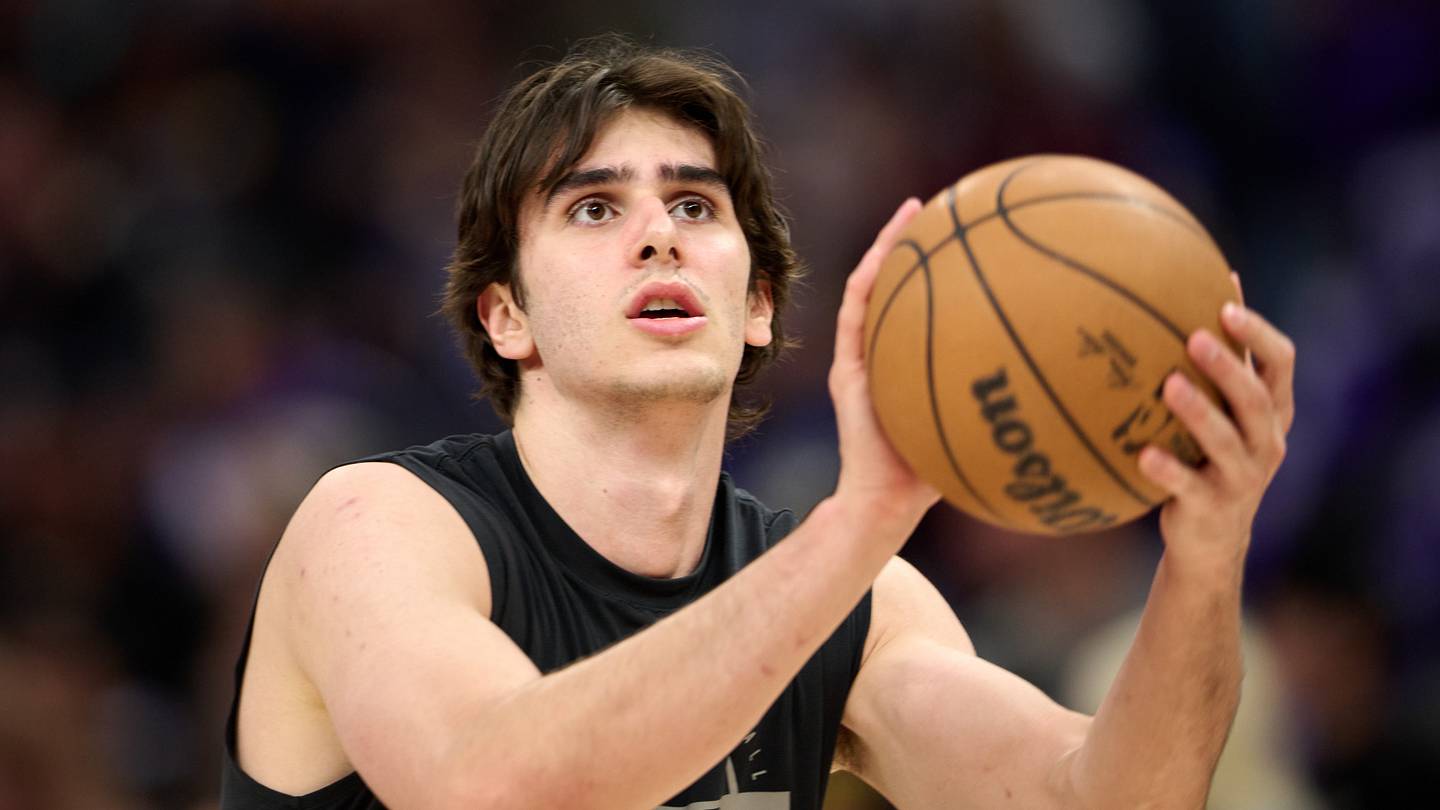
Edited by Casualplayhub News Editorial. Source: SI NBA. Casualplayhub News adds summary, context, and editorial framing while linking back to the original report.
As the Sacramento Kings gear up for the 2026-27 campaign, they find themselves navigating a peculiar roster construction—one that blends a partial rebuild with veterans whose contracts are winding down. The resulting positional imbalance makes the coming season particularly intriguing, especially in the frontcourt. Zach LaVine will continue to command heavy minutes at shooting guard, but unlike previous years, the guard depth behind him is thin. The same cannot be said for the center position, where a logjam threatens to create headaches for head coach Doug Christie.
The most pressing question revolves around the center rotation. Domantas Sabonis is returning from an injury and stepping back into his familiar high-usage role. However, waiting in the wings are two promising young bigs: Maxime Raynaud and Dylan Cardwell. Both are considered building blocks for the franchise’s future, and their development hinges on getting significant playing time—a challenge when Sabonis commands the majority of minutes.
One potential solution is deploying two-big lineups, pairing Sabonis with either Raynaud or Cardwell. While this might work in short bursts, it is hardly a sustainable long-term strategy. The Kings are caught between the old and the new: Sabonis, a proven All-NBA talent, and the younger players eager to take the reins. If Sabonis performs well and returns to elite form, he becomes a more attractive trade asset—possibly movable by the deadline. The question is whether that wait will hinder the growth of the prospects behind him.
The congestion does not end with the three traditional centers. Precious Achiuwa and Jonathan Mogbo can also slide into the center spot, offering small-ball options. Achiuwa found success in that role late last season, providing energy and defensive versatility. Mogbo, currently on a two-way deal, has already shown he is outplaying that contract. He could theoretically get extended minutes in the G-League with the Stockton Kings, but his game suggests he deserves a regular spot on the big league roster.
This logjam has a cascading effect on the entire rotation. If the Kings commit to two-big lineups with Sabonis, Raynaud, or Cardwell, minutes will shrink for others. Achiuwa and Mogbo will feel the pinch, but so will forwards Keegan Murray and De’Andre Hunter, and even swingman Nique Clifford, who could lose time at the small forward position. The ripple effect touches nearly every player on the roster.
In the grand scheme, this might be a short-term issue—one that resolves itself if Sabonis is traded or if injuries force decisions. But for now, it is a flaw the Kings cannot ignore. Rotations are always a point of scrutiny, but Christie faces an especially delicate balancing act: satisfying veteran expectations while nurturing the next generation. The Kings’ center dilemma will be one of the most compelling storylines to watch as the season unfolds.
Article commentary
The Sacramento Kings’ center logjam illuminates a broader tension in modern NBA roster construction: the conflict between developing young talent and maximizing veteran production. The team finds itself in a transitional phase, holding onto a star in Domantas Sabonis while simultaneously investing in bigs like Maxime Raynaud and Dylan Cardwell. This is not inherently a bad strategy, but it creates a practical problem when minutes are finite. From a developmental standpoint, the optimal approach would be to give Raynaud and Cardwell substantial run—preferably 20-plus minutes a night—to accelerate their learning curves. However, Sabonis, when healthy, commands a high-usage role that leaves limited room for others. The Kings’ front office likely hopes Sabonis’s trade value rebounds, allowing them to move him for assets and clear the path for the younger players. But that timeline is uncertain. If Sabonis struggles or suffers another injury, his value dips, and the logjam persists. Precious Achiuwa and Jonathan Mogbo add another layer. Achiuwa proved effective as a small-ball center last season, offering a switchable option that contrasts with Sabonis’s traditional style. Mogbo’s two-way deal suggests the team sees him as a developmental project, yet his on-court impact already hints at a player ready for more. The Kings face a tricky choice: keep Mogbo on the main roster and risk losing his G-League development time, or send him down and risk stunting his momentum. The ripple effect on the wing rotation is equally concerning. Keegan Murray and De’Andre Hunter are key contributors whose minutes could shrink if Christie goes big. That trade-off—sacrificing wing depth for interior size—may not be worth it if the two-big lineups underperform. Small-ball lineups featuring Achiuwa at center might actually yield better spacing and pace, especially given LaVine’s shooting. Ultimately, the Kings’ center logjam is a problem of their own making, rooted in a half-hearted rebuild. They have not fully committed to youth, nor are they all-in on winning now. Doug Christie’s rotation decisions will be under a microscope, as every minute given to one player is a minute taken from another. The team’s success may hinge on whether they can find a trade partner for Sabonis sooner rather than later. If not, they risk both disappointing veteran stars and delaying the development of their future core. It is a tightrope walk that few teams navigate well, and the Kings’ front office must decide which direction they truly want to go.