Bears' Kyle Monangai escapes serious knee injury, initial tests clear
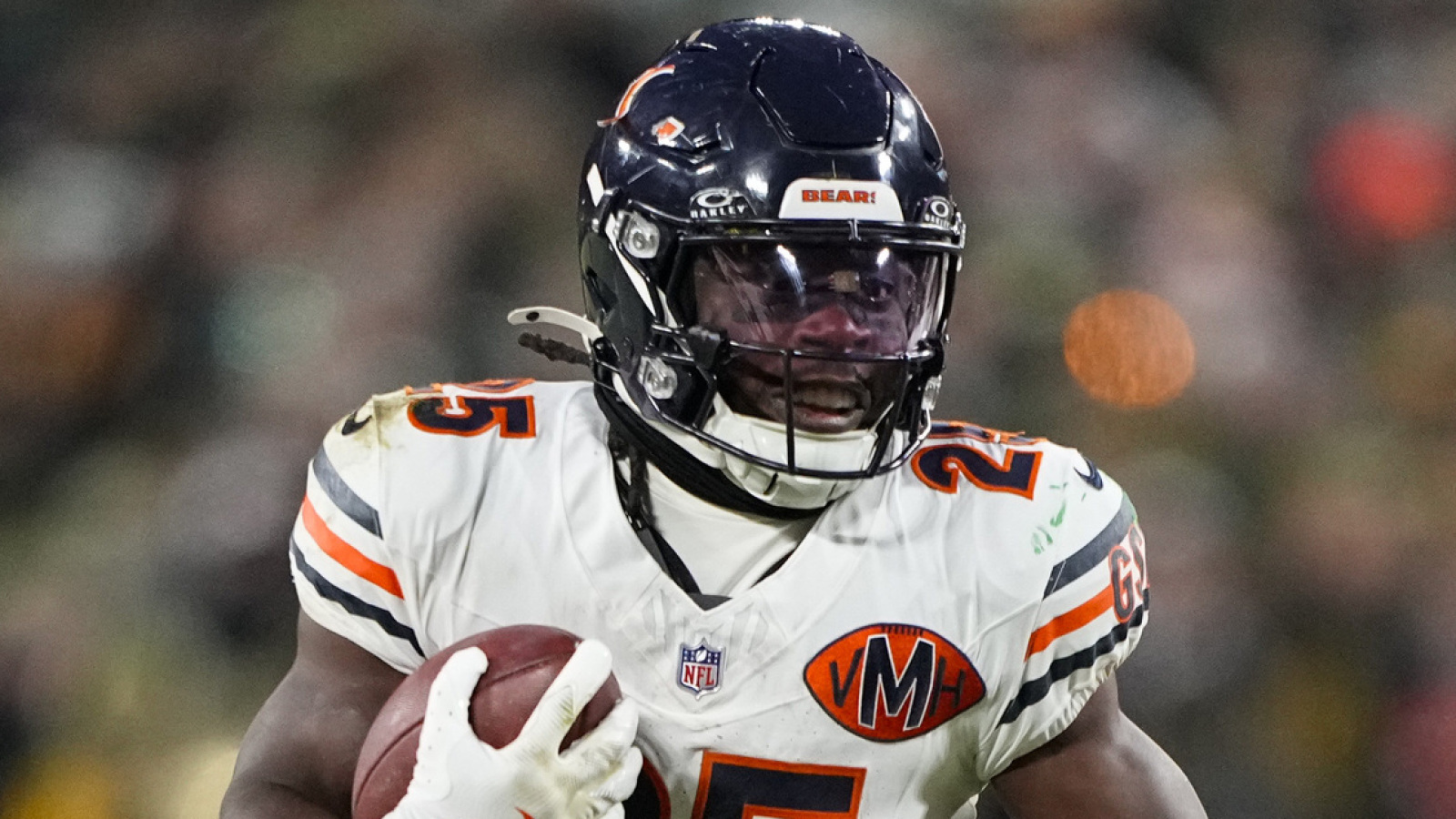
Source: Yard Barker. Casualplayhub News adds summary, context, and editorial framing while linking back to the original report.
The Chicago Bears dodged a significant bullet on Sunday when running back Kyle Monangai left training camp practice with what initially looked like a troubling knee injury. The 24-year-old, who serves as the team's No. 2 option behind D'Andre Swift, was seen grabbing his knee after a play and did not return to the field. However, the concern quickly turned to relief as early test results came back clean.
ESPN's Adam Schefter reported, citing team sources, that Monangai is believed to be fine. The preliminary tests showed no structural damage to his knee, though the Bears plan to perform a follow-up MRI to ensure nothing is overlooked. For a franchise that relies heavily on its rushing attack, this update was a welcome reprieve.
Monangai's role in the Bears' offense cannot be overstated. Last season, Chicago's ground game was among the league's elite, averaging 144.5 yards per game to rank third in the NFL. The one-two punch of Swift and Monangai proved devastating. Swift handled 223 carries, rolling up 1,087 yards at an average of 4.9 yards per touch, while Monangai chipped in with 169 carries for 783 yards and a 4.6-yard average. Together, they formed a tandem that wore down defenses and kept the chains moving.
Now entering his second season, Monangai was poised to potentially elevate his game. The seventh-round pick from Rutgers in the 2025 NFL Draft exceeded expectations as a rookie, showing power, vision, and the ability to break tackles. His physical running style complements Swift's elusiveness, giving the Bears a balanced backfield that opponents struggle to prepare for.
Even with quarterback Caleb Williams expected to take a leap forward in his development, Chicago's offensive identity remains rooted in the run. The Bears plan to employ a similar split to last season, with Swift as the primary ball carrier and Monangai providing a reliable change of pace. Any significant absence for Monangai would have forced the team to rely on unproven depth, potentially disrupting the rhythm of the entire offense.
The injury scare, while alarming at the moment, appears to have been a false alarm. Monangai's quick recovery and the clean test results allow the Bears to breathe easier as they continue preparations for the regular season. The team will likely manage his workload carefully in the remaining practices to avoid any setbacks, but the outlook is far brighter than it seemed on Sunday afternoon.
For a Bears team with playoff aspirations, keeping their run game intact is non-negotiable. Monangai's continued health will be critical as they look to build on last season's success and challenge for a top rushing title once again.
Article commentary
The Chicago Bears' brief scare with Kyle Monangai's knee injury serves as a stark reminder of how fragile a team's depth can be, especially at a position as physically demanding as running back. While the initial tests came back clean and the follow-up MRI is likely a formality, the incident highlights the Bears' heavy reliance on a two-back system that leaves little margin for error. Monangai's emergence as a rookie seventh-round pick was a pleasant surprise, but it also underscores the risk of depending on a relatively unproven player in a high-impact role. His 783 yards on 169 carries were impressive, but that workload came with minimal injury history at the NFL level. A single twist of the knee during a routine practice could have derailed an entire season's worth of planning. The Bears' coaching staff must now consider whether they have adequate contingency plans if Monangai were to miss time. Behind him, the depth chart is thin, and the team's rushing attack would suffer a noticeable drop-off. From a broader perspective, this incident also speaks to the evolving nature of the Bears' offense. With Caleb Williams under center, there is a natural temptation to shift toward a more pass-heavy approach. However, the team's success last season was built on the ground, and maintaining that balance will be key to Williams' development. A strong running game takes pressure off a young quarterback, opens up play-action opportunities, and controls the clock. Losing Monangai would have forced Swift to carry an even heavier load, potentially leading to fatigue and increased injury risk for the starter. Another angle worth examining is Monangai's own trajectory. Entering his second season, he has the chance to build on a promising rookie campaign. If he can stay healthy and improve his efficiency, he could become one of the league's more valuable complementary backs. The Bears' offensive line, which has been a work in progress, will also play a role in his success. The team's ability to run the ball effectively against stacked boxes will determine how much opposing defenses respect the pass. Ultimately, the Monangai injury scare is a valuable lesson in the importance of depth and preparation. The Bears got lucky this time, but they cannot afford to assume that fortune will always be on their side. As the season approaches, the front office should consider adding another reliable option to the backfield or investing in the development of younger players. For now, the team can move forward with confidence, knowing that their No. 2 running back is healthy and ready to contribute. The real test will come when the games count, and the physical toll of a 17-game season begins to mount.