Atlantic Division Center Power Rankings: Sharpe Steps Up
Source: SI NBA. Casualplayhub News adds summary, context, and editorial framing while linking back to the original report.
Ad eligibility review: sensitive-topic
The Brooklyn Nets shook up their roster this summer by trading beloved center Nic Claxton in a blockbuster three-team deal that netted Julius Randle. Claxton, one of the last links to the Nets' playoff era, now heads to Chicago, leaving a gaping hole in the middle. The organization will turn to Day'Ron Sharpe, a familiar face off the bench, to fill that void. Sharpe has spent six seasons developing his game in Brooklyn, but he has started only 21 games. Now, he must prove he can hold his own against a loaded Atlantic Division. Here is how the five starting centers stack up.
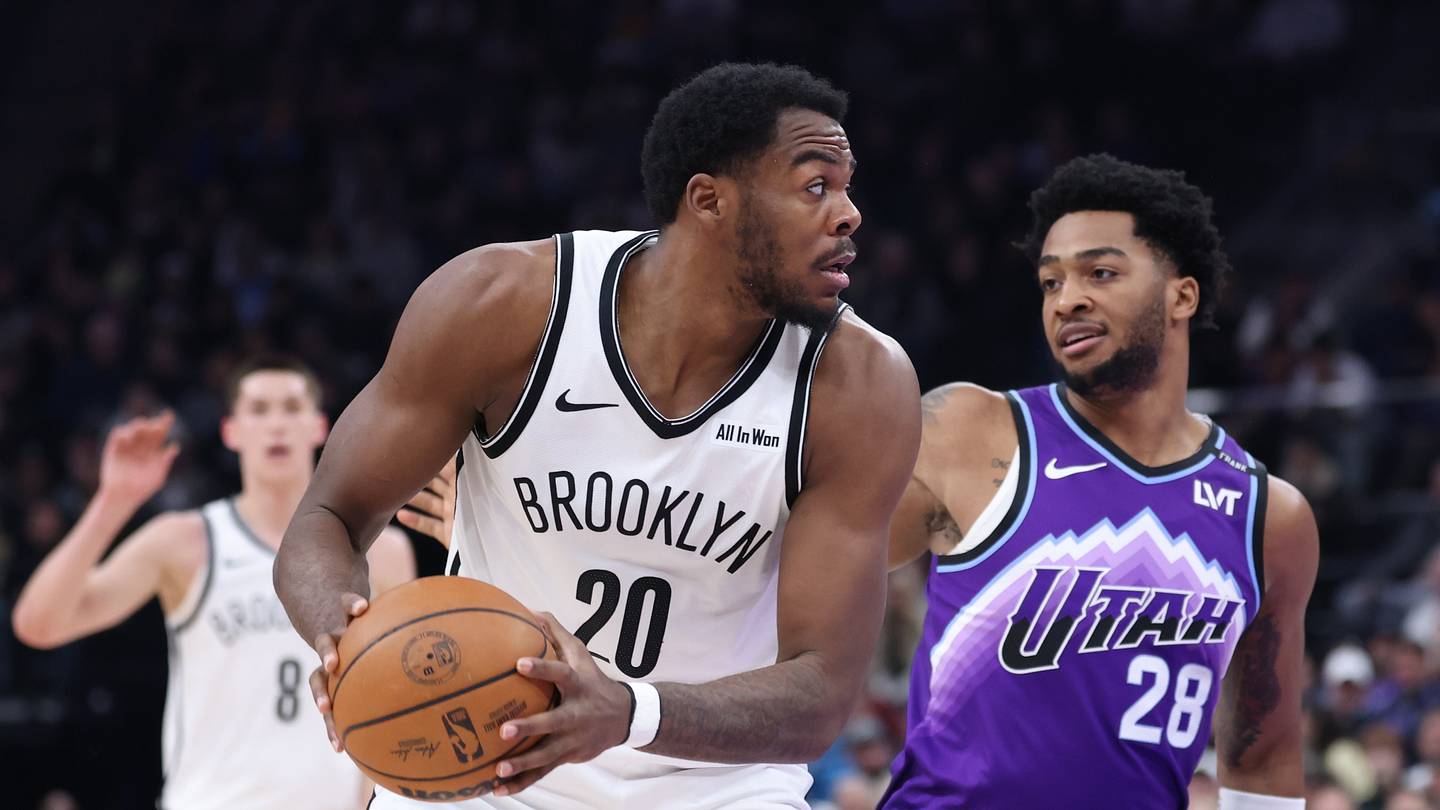
**5. Day'Ron Sharpe, Brooklyn Nets**
Last season: 8.7 points, 6.7 rebounds, 2.3 assists, 1.1 steals, 60.1% shooting.
Sharpe has shown steady growth as a reserve, expanding his offensive skills, improving his passing, and becoming a more reliable defender. He is not a rim protector—career 0.6 blocks per game—but he brings energy and a high motor. The challenge is whether he can sustain that production against elite competition every night. His offensive rebounding and soft touch around the basket are assets. The Nets are betting on his continued development, but he remains the division's biggest unknown.
**4. Neemias Queta, Boston Celtics**
Last season: 10.2 points, 8.4 rebounds, 1.3 blocks, 65.3% shooting.
Queta emerged as a surprise starter for Boston, earning 75 starts even after the team acquired veteran center Nikola Vucevic midseason. The Celtics valued his rim-running, screen-setting, and rebounding. He finished lobs effectively and provided a steady interior presence. With continued coaching, Queta can refine his game further. He is a reliable option on a championship contender, and his upward trajectory suggests he could climb this list.
**3. Jakob Poeltl, Toronto Raptors**
Last season: 10.7 points, 7.0 rebounds, 2.0 assists, 70.0% shooting.
Poeltl is the hardest player to evaluate. A few years ago, he was considered a fringe top-ten center, known for his defense and efficiency. But a chronic back issue has limited him to 46 games last season, and his effectiveness waned. He was even benched late in playoff games for a rookie. When healthy, Poeltl is a smart defender and a reliable finisher. However, the back problems cast a long shadow. His ranking reflects potential, but reliability remains a major concern.
**2. Karl-Anthony Towns, New York Knicks**
Last season: 20.1 points, 11.9 rebounds, 3.0 assists, 50.1% shooting.
Towns has always put up impressive numbers, but he solidified his legacy with a championship run last season. The 7-footer is an elite rebounder, a threat from beyond the arc, and plays with infectious passion. His defensive lapses are often overshadowed by his immense skill and basketball IQ. After winning a title, there is no debate about his status as a winner. Towns brings star power to the Knicks' frontcourt and is a legitimate top-tier center.
**1. Joel Embiid, Philadelphia 76ers**
Last season: 26.9 points, 7.7 rebounds, 3.9 assists, 1.2 blocks, 48.9% shooting.
Embiid remains the division's best center, despite persistent health concerns. He played only 38 games last season but was dominant when on the court, resembling his MVP form. In the playoffs, he led the 76ers to erase a 3-1 deficit against Boston. However, he has not topped 40 regular-season games since 2022-23. Philadelphia's hopes hinge on his availability for the postseason. When healthy, Embiid is the most impactful big man in the Atlantic, blending scoring, rebounding, and defense at an elite level.
The Atlantic Division boasts a mix of proven stars, rising talents, and injury-riddled question marks. Sharpe has the opportunity to climb, but he faces a steep learning curve. For now, the hierarchy remains clear: Embiid at the top, followed by a chasing pack of Towns, Poeltl, Queta, and Sharpe.
Article commentary
The Atlantic Division center rankings reveal a fascinating blend of star power, potential, and fragility. At the top, Joel Embiid remains the league's most dominant force when healthy, but his chronic unavailability is a persistent narrative that clouds Philadelphia's championship aspirations. The 76ers have built a roster around his health, yet the reality is that Embiid has missed significant time in three of the last four seasons. His playoff performance last year—leading a 3-1 comeback against Boston—shows what he can do, but it also underscores the risk: the team cannot rely on 38 games of regular-season dominance. Karl-Anthony Towns, now with the Knicks, offers a different kind of stability. His championship run last season reshaped his legacy, silencing critics who questioned his winning impact. Towns is a versatile offensive weapon who can stretch the floor and rebound at an elite level. His defensive limitations are real, but they are mitigated by his offensive production and the Knicks' system. He is a clear No. 2 in the division, and his durability gives New York a reliable anchor. Jakob Poeltl represents the division's biggest wild card. When healthy, he is a top-15 center, but his back issues have turned him into a liability. The Raptors are betting on his recovery, but the data is concerning: limited games, diminished impact, and being benched for a rookie in crunch time. Toronto's development of young big men may eventually push Poeltl down the depth chart. Neemias Queta is the surprise riser. The Celtics' faith in him over a veteran like Vucevic speaks volumes. Queta's game is not flashy, but his efficiency and defensive presence fit perfectly alongside Boston's star wings. He is a low-usage, high-impact player who could become a key piece in a contender's rotation. His ceiling is not as high as the top three, but his reliability is a major asset. Day'Ron Sharpe is the most intriguing question. The Nets are asking him to replace a fan favorite in Claxton, who was a defensive anchor and lob threat. Sharpe offers different strengths: better passing, improved scoring touch, and a relentless motor. However, he has never been a primary option, and his lack of shot-blocking could be exploited. The Nets' rebuild is in flux, and Sharpe's development will be a crucial storyline. If he can replicate his bench production as a starter, he could climb this list quickly. But the gap between him and the division's elite is wide. Overall, the Atlantic Division is a microcosm of the NBA's center landscape: a clear top tier, a middle class with injury risks, and emerging talents trying to break through. Health will be the defining factor for Philadelphia and Toronto, while Boston and New York have more stable options. Brooklyn's future hinges on Sharpe's ability to seize the moment.