Three Player Comparisons for Hawks' Kingston Flemings
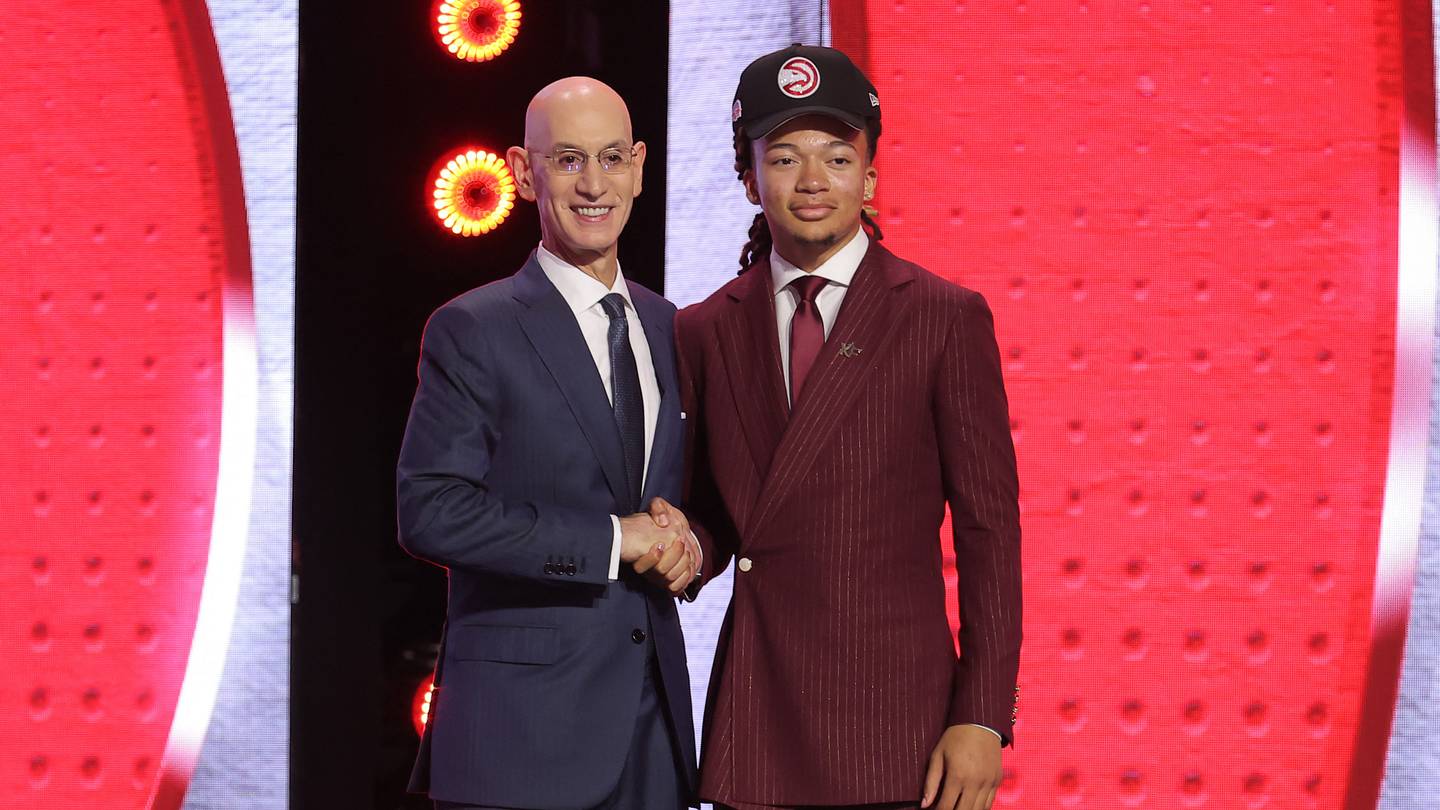
Source: SI NBA. Casualplayhub News adds summary, context, and editorial framing while linking back to the original report.
Ad eligibility review: sensitive-topic
The Atlanta Hawks entered the 2026 NBA Draft with uncertainty swirling around their plans. Would they trade up for a higher pick? Would they slide down and accumulate assets? In the end, the front office held firm at No. 8 and selected Houston point guard Kingston Flemings, a prospect whose blend of speed, vision, and scoring potential made him one of the most intriguing guards in a deep freshman class. Flemings arrives in Atlanta with All-Star aspirations, but the Hawks have a clear development path in mind: he will learn behind veteran CJ McCollum, provide punch off the bench, and eventually inherit the starting point guard role.
Player comparisons help frame expectations, even if they are imperfect. For Flemings, three distinct comps emerge—each representing a different level of outcome.
Floor: Cole Anthony. Anthony has carved out a solid career as a backup point guard. At his best, he is a below-average three-point shooter but a capable floor general who can run an offense. During Summer League, Flemings showed similar traits: he excelled at directing the offense and finding open teammates, but he struggled finishing at the rim and shooting from deep. Anthony's career numbers—34 percent from three, 41 percent from the field, and 3.8 assists per game—paint a picture of what Flemings might become at his absolute minimum. Nothing flashy, but a reliable rotation piece.
Median: Brandon Knight. For a time, Knight was a borderline All-Star point guard. His 2014–15 season with the Milwaukee Bucks saw him shoot 41 percent from three, though he often hovered between 30 and 35 percent in other years. Knight and Flemings share similar height and weight, and both played over a decade in the league. The key difference: Knight was a scorer first, while Flemings projects as a pass-first guard who prioritizes setting up teammates. If Flemings hits this median, he becomes a streaky yet productive starter—a player who can get hot and carry an offense on a given night.
Ceiling: Tyrese Maxey. The high-end comparison often thrown around for Flemings is De'Aaron Fox, but a more fitting—and more exciting—ceiling might be Maxey. Maxey has evolved into one of the NBA's elite guards, using his lightning speed to attack the rim, finishing with creativity, and stretching his range into a dangerous pull-up threat. He also defies his size with disruptive defense, ranking among the league leaders in steals. Is this outcome likely? Probably not. Even All-Stars can fall short of the loftiest projections. But if Flemings reaches his ceiling, he would be a dynamic transition scorer, a reliable three-point shooter, and a pesky defender—exactly the kind of star the Hawks envision.
Atlanta believes they have found a future cornerstone. The comparisons provide a roadmap, but the journey is Flemings' to write.
Article commentary
Drafting is an exercise in projection, and player comparisons serve as a useful shorthand for fans and analysts alike. The Hawks' selection of Kingston Flemings at No. 8 carries clear intentions: they want a long-term answer at point guard. The three comps offered—Cole Anthony, Brandon Knight, and Tyrese Maxey—cover a wide spectrum of outcomes, from rotational backup to perennial All-Star. But how realistic are these parallels, and what do they reveal about Flemings' game? Starting with the floor: Cole Anthony. Anthony's career has been marked by inconsistency, particularly from deep. He has never shot above 40 percent from the field in a season and has topped 35 percent from three only once. For Flemings, this comp underscores the risk of a guard who struggles to finish and shoot efficiently. However, Anthony's playmaking and leadership have kept him employed. If Flemings' shooting and finishing don't improve, he could settle into a similar niche—a capable backup who doesn't stretch the floor. That is a survivable outcome, but not what the Hawks invested in. The median comp of Brandon Knight is more optimistic. Knight's peak was genuine: during the 2014–15 season, he averaged 17.8 points, 5.4 assists, and 4.3 rebounds while shooting 41 percent from three. He was a borderline All-Star. But his career also illustrates the fragility of such a label. Injuries and inconsistency derailed him, and he never again reached that level. For Flemings, the Knight comparison suggests that his most likely outcome is a streaky, scoring-oriented guard who can be a starter but not a star. The key difference is Flemings' pass-first mentality, which might make him more reliable than Knight, who often forced shots. Finally, the ceiling: Tyrese Maxey. Maxey's transformation from a raw prospect to an elite guard is a testament to work ethic and system fit. His speed, finishing, and improving outside shot have made him a top-20 player. For Flemings to reach that level, he would need to develop a three-point shot that commands respect, become a crafty finisher in traffic, and prove he can defend without fouling—all while maintaining his playmaking. The odds are long, but not impossible. Maxey himself was a mid-first-round pick who exceeded expectations. What do these comps say about the Hawks' draft strategy? They are betting on development. Flemings' raw tools—speed, court vision, competitive spirit—are tantalizing. But the gap between his floor and ceiling is vast. The Hawks have a strong developmental track record and a veteran mentor in CJ McCollum. If Flemings can refine his shooting and decision-making, he could become a dynamic two-way guard. If not, he may be another Cole Anthony—useful but not transformative. Ultimately, the comparisons are frameworks, not prophecies. Flemings will write his own story. The next few years will reveal whether the Hawks landed a future All-Star or a serviceable backup. For now, the excitement is real, and the risk is worth taking.