Blazers Contract Rankings: Best to Worst Deals
Source: SI NBA. Casualplayhub News adds summary, context, and editorial framing while linking back to the original report.
Ad eligibility review: sensitive-topic
The Portland Trail Blazers have navigated a tumultuous offseason marked by a blockbuster trade involving a former All-Star, yet their financial landscape remains impressively balanced. With an active payroll of $191.8 million—19th in the NBA per Spotrac—the team operates $8.3 million below the luxury tax, $16.9 million under the first apron, and $29.6 million below the second apron. This cushion grants Portland full trade and buyout flexibility, along with a non-taxpayer mid-level exception worth over $15 million. The Blazers also hold a deep cache of future draft picks, making them attractive trade partners. However, not every contract on the 15-man roster is created equal. While no deal is truly terrible, a ranking emerges when considering trade value, on-court production, and market fairness.
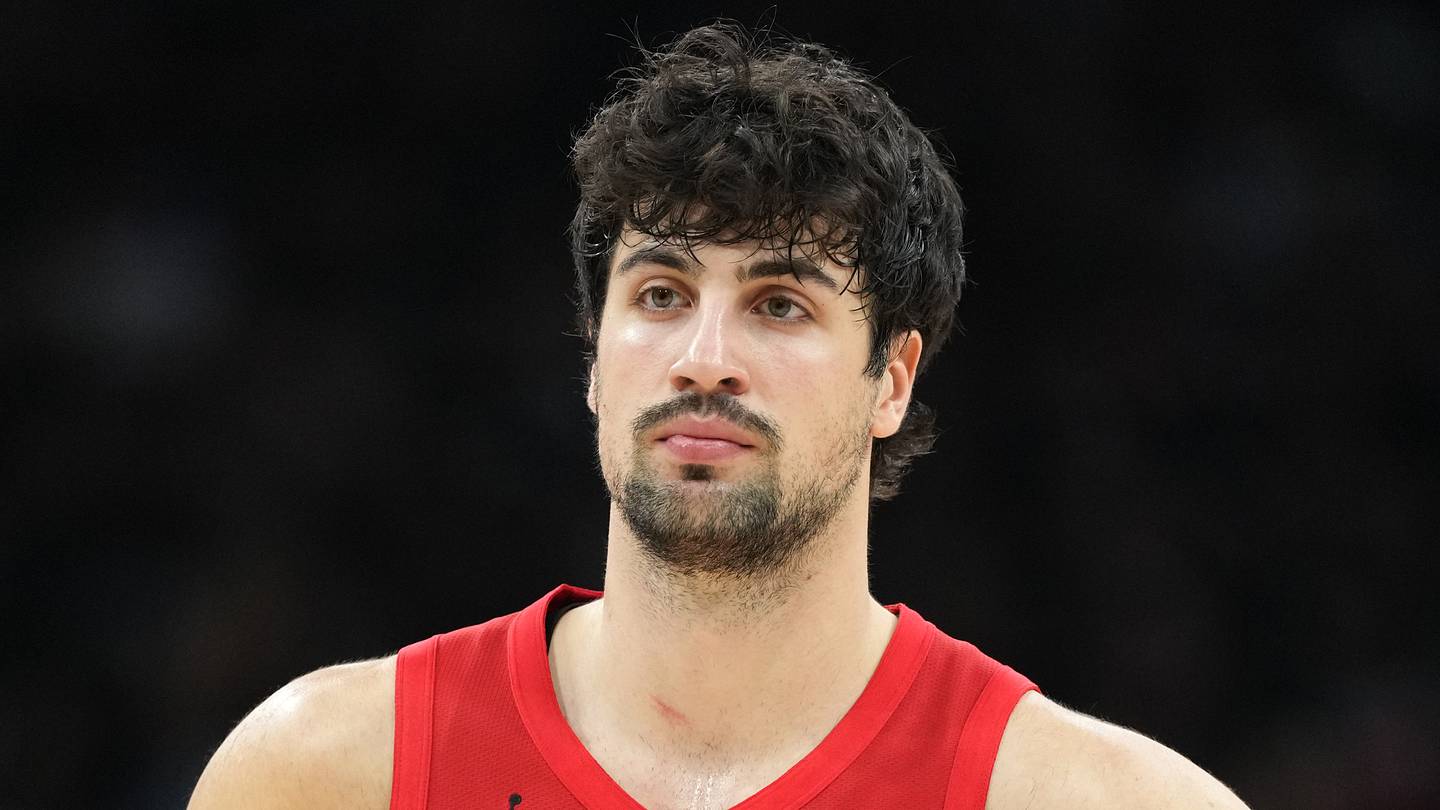
Deni Avdija stands as the crown jewel of the non-rookie contracts. After ascending to All-Star status last season, his $13.1 million salary for the upcoming year accounts for just 8% of the team’s cap. He is the eighth-highest-paid Blazer, yet earns less than Utah’s Darryn Peterson, the Lakers’ Luke Kennard, and Miami’s Nikola Jovic. Portland will eventually need to offer a major extension, but for now, they enjoy paying a cornerstone player a fraction of his worth.
Damian Lillard’s return to the Rose City is a feel-good story with financial logic. After the Milwaukee Bucks waived him and stretched his remaining $113 million, Lillard signed a three-year, $42 million deal with Portland. His $13.4 million salary this season is the lowest he’s earned since his fourth year. The nine-time All-Star holds a no-trade clause, but the Blazers are unlikely to move him. Even if his All-Star days are behind him, the price for one of the league’s premier shooters is a bargain.
Toumani Camara’s four-year, $82 million extension kicks in this year. The 6-foot-7 forward, a former NBA All-Defensive second-team selection, has missed only 12 games in his career and played all 82 last season. His contract is easily tradeable if needed, but his durability and defensive versatility make him an integral piece.
Donovan Clingan, the rookie center, is owed just $7.5 million this year. After averaging 12.1 points, 11.6 rebounds, 2.1 assists, and 1.7 blocks in 77 games, his production far exceeds his salary. His rim protection will be vital for a backcourt expected to struggle defensively.
Robert Williams III’s three-year, $44 million extension is a calculated risk. At his peak, the 28-year-old was an All-Defensive second-team selection, but injuries have limited him to 120 of 328 possible games over the past five seasons. Last year’s 59 games were his most since 2021-22. The contract reflects this: $14 million fully guaranteed this season, with the second year only $5 million guaranteed and the third year non-guaranteed. Both become fully guaranteed if he plays 50 games, a fair compromise.
Scoot Henderson’s situation is more uncertain. The former No. 3 pick has not lived up to expectations, and his $13.6 million salary is reasonable for a backup point guard. The Oct. 19 extension deadline looms; without a deal, he becomes a restricted free agent in 2027, giving Portland leverage.
Yang Hansen, the 7-foot-1 rookie from China, is a project. He played 43 games at seven minutes per night, and his contract is judged on potential, not production. Trading him would require selling that potential, a harder pitch.
Jrue Holiday, at 36 and entering his 18th season, commands $34.8 million—21.1% of the cap. He will handle perimeter defense alongside Camara, but his scoring will likely dip. He will probably pick up his $37.2 million player option for 2027-28, a hefty sum for an aging guard.
Ja Morant’s arrival via trade carries both excitement and risk. The former MVP candidate has played only 79 games over the last three seasons due to off-court issues and injuries. His $42.2 million salary this year is 25% of the cap. If healthy, he can be a transformative talent, but that’s a big if.
Shaedon Sharpe’s four-year, $90 million rookie extension was well-received, but after a torn meniscus in his right knee, he is likely to miss most of the upcoming season. He played just 50 games last year, and injuries have plagued his young career. The history of athletic guards with knee problems is a cautionary tale.
The remaining players—Micah Potter, Vit Krejčí, Sidy Cissoko, Branden Carlson, and Jeremy Sochan—fill out the roster with minimal fanfare. Their contracts are not bad, but they lack the upside to excite the fanbase. Portland has no terrible deals, but the hierarchy shows which assets are valuable and which are merely placeholders.
Article commentary
The Portland Trail Blazers have crafted a roster that balances financial prudence with competitive ambition. Their current salary structure reflects a team in transition—one that retains flexibility while building around a mix of veterans and young talent. The front office, led by general manager Joe Cronin, has avoided the albatross contracts that plague many franchises, instead opting for deals that can be moved, restructured, or absorbed without crippling the cap. At the top of the contract hierarchy, Deni Avdija’s deal is a masterclass in value. He is outperforming his salary by a wide margin, and Portland will eventually need to commit more money to him. But for now, his low cap hit allows the team to allocate resources elsewhere. Similarly, Damian Lillard’s bargain contract is a short-term win. At $13.4 million, he provides elite shooting and leadership, though his age (36) and no-trade clause limit long-term flexibility. The Blazers are betting that Lillard’s presence will help develop younger players like Scoot Henderson and Shaedon Sharpe. The risk-reward dynamic is most evident in the contracts of Ja Morant and Robert Williams III. Morant is a high-upside gamble—if he stays healthy and focused, he could be the best player on the team. But his injury history and off-court distractions make him a volatile asset. The Blazers are paying him $42 million this year, a significant chunk of cap space for a player who has played 79 games in three seasons. Williams, meanwhile, is a low-risk, medium-reward bet. His contract is structured to protect the team if he gets hurt again, but if he stays on the court, his defensive impact is worth the $14 million. Shaedon Sharpe’s extension is the most concerning. The 23-year-old has now suffered multiple knee injuries, and the history of guards with similar issues—think Derrick Rose or Brandon Roy—is sobering. Portland committed $90 million based on potential, but that potential is now in question. The team will need to manage his minutes carefully and hope modern medicine can preserve his athleticism. The bottom of the roster is filled with low-cost, low-risk players. Micah Potter, Vit Krejčí, and others are minimum-salary or near-minimum contracts that can be waived or traded easily. They provide depth without hampering the cap. Portland’s ability to stay under the tax and aprons while retaining the mid-level exception gives them room to make moves during the season, whether through trades or buyout market additions. Overall, the Blazers have positioned themselves for multiple scenarios. They can compete now if Morant and Lillard stay healthy, or they can pivot to a rebuild by trading veterans for assets. The contract rankings show that Portland has no bad deals, only varying degrees of risk and reward. The key will be execution—whether the players can stay on the court and produce. If they do, the financial flexibility will be a luxury. If not, the contracts are still manageable enough to avoid a long-term disaster. This is a team that has learned from past mistakes and is now playing a smart, patient game.