Hawthorne Race Course Sold for $90M, Racing Community Displaced
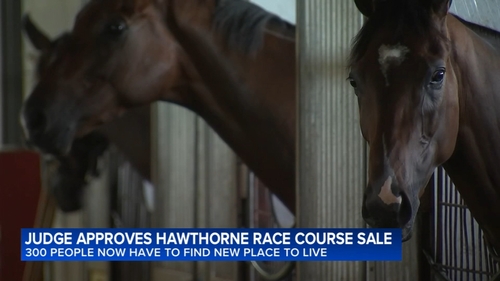
Edited by Casualplayhub News Editorial. Source: ABC 7 Chicago Sports. Casualplayhub News adds summary, context, and editorial framing while linking back to the original report.
Ad eligibility review: sensitive-topic
STICKNEY, Ill. — A federal bankruptcy judge has signed off on the sale of Hawthorne Race Course, a historic venue that has been a cornerstone of Illinois horse racing for decades. The property, located in the Chicago suburb of Stickney, was purchased by a Delaware-based entity for $90 million, a deal that effectively sounds the death knell for live thoroughbred racing in the northern part of the state.
The ruling, delivered on Monday, August 10, 2026, brings an end to a prolonged period of uncertainty for the track's employees, residents, and the broader racing community. The new owners have not disclosed specific plans for the 125-acre site, but they have made clear that racing will not continue. That reality has sent shockwaves through the community of roughly 300 people—many of them families with children—who live in the modest apartments above the stables, known as the backstretch.
For 18-year-old Arleth Roman, Hawthorne has been home for most of her life. She has lived at the track, and before that at Arlington Park, since she was five years old. Her parents work in the stables. After recently graduating from high school and planning to attend college, Roman now faces the added burden of finding a place to live. “It’s pretty sad over here. We have friends, family close to each other. Now everyone has to go,” she said.
Maya Heins, who is 14, faces a similar upheaval. She and her parents are preparing to move to Kentucky, where they hope to find work at another racetrack. “I’ve been here since I was four. It’s a really hard change. I made a lot of friends. It’s gonna be hard to go, but you can’t do anything about it,” Heins said.
The track’s owners had spent months trying to find a buyer who would keep Hawthorne operating as a racing venue. Those efforts ultimately failed, and last month the judge granted approval for the sale to the Delaware company, which intends to repurpose the land. The Illinois Thoroughbred Horsemen’s Association voiced deep frustration. “You’re uprooting a whole community. There’s a sense of closeness here. Everybody knows each other,” said George Moreno, a representative of the association.
For horse owners and trainers, the closure is a devastating blow to their livelihoods. Mena Perez, a horse owner, expressed resignation. “I’m not the only one whose life revolves around horses. And we’ve been trying to save this place. But there’s nothing more we can do,” she said.
The backstretch residents are especially vulnerable. Many of them have lived and worked at the track for years, but they lack formal rental histories or steady income documentation that landlords require. Sylvester Espinosa, one of the displaced workers, said he has been unable to secure housing because prospective landlords demand proof of income and rental history—neither of which he can provide. “I don’t know where I’ll go,” he said.
Despite the sale, Hawthorne’s owners have applied for racing dates for the upcoming season. They still hold the racing license and are hoping to partner with another venue to continue operations elsewhere. That possibility, however, offers little comfort for the families who must leave their homes by the end of the month.
Roman summed up the mood of the community: “It’s over now. It is what it is. I’m very sad.”
The sale of Hawthorne Race Course marks the end of an era for Illinois horse racing, which has already lost Arlington Park and now faces the loss of its last major track in the northern part of the state. The impact on jobs, housing, and the lives of hundreds of people will be felt for years to come.
Article commentary
The sale of Hawthorne Race Course is not merely a financial transaction; it represents the unraveling of a social and economic ecosystem that has sustained hundreds of families and a sport with deep roots in Illinois. The approval by a bankruptcy judge, while legally sound, highlights the stark tension between the letter of the law and the human cost of corporate restructuring. From a legal perspective, bankruptcy courts are tasked with maximizing value for creditors. In this case, the $90 million offer from the Delaware company satisfied that objective. The track’s owners had a duty to consider the highest bid, even if it meant scuttling racing operations. The judge’s decision follows standard practice, but it underscores the fragility of industries that rely on land use and zoning—especially when the land is valuable for alternative development. Economically, the closure of Hawthorne will have ripple effects beyond the 300 displaced residents. The track supported a network of trainers, grooms, veterinarians, feed suppliers, and local businesses in Stickney. The loss of racing in northern Illinois also means the state will forfeit tax revenue from pari-mutuel betting and related activities. The Illinois horse racing industry has been in steady decline, with Arlington Park closing in 2021 and now Hawthorne following suit. The state’s racing circuit, once vibrant, is now reduced to a handful of downstate tracks. Socially, the displacement of the backstretch community is a humanitarian crisis. These workers, many of whom are Latino immigrants, have lived on-site for years, often in substandard housing but with a strong sense of community. The lack of rental history and formal income documentation makes it nearly impossible for them to qualify for private rentals. Local governments and social services have been slow to respond, leaving families to fend for themselves. The stories of Arleth Roman and Maya Heins illustrate the personal toll: teenagers forced to leave their homes and friends, their futures uncertain. Culturally, horse racing has long been part of Illinois’ heritage. The loss of Hawthorne marks the end of a tradition that dates back to 1891. The track’s owners still hold a racing license, but finding a new venue is a long shot given the economics of the sport. Without a major track in the Chicago area, the sport’s infrastructure—training facilities, breeding programs, and fan base—will atrophy. The broader lesson is that communities tied to single industries are vulnerable to market forces and legal processes that prioritize creditors over people. Policymakers may need to consider stronger protections for on-site workers, such as relocation assistance or mandatory community impact assessments before large-scale sales. For now, the residents of Hawthorne are left with little more than memories and a sense of loss. As the dust settles, the question remains: Will Illinois horse racing survive in any form? The answer likely depends on whether the state can attract investment to build a new track or repurpose existing ones. But for the 300 people who called Hawthorne home, that question is academic. They are already packing their bags.