NFL Delegates Red Flag: Coaches Can Now Assign Challenge Duties
Edited by Casualplayhub News Editorial. Source: NBC10 Philadelphia Sports. Casualplayhub News adds summary, context, and editorial framing while linking back to the original report.
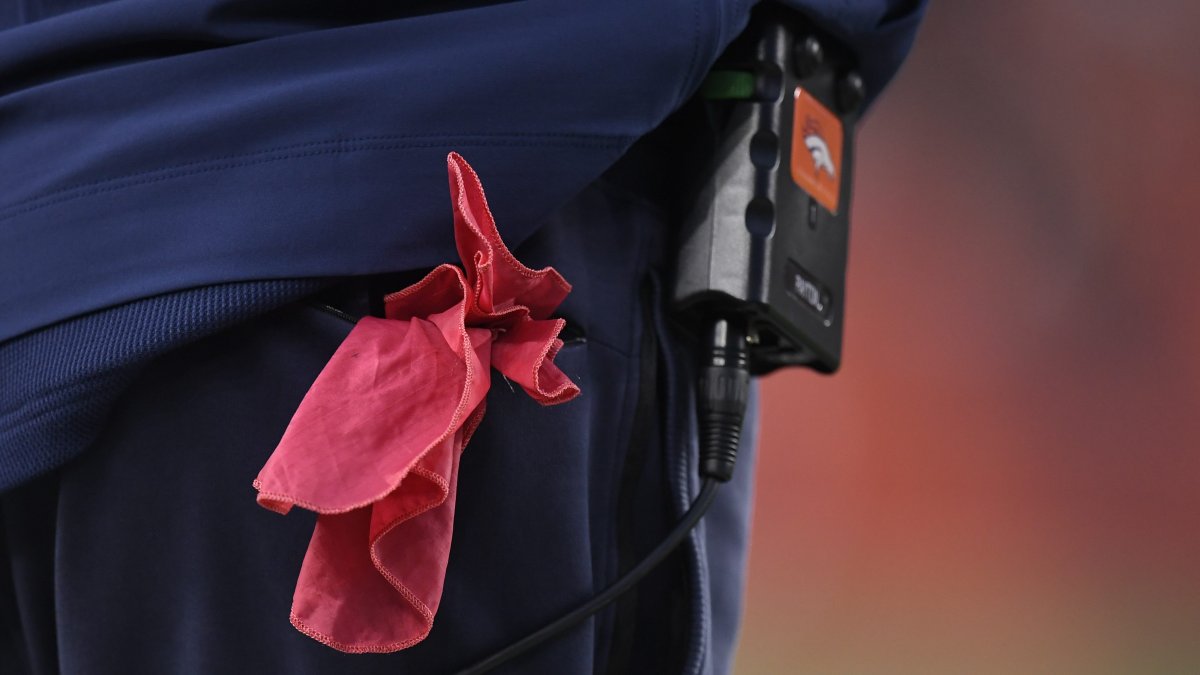
The NFL has quietly rewritten a long-standing rule, giving head coaches the flexibility to hand off the red flag to a trusted assistant. Since the advent of instant replay in 1999, only the head coach could toss the flag onto the field to challenge a call. But with the league's latest tweak to Rule 15 Section 1, that responsibility can now be transferred to a pregame designee.
The official language, found in Article 1 (a) of the rulebook, states: “The head coach or head coach’s pregame challenge designee can initiate a challenge by throwing a red flag onto the field of play before the next legal snap or kick.” If a head coach decides to delegate, he must inform the officiating crew before the game begins. The decision to challenge, however, remains a collaborative effort. Typically, the head coach consults with staff in the booth, weighing the risk and reward of using one of the team’s two allotted challenges. A third challenge becomes available if the first two result in overturned calls.
Replay reviews cover a wide range of scenarios: possession, whether a player or ball touched the ground, boundary calls, first-down determinations, and the number of players on the field. Certain plays—including all scoring plays, turnovers, failed fourth-down attempts, possession after a kick, and disqualifications—are automatically reviewed and cannot be challenged by teams.
The rule change arrives amid a flurry of other NFL developments. The league recently released its rankings of the highest-paid running backs ahead of the 2026 season, tracking a market that continues to shift. Teams have also unveiled new uniforms for 2026, with a gallery of fresh looks hitting the field. Meanwhile, the schedule for the upcoming season has been released, highlighting marquee matchups such as Seahawks-Eagles and Bills-Rams. The season will kick off with a Super Bowl rematch between the Seattle Seahawks and New England Patriots, a game that promises to set the tone for the year.
This adjustment to the challenge flag rule is subtle but significant. It acknowledges that the act of throwing the flag is a physical, sometimes distracting task that can be separated from the strategic decision-making process. By allowing a designee, the league hopes to reduce the risk of a coach fumbling the flag or losing focus during a critical moment. The change also aligns with the broader trend of delegating sideline responsibilities, as seen with quarterbacks receiving play calls from the sideline and coordinators handling game management.
Critics, however, worry that the new rule could lead to confusion. If a designee throws the flag without proper authorization, or if the head coach fails to communicate the delegation clearly, it could result in wasted challenges or even penalties. The league has not specified a penalty for an improper challenge, but the existing rulebook dictates that an incorrect challenge costs a timeout. The requirement to pregame-announce the designee could mitigate some of these risks, but it adds another layer of bureaucracy to an already complex process.
For now, the NFL appears confident that the change will improve efficiency without compromising the integrity of the review system. As the new season approaches, teams will have to decide whether to keep the flag in the head coach’s hand or pass it to a trusted lieutenant. The choice may seem small, but in a league where every second counts, even a split-second delay in throwing the flag can make the difference between a successful challenge and a missed opportunity.
Article commentary
The NFL’s decision to allow head coaches to delegate the challenge flag is a nuanced but meaningful shift in game-day operations. On the surface, it seems like a minor procedural tweak—after all, the head coach still retains ultimate authority over whether to challenge. But the change reflects a deeper evolution in how the league thinks about sideline management and the role of technology in the sport. Historically, the challenge flag has been a symbol of a head coach’s authority. The act of throwing it is often theatrical, a moment of defiance or hope. By allowing a designee, the NFL is signaling that the physical act of challenging is less important than the cognitive decision behind it. This is a logical step in an era where coaches are increasingly burdened with multiple responsibilities, from play-calling to clock management to player communication. Freeing them from the need to physically throw the flag could reduce distractions and improve focus on the game flow. There is also a strategic dimension. A head coach who is deeply engaged in calling plays or managing the sideline might not be in the best position to spot a replay-worthy moment. A designated assistant, perhaps a quality control coach or a video assistant, could be more attuned to the nuances of a disputed call. This could lead to more challenges being made, potentially increasing the accuracy of officiating. However, it could also lead to frivolous challenges if the designee is not properly disciplined. The risk of abuse is mitigated by the fact that challenges are limited, and each failed challenge costs a timeout. Comparisons to other sports are instructive. In the NBA, head coaches have long been able to delegate challenges to assistants, and the system has worked smoothly. In the NFL, the challenge flag has always been a head coach’s prerogative, but the league’s willingness to adapt shows a responsiveness to the realities of modern coaching. The new rule also aligns with the NFL’s broader push to streamline replay review, including the introduction of booth-initiated reviews for certain calls. One potential downside is the loss of a visible, authoritative moment. Fans and commentators often scrutinize the way a head coach throws the flag—was it decisive? Hesitant? Angry? That theater is part of the game’s drama. By delegating, coaches may reduce the emotional impact of a challenge. But the league likely prioritizes efficiency over spectacle. Another concern is the potential for confusion. The rule requires the designee to be named before the game, but what if a coach changes his mind mid-game? The rulebook does not explicitly address this, though it could be handled informally. Additionally, the designee must be a member of the coaching staff, not a player or equipment manager, which limits the pool of candidates. Overall, the change is a measured, sensible evolution. It acknowledges that the role of the head coach is too complex to be burdened with every procedural detail. The NFL’s challenge system remains one of the most robust in professional sports, and this tweak only strengthens it by optimizing the human element. As the 2026 season unfolds, it will be interesting to see how many coaches take advantage of the new rule and whether the designee system becomes standard practice or remains a niche option.