Bully Ray on Why Punk-Owens Feud Stands Apart
Edited by Casualplayhub News Editorial. Source: Wrestling Inc.. Casualplayhub News adds summary, context, and editorial framing while linking back to the original report.
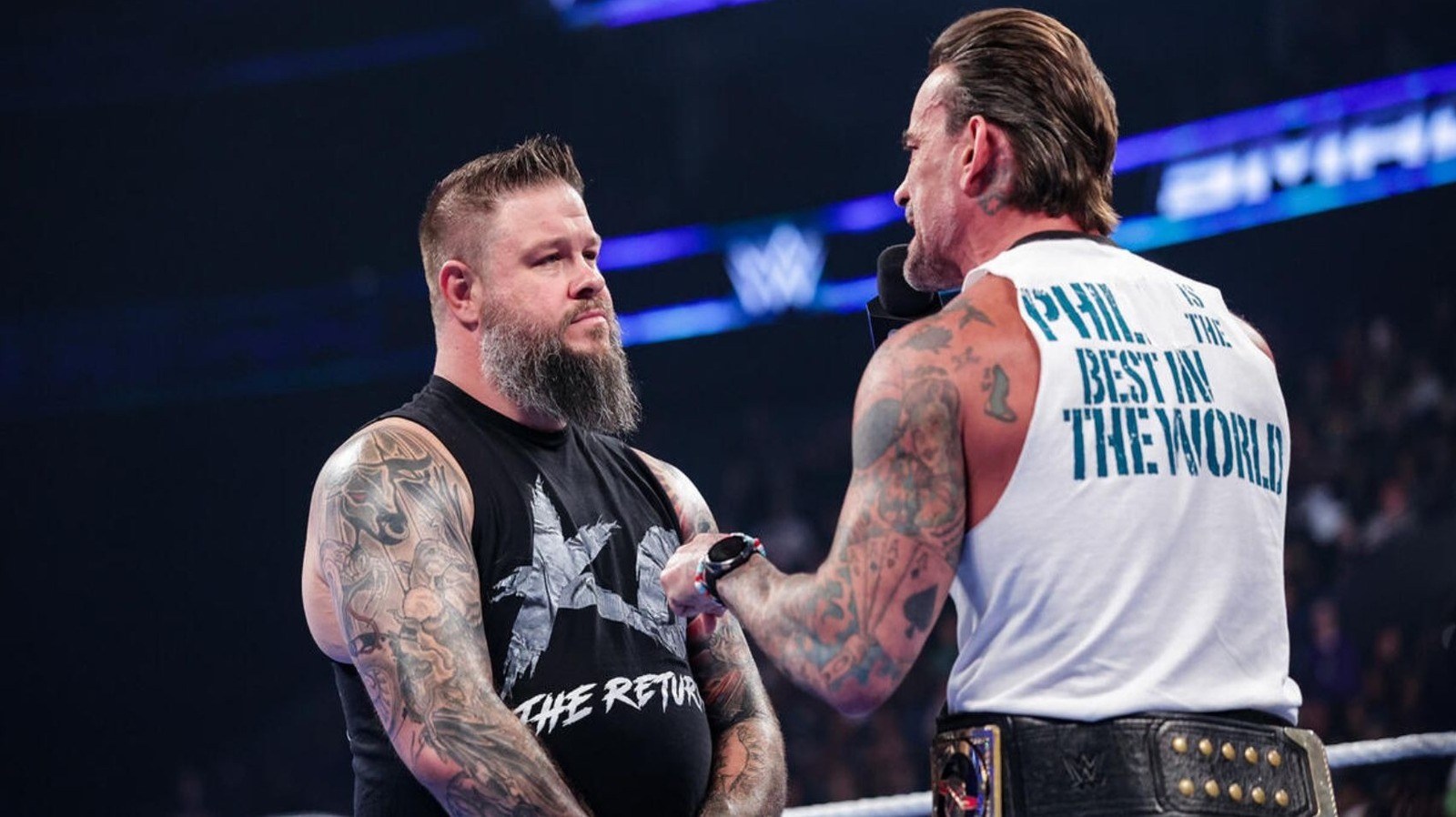
Since his long-awaited return to WWE in 2023, CM Punk has been locked in a series of high-profile feuds, but the one brewing with Kevin Owens feels fundamentally different. That is the assessment of Bully Ray, the WWE Hall of Famer and co-host of "Busted Open Radio," who broke down the unique chemistry between the two during a recent episode.
Ray’s argument rests on the premise that Owens has something no other recent Punk opponent has: firsthand knowledge of the man behind the character. The two crossed paths in Ring of Honor back in 2005, when Punk was still Phil Brooks, a hungry independent wrestler trying to make a name for himself. That shared history, Ray believes, gives Owens a psychological edge that no amount of rehearsed rhetoric can replicate.
“Everybody tries to recycle the same s*** with Punk about him leaving and it never really hits, but there is a certain way to do it,” Ray said on the show. “Kevin hit it from a different perspective without shining a light on it. He’s kind of doing it in such a subtle way, that if he does shine a light on it moving up in this story, in this feud, I think it will resonate and hit home more than Drew [McIntyre] saying it. More than Roman [Reigns] saying it. More than Seth [Rollins] saying it.”
Ray pointed to a specific moment during an episode of WWE Raw when Owens delivered a line that cut deeper than the usual insults. Owens told Punk he was happy he didn’t turn out like him. On the surface, it was a simple jab, but Ray argued the weight of the words came from the years of shared history. “He’s kind of doing it in such a subtle way,” Ray repeated, emphasizing that the best storytelling often happens in the spaces between the big moments.
Another detail that caught Ray’s attention was the commentary team’s deliberate choice to avoid discussing Punk and Owens’ past. “They mentioned they weren’t going to talk about the pair’s history, and I believe it will come up eventually,” Ray noted. That restraint, he said, is a sign that WWE is saving the deeper narrative layers for when the feud escalates.
Perhaps the most compelling observation Ray made was about Punk’s eyes. “There’s been two times in Punk’s career where when I look in his eyes, I can tell that he knows that the guy standing across from him can get the better of him,” Ray explained. “Kevin is definitely one of those two. Punk gets this certain look in his eyes, where there’s a little bit of hatred and concern, and it was definitely there with Kevin.”
Ray’s analysis suggests that the Punk-Owens feud is not just about wins and losses, but about psychological warfare rooted in a decade-old relationship. The rivalry is still in its early stages, but if the initial exchanges are any indication, it has the potential to become one of the most compelling storylines in WWE’s modern era. The tension is palpable, and as Ray put it, Owens is playing the long game, letting the history breathe before fully unleashing it.
For fans who have followed both men since their independent days, this feud carries an authenticity that is rare in the polished world of WWE programming. It is not just about two top stars competing for a championship—it is about two men who have known each other long before the lights got bright, and that difference is exactly what makes it feel so different.
Article commentary
Bully Ray’s dissection of the CM Punk versus Kevin Owens feud offers a compelling lens through which to view modern WWE storytelling. At its core, his argument highlights a fundamental truth about professional wrestling: the most memorable rivalries are built on real history, not just scripted conflict. Punk’s previous feuds since his 2023 return—against Drew McIntyre, Seth Rollins, and Roman Reigns—were all technically proficient, but they often relied on the same bullet points: Punk’s controversial departure from WWE, his AEW tenure, and his perceived arrogance. Owens, by contrast, has access to a deeper well of material because he was there when Punk was just another hungry kid on the indies. This distinction matters because it changes the emotional stakes. When McIntyre or Rollins attacked Punk’s character, they were targeting a persona. But when Owens references the time before the fame, he is touching the real person behind the leather jacket and the pipe bomb. That is why Ray’s observation about the look in Punk’s eyes is so resonant. For a performer as calculated as Punk, visible vulnerability is a rare gift to the audience. It signals that the story is not just a performance—it is personal. Ray’s commentary also serves as a reminder that the best wrestling storytelling often comes from restraint. The subtle digs, the unspoken history, the decision not to mention the past on commentary—all of these are deliberate choices designed to build anticipation. In an era where WWE sometimes over-explains its narratives, the quiet approach can be more effective. Owens is not screaming about Punk’s past; he is letting it simmer. That kind of patience is what separates a good feud from a great one. From a broader perspective, this feud also highlights the changing nature of WWE’s roster. With more wrestlers who have deep independent roots, the potential for such layered rivalries is greater than ever. Punk and Owens are not just colleagues; they are contemporaries who have walked parallel paths for nearly two decades. That level of familiarity cannot be faked, and it is exactly what makes their current story feel so raw. Bully Ray’s analysis is insightful because it identifies the emotional core of the feud before the fireworks have even begun. If the rivalry continues to build on this foundation, it could easily become the defining angle of Punk’s second WWE run. And for fans who appreciate the craft of wrestling storytelling, that is a promise worth watching closely.