Trump Declares Control of Strait of Hormuz, Seeks Iran Compensation
Edited by Casualplayhub News Editorial. Source: CBS News World. Casualplayhub News adds summary, context, and editorial framing while linking back to the original report.
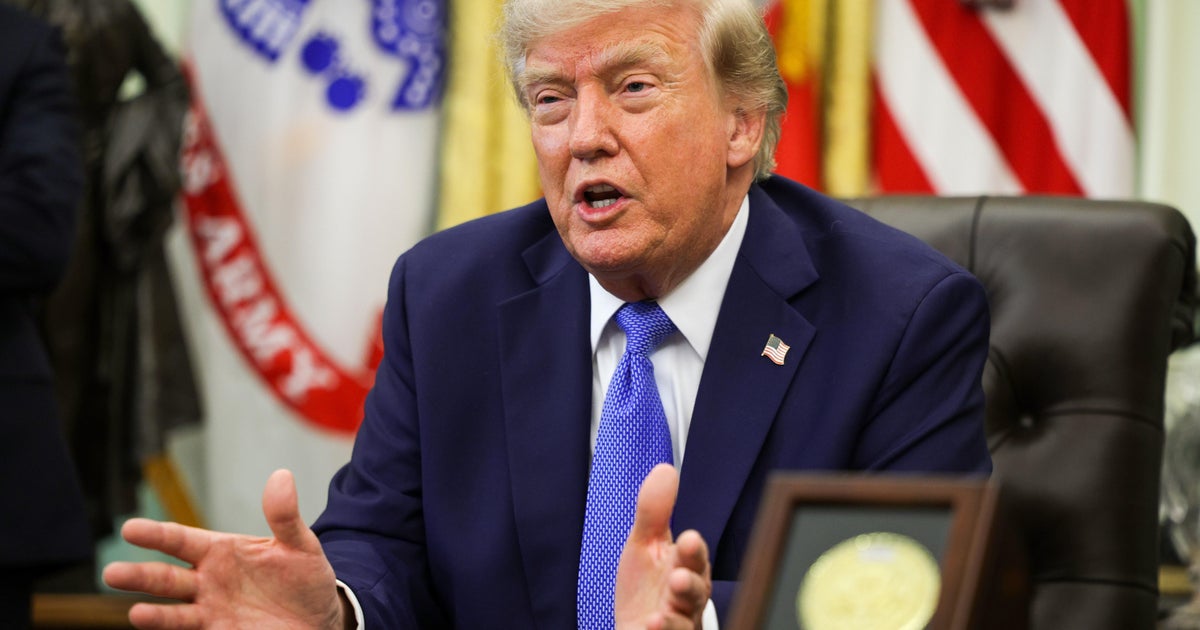
President Donald Trump escalated the rhetoric in the Iran-U.S. conflict on Monday, asserting that American forces have taken full control of the Strait of Hormuz, the narrow waterway through which about a fifth of the world’s oil passes. Speaking to reporters at the White House, Trump claimed the U.S. military now dominates the strait and demanded that Iran compensate the United States for the costs and damages incurred since the war began on February 28.
“We control the Strait of Hormuz, and they know it,” Trump said. “They have caused tremendous damage, and they should pay for it. Their economy is suffering because of this war, and they need to understand that.” The president’s statement echoed a key Iranian demand: Tehran has long insisted that the U.S. pay reparations for the destruction caused by the conflict. By flipping the script, Trump appears to be trying to pressure Iran into negotiations on American terms.
The Strait of Hormuz, located between Oman and Iran, is a vital artery for crude oil exports from Saudi Arabia, Iraq, Kuwait, the United Arab Emirates, and other Gulf states. Any disruption to shipping through the strait can send shockwaves through global energy markets. On Monday, oil prices surged 5% as traders reacted to the uncertainty. Benchmark Brent crude rose above $80 a barrel, while West Texas Intermediate climbed to $75.
The war, which started in late February, has seen both sides trade strikes and accusations. The U.S. has deployed additional naval assets to the region, while Iran has threatened to block the strait in retaliation. Trump’s claim of control suggests a significant military escalation, though independent verification is difficult. Pentagon officials did not immediately confirm the president’s statement, and analysts remain skeptical.
“This is a high-stakes bluff,” said Dr. Emily Rostami, a geopolitical analyst at the Middle East Institute. “The U.S. Navy has a strong presence, but full control of the strait would require a massive and sustained operation. It’s more likely a negotiating tactic.” Iran’s Foreign Ministry quickly dismissed Trump’s remarks as “baseless propaganda” and reiterated that the strait remains under Iranian influence. “The United States is not in a position to dictate terms,” a spokesman said. “We will not pay a cent for their aggression.”
The stalemate shows no signs of breaking. Economic data from Iran indicates a sharp contraction in GDP, with inflation soaring and the rial weakening. Trump pointed to these figures as evidence that his strategy is working. “Their economy is in ruins,” he said. “They have no choice but to come to the table.” Yet Iran’s leadership has shown no willingness to negotiate under pressure. Supreme Leader Ayatollah Ali Khamenei has called the war a “test of resilience” and urged the nation to endure.
On the ground, the conflict has claimed hundreds of lives, though exact numbers remain contested. The U.S. has reported no combat fatalities in recent weeks, but Iran has suffered significant military losses. Humanitarian organizations warn of a growing crisis, with civilians caught in the crossfire.
Market analysts are closely watching the Strait of Hormuz. Any disruption to tanker traffic could push oil prices even higher, threatening global economic recovery. The 5% jump on Monday was just a preview, some experts say. “If the stalemate persists, we could see prices spike by 20% or more,” said John Remington, an energy economist at Columbia University. “The Strait is the world’s most important oil chokepoint, and the U.S. claim of control is unprecedented.”
As the war drags into its third month, both sides are digging in. Trump’s demand for compensation is a sharp departure from previous U.S. policy, which had focused on sanctions and diplomatic isolation. By mirroring Iran’s own reparations demand, the president is attempting to shift the narrative. But Tehran appears unmoved. The standoff continues, with no end in sight.
Article commentary
President Trump’s claim of controlling the Strait of Hormuz and his demand for compensation from Iran mark a significant rhetorical escalation in the ongoing conflict. The move is striking not only for its boldness but also for its symmetry—Trump is essentially adopting the same logic Tehran has used to demand war reparations from the United States. This reversal suggests a strategic attempt to reframe the narrative, putting Iran on the defensive and forcing it to respond to American terms. From a geopolitical perspective, the Strait of Hormuz is one of the most strategically important waterways in the world. Any assertion of control over it carries immense weight, both militarily and economically. The 5% surge in oil prices on Monday reflects the immediate market reaction: fear of supply disruption. If the U.S. truly has the ability to dominate the strait, it could exert enormous leverage over global energy markets. However, the lack of corroborating evidence from the Pentagon or independent observers raises questions about whether this is a factual claim or a negotiating tactic. Historically, the United States has maintained a naval presence in the Persian Gulf but has not attempted to assert full control over the Strait of Hormuz. Such an action would risk direct confrontation with Iran, which has invested heavily in anti-access/area denial capabilities, including mines, fast-attack boats, and anti-ship missiles. The Iranian military has repeatedly threatened to block the strait in response to pressure, and any attempt to enforce control could trigger a wider conflict. Trump’s statement may therefore be more about psychological warfare than actual military posture. On the economic front, the demand for compensation is unlikely to be taken seriously by Tehran. Iran’s leadership has consistently framed the war as a defensive struggle against American aggression. Paying reparations would be politically untenable and would contradict the regime’s narrative of resistance. Moreover, Iran’s economy is already under severe strain from sanctions and the war itself. Demanding payment from a country that is struggling to meet its own needs seems unrealistic, unless the goal is to set a precedent for future negotiations. The deeper implications of this standoff extend beyond the immediate conflict. The Strait of Hormuz is a lifeline for global energy security, and any prolonged instability there could have cascading effects on the world economy. The 5% oil price jump is only a taste of what could happen if the situation deteriorates further. Major oil-consuming nations, particularly in Asia and Europe, are watching anxiously. They may be forced to pressure both sides to de-escalate, though so far diplomatic efforts have yielded little. Looking ahead, the stalemate appears entrenched. Neither side seems willing to back down, and the war has become a test of endurance. Trump’s latest comments may be aimed at rallying domestic support and projecting strength ahead of the upcoming election cycle. But the risk of miscalculation is high. A small incident in the strait—a ship being hit, a mine detonating—could quickly spiral into a broader confrontation. The international community should be wary of the volatility this situation creates. The Strait of Hormuz is not just a geopolitical chess piece; it is the pulse of the global oil market, and right now, that pulse is racing.