Trump Used Catering Truck to Stash From Iran Threat on Secret Flight
Edited by Casualplayhub News Editorial. Source: ABC30 Fresno World. Casualplayhub News adds summary, context, and editorial framing while linking back to the original report.
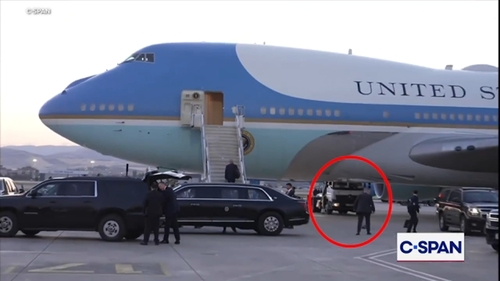
President Donald Trump reportedly orchestrated an elaborate ruse last month to hide his travel from Turkey to the United Kingdom, using a catering food truck and a secret military aircraft to dodge threats from Iran, according to a detailed account in The Washington Post. The operation, carried out without the knowledge of the traveling press corps and even some White House officials, involved a decoy flight on the older Air Force One jet while Trump himself was spirited away in a catering cart typically used for loading meals and beverages.
On July 8, Trump was seen boarding the aircraft, but the Post reports that after stepping aboard, he was transferred to the catering truck and then to a smaller military plane. The traveling press, who were told to keep their window blinds closed throughout the flight—a directive attributed to the Secret Service—had no idea the president was not on the same plane. The old Air Force One had its transponder turned off, further obscuring the operation.
At the time, Trump publicly stated he would not be flying on the newer Qatari-gifted Air Force One jet because he was sending it to a base in the UK so service members could tour it. ABC News had previously reported that Trump was advised against taking that plane due to security concerns amid escalating tensions with Iran. Sources told ABC that the Secret Service urged Trump to use the old Air Force One as a precaution.
Upon arrival in the UK, Trump was seen descending the stairs of the old plane to transfer to the Qatari-gifted jet. It remains unclear how he reboarded the old plane after that. Later, during the return flight to the US on the new Air Force One, Trump spoke with reporters. When asked if there were any security concerns surrounding the plane swap, he replied, "No, no." But when pressed about why reporters had to close their window blinds, he said, "Well, yeah, because you're probably on a dangerous flight because of the sleaze bags that we have to deal with."
The White House, in a statement to ABC News, said, "As the President has said recently, there are many enemies of America who have their sights on him, and we use every tool at our disposal to address those threats." The statement did not directly confirm or deny the specifics of the Post's report.
The episode underscores the lengths to which the administration goes to ensure presidential security, particularly in the face of threats from Iran. Iranian officials have in the past vowed retaliation for the US killing of General Qasem Soleimani in 2020, and the threat environment has remained elevated. The use of a catering truck as a decoy is reminiscent of tactics employed by world leaders to evade potential assassins, but it also raises questions about the transparency of presidential movements and the safety of those traveling with the decoy.
ABC News has not independently verified the details of the Post's story. The report adds to a growing list of instances where Trump's security details have taken extraordinary measures to protect him, often at the expense of public knowledge and press access.
Article commentary
The Washington Post's report on President Trump's use of a catering truck and secret military aircraft to evade Iranian threats during a July trip from Turkey to the United Kingdom is a striking example of how presidential security often operates in the shadows. The narrative—replete with a decoy plane, transponder turned off, and a press corps kept in the dark—reads like a spy thriller, yet it underscores a sobering reality: the commander-in-chief faces persistent, credible threats that require unconventional countermeasures. From a security perspective, the operation appears textbook. The US Secret Service and military aides regularly employ deception to protect dignitaries, and the Iranian threat is not hypothetical. Iran has repeatedly threatened retaliation for the 2020 drone strike that killed General Qasem Soleimani, and intelligence assessments have consistently warned of plots against American officials. In this context, using a catering truck to swap the president out of the public eye is a reasonable, if dramatic, step. The fact that the press was told to keep blinds closed—and that the old Air Force One's transponder was off—suggests a genuine concern about tracking or targeting. However, the report also raises troubling questions about transparency and accountability. The traveling press corps, who are expected to report on the president's movements, were essentially misled. While some level of secrecy is justified for security, the line between necessary deception and public misinformation can blur. The White House's statement—acknowledging "many enemies" but not addressing the specifics—leaves a gap that invites speculation. Critics might argue that such tactics, if confirmed, set a dangerous precedent for executive secrecy, especially when the president himself later denied any security concerns, only to contradict himself by calling the flight dangerous. Moreover, the episode highlights the unique challenges of covering a president who faces persistent threats. The press's role is to hold power accountable, but when they are deliberately kept in the dark, their ability to inform the public is compromised. The initial ABC News reporting noted that Trump was advised not to use the newer plane due to security concerns, yet he publicly dismissed those concerns until the Post's report emerged. This inconsistency feeds into a broader pattern of the Trump administration's opaque handling of security matters. From a geopolitical standpoint, the report reinforces the volatile nature of US-Iran relations. The fact that a sitting president felt compelled to engage in such a cloak-and-dagger operation speaks volumes about the depth of animosity between the two nations. It also raises questions about the effectiveness of broader security measures: if the president needed to hide his movements, what does that say about the perceived vulnerability of official travel? In the end, the Post's story is a compelling piece of investigative journalism that pulls back the curtain on presidential security. It offers a rare glimpse into the lengths to which the US government goes to protect its leader, but it also serves as a reminder that the line between security and secrecy is a fine one. The public deserves to know when and why such measures are used, even if the full details remain classified. The commentary from both sides is likely to be intense: security hawks will praise the ingenuity, while transparency advocates will decry the lack of openness. This report will fuel that debate for weeks to come.