Westbrook Retires: Presti Hails Thunder Icon's Legacy
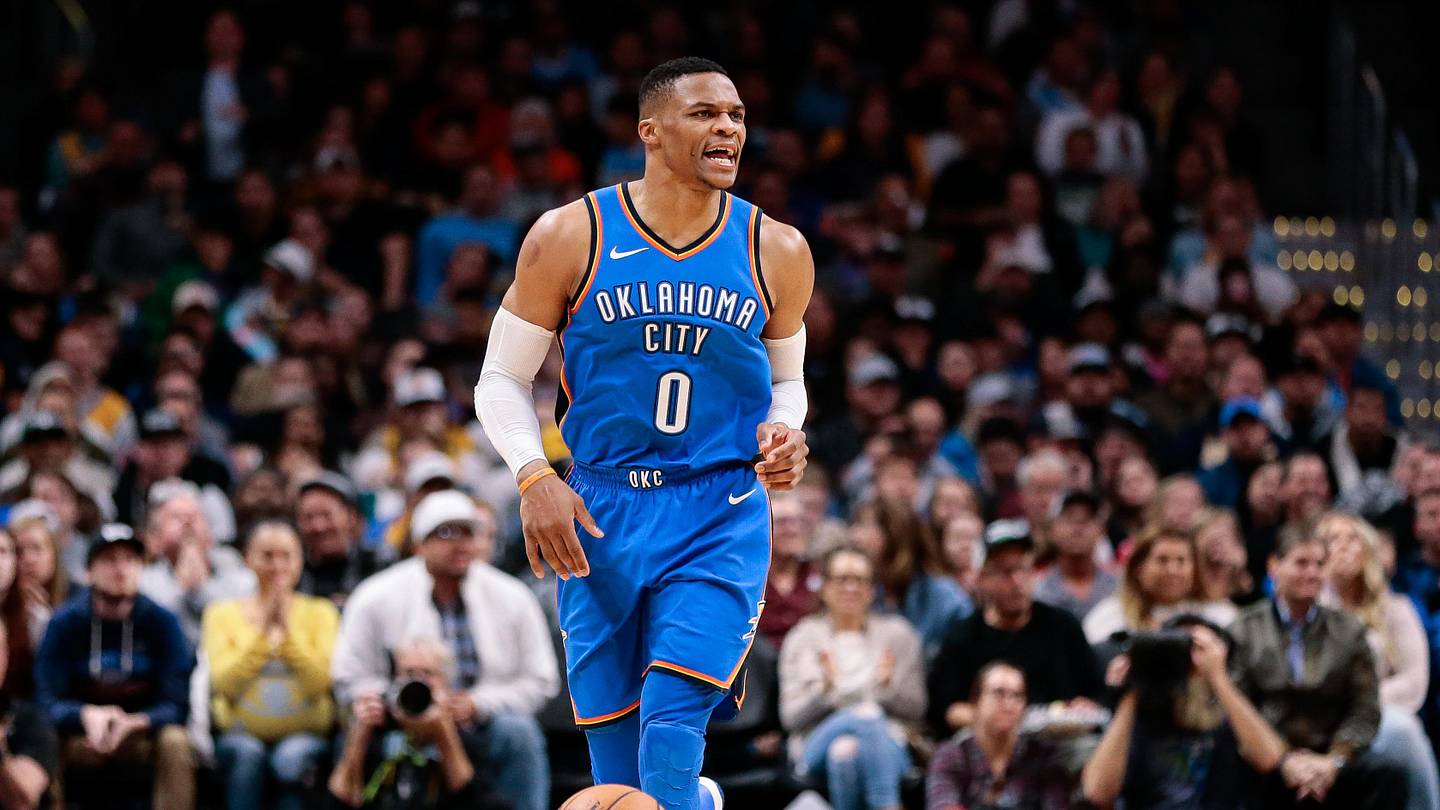
Source: SI NBA. Casualplayhub News adds summary, context, and editorial framing while linking back to the original report.
Wednesday afternoon brought a wave of emotion to Oklahoma City. Russell Westbrook, the franchise icon who defined the Thunder's identity for nearly two decades, announced his retirement from the NBA. The 18-year journey came to a close, but his legacy remains etched into the city's fabric.
Westbrook's prime unfolded in Bricktown, where he became the cornerstone of the Thunder organization. For many residents, he is not just a past favorite but the first and still current NBA player they hold dear. In Oklahoma City, he built a career that will land him in Springfield, Massachusetts, as a first-ballot Hall of Famer.
His statistical achievements alone are staggering. Westbrook averaged a triple-double four times in his career, an unprecedented accomplishment in the modern era. Three of those seasons came while wearing a Thunder jersey, making a routine out of what many thought impossible. He earned nine All-Star appearances and nine All-NBA selections, along with two scoring titles, three assist titles, and two All-Star Game MVP trophies. In 2017, he was named the NBA's Most Valuable Player, cementing his place among the game's elite.
But Westbrook's impact transcended numbers. He never captured a championship during his prime, yet he left an indelible mark on the communities he played in. In Oklahoma City, he remains a key figure even after retirement, involved in the new multi-purpose stadium set to open in 2028 for professional soccer and football in Bricktown. His philanthropic work—supporting libraries, revamping community projects, and earning a key to the city from Mayor David Holt—showed a commitment to the place that embraced him.
When Kevin Durant departed for the Bay Area in 2016, the Thunder were at a crossroads. Many wrote off the franchise, but Westbrook chose to stay. He steadied the team, becoming the face of a landlocked flyover city that had suddenly lost its star. His resilience gave the Thunder credibility, a rock to build around. That foundation eventually led to the championship season in 2025, a title built on the shoulders of the UCLA product.
After the retirement announcement, Thunder general manager Sam Presti released a statement. "Russell Westbrook is the ultimate competitor. His internal belief and unbridled fearlessness helped establish the foundation of our organization from day one in 2008 and he elevated the confidence and inspired our community in every year thereafter," Presti said. "Russell will be as successful in his life after basketball as he was during his career because his qualities and gifts transfer. His impact on our community is still felt today, and he is beloved for his devotion as much as his talent. He built a Hall of Fame career not by making statements or simply by breaking records, he did it by showing us all the power of asking one simple question: Why Not?"
Westbrook is already a member of the NBA's top 75 player list, and his jersey will soon hang in the rafters of the Paycom Center. The retirement marks the end of an era, but his legacy in Oklahoma City—and across the league—will endure for generations.
Article commentary
Russell Westbrook's retirement closes a chapter not just for the Oklahoma City Thunder, but for the NBA as a whole. His career arc is a study in defiance: a player who rewrote statistical norms, refused to conform to positional expectations, and wore his intensity on his sleeve. In an era increasingly defined by efficiency and analytics, Westbrook was a force of chaotic brilliance—a player who could win a game by himself or lose it with equal passion. What makes his legacy particularly compelling is the context of his prime. Westbrook's triple-double seasons were initially dismissed as stat-padding, but over time, the sheer consistency of his production forced a reevaluation. Averaging a triple-double four times—including three in a row—is not a fluke; it's a testament to relentless athleticism, court vision, and an unyielding motor. Yet statistics alone don't capture his impact. The 2017 MVP season, when he carried a depleted Thunder roster to the playoffs after Durant's departure, remains one of the most singular individual achievements in league history. But Westbrook's story is also one of loyalty and resilience. In an era of player movement, he chose to stay in Oklahoma City when the franchise was at its lowest point. That decision resonated deeply in a market that often feels overlooked. He became the embodiment of the city's identity: hardworking, proud, and unapologetically intense. The key to the city from Mayor David Holt was not just a ceremonial gesture; it reflected genuine community impact. His involvement in the new multi-purpose stadium shows that his commitment to Oklahoma City extends beyond basketball. Presti's statement perfectly encapsulates Westbrook's ethos: the "Why Not?" motto that defined his career. It's a phrase that rejects limitations, both on and off the court. For a franchise that started in 2008, Westbrook provided immediate credibility. He was the foundation upon which the Thunder's culture was built, and the 2025 championship—while achieved after his prime—owes a debt to the competitive standard he set. Critics will point to his playoff shortcomings, the lack of a title in his prime, and the sometimes reckless style of play. But to reduce Westbrook's legacy to championships is to miss the point. He was a transformative figure: a point guard who redefined the position, a community leader who gave back, and a player who brought joy to a city that needed a hero. The NBA's top 75 list is a permanent acknowledgment of his place in history. As Westbrook moves into the next phase of his life, his impact will continue. The jersey retirement, the Hall of Fame induction, and the memories of those triple-double seasons will keep his name alive. But for Oklahoma City, he will always be more than a player. He was the face of a franchise, a rock in turbulent times, and the answer to the question every small-market team asks: "Why not us?"