Padres' $3.9B Sale Seals Peter Seidler's Transformative Legacy
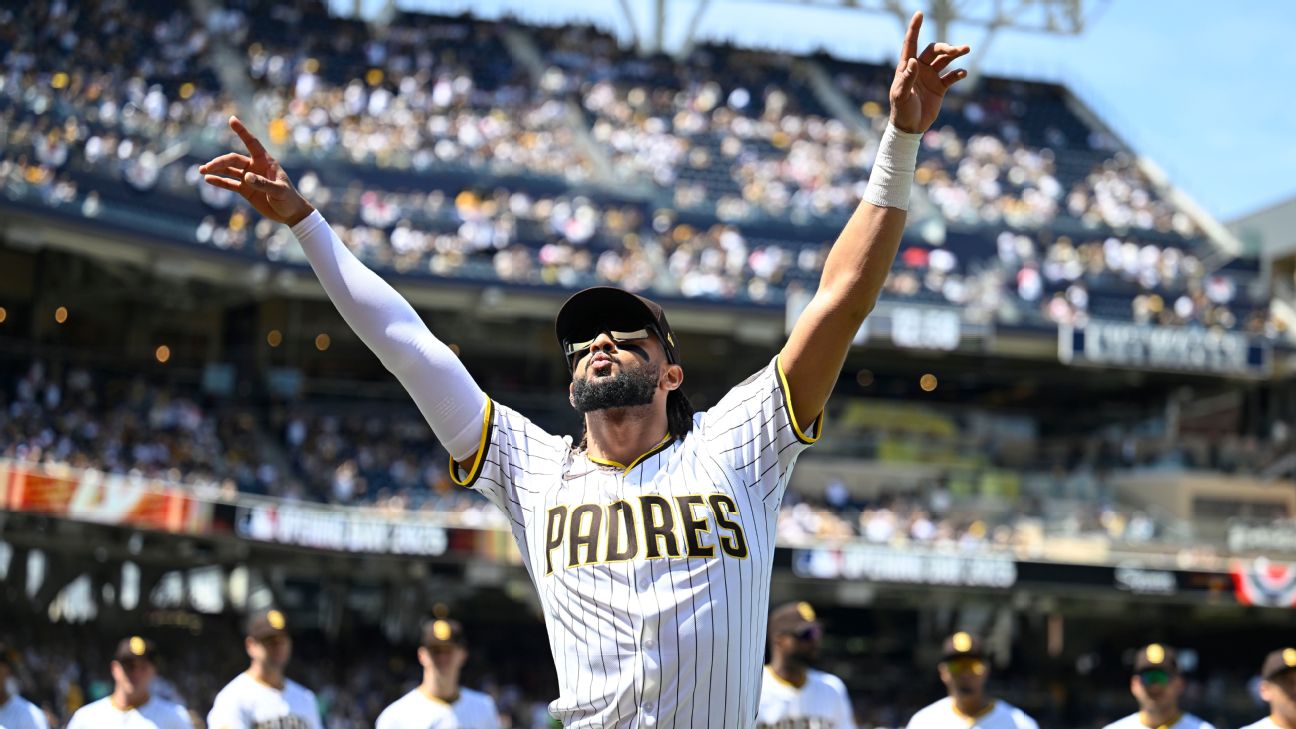
Source: ABC30 Fresno Sports. Casualplayhub News adds summary, context, and editorial framing while linking back to the original report.
The San Diego Padres are officially under new ownership. On August 17, 2026, MLB team owners unanimously approved the sale of the franchise to Jose Feliciano and Kwanza Jones for a staggering $3.9 billion, the highest price ever paid for a Major League Baseball team. The deal surpasses the previous record of $2.4 billion when Steve Cohen bought the New York Mets in 2020. For the Padres, a team that occupies a modest corner of the California media market, the valuation is nearly five times the $800 million the franchise fetched in 2012.
The sale is the culmination of a bold vision set by the late Peter Seidler, who died in November 2023 after a long battle with illness. Seidler, who co-owned the Padres alongside Ron Fowler, was determined to break a cycle of frustration that had long plagued San Diego sports fans. As general manager A.J. Preller recalled, Seidler often spoke about how the city's fans had seen star players come and go—traded away or lost to free agency—leaving the team to sink back into mediocrity. The Chargers had moved to Los Angeles in 2017, and the NBA's Clippers had left in 1984, deepening a sense of abandonment. But Seidler vowed to change the narrative.
“He was great to work for in that way,” Preller said. “He hired people to run baseball operations and then he listened to them.” Seidler never set a strict budget. Instead, he asked what was possible and let his front office explore options. That approach led to a series of bold moves that reshaped the franchise. In 2019, the Padres signed Manny Machado to a $300 million contract, stunning rival executives. Two years later, they locked up Fernando Tatis Jr. with a 14-year, $340 million deal. Then came Xander Bogaerts, Joe Musgrove, Yu Darvish, and a nine-year extension for Jackson Merrill. The payroll soared from $70 million in 2017 to $202 million in 2026, peaking at $249 million in 2023.
Critics called the spending “unsustainable.” But Seidler, who had twice survived non-Hodgkin’s lymphoma, pressed on. “He wanted to win,” Preller said, “and he wanted to win in an entertaining way.” The Padres made the playoffs for the first time in 14 years in 2020, then again in 2022, 2024, and 2025. They drew over 3 million fans for three consecutive seasons, ranking second only to the Los Angeles Dodgers in attendance. In 2024, the Dodgers acknowledged that the Padres were the toughest opponent they faced on their way to a World Series title.
Preller’s aggressiveness in the trade market defined the era. In 2022, he traded top prospects Mackenzie Gore, James Wood, and CJ Abrams for Juan Soto, then flipped Soto to the Yankees a year later for Michael King and others. The Padres also pursued Aaron Judge and Trea Turner, coming up just short but forcing the Yankees and Phillies to raise their offers. “At one point, nobody wanted to be a Padre,” Machado said. “Now, the players are lining up to come. Fans are lining up and the seats are being sold out. And it all started with his new dream.”
The new owners, Feliciano and Jones, inherit a team with a strong core and a culture of winning. They also assume significant financial commitments, including long-term contracts for Machado, Bogaerts, Musgrove, and Jake Cronenworth. But the foundation is solid. As one long-serving executive put it, “I never would have guessed they could do this. I don’t think anybody in baseball thought they could.” Seidler, who assured a reporter in 2022 that the Padres would be fine, was proven right. The sale completes his legacy: a small-market team transformed into a perennial contender, with a fan base that finally believes.
Article commentary
The $3.9 billion sale of the San Diego Padres is more than a financial milestone—it is a testament to Peter Seidler’s conviction that small-market teams can compete with the game’s giants. For decades, the Padres were a cautionary tale: a franchise that developed stars only to lose them, leaving fans with a persistent sense of déjà vu. Seidler shattered that narrative, not by following traditional baseball economics, but by rewriting them. He treated the Padres not as a small-market club but as a big-market team in disguise, leveraging the power of a passionate fan base and a beautiful ballpark to justify spending that many called reckless. What makes this story remarkable is that Seidler’s gamble paid off. The Padres didn’t just spend money; they built a winning culture. Attendance soared, and the team became a legitimate threat in the National League. The sale price—nearly five times the 2012 valuation—reflects that transformation. For comparison, the Mets sold for $2.4 billion in 2020, and the Los Angeles Dodgers were valued at $2.2 billion in 2012. The Padres’ $3.9 billion price tag signals that the franchise is now viewed as a premier asset, one that combines competitive success with long-term revenue potential. Yet the deal also raises questions about sustainability. The Padres’ payroll is high, and several key players are in their thirties with expensive contracts. A.J. Preller will need to balance the books, possibly by trading away younger talent or letting some veterans walk. The new owners, Jose Feliciano and Kwanza Jones, are inheriting a team that is at its peak value, but also at a potential inflection point. The margin for error is thin in a division that includes the Los Angeles Dodgers, who continue to spend heavily. Seidler’s legacy, however, is secure. He proved that ownership conviction can overcome market constraints. He refused to accept the narrative that San Diego could not support a championship-caliber team. In doing so, he changed the expectations of an entire city. The Padres are no longer a stepping stone for stars; they are a destination. The sale completes that transformation, but the real test now lies in whether the new owners can sustain the momentum Seidler built. For the fans, the hope is that this is not the end of a golden era, but the beginning of an enduring one. The $3.9 billion price tag is a number, but the real value is the trust Seidler restored—a trust that the Padres will always try to win.