Jericho Lifts the Lid on AEW's Creative Process and His Career Evolution
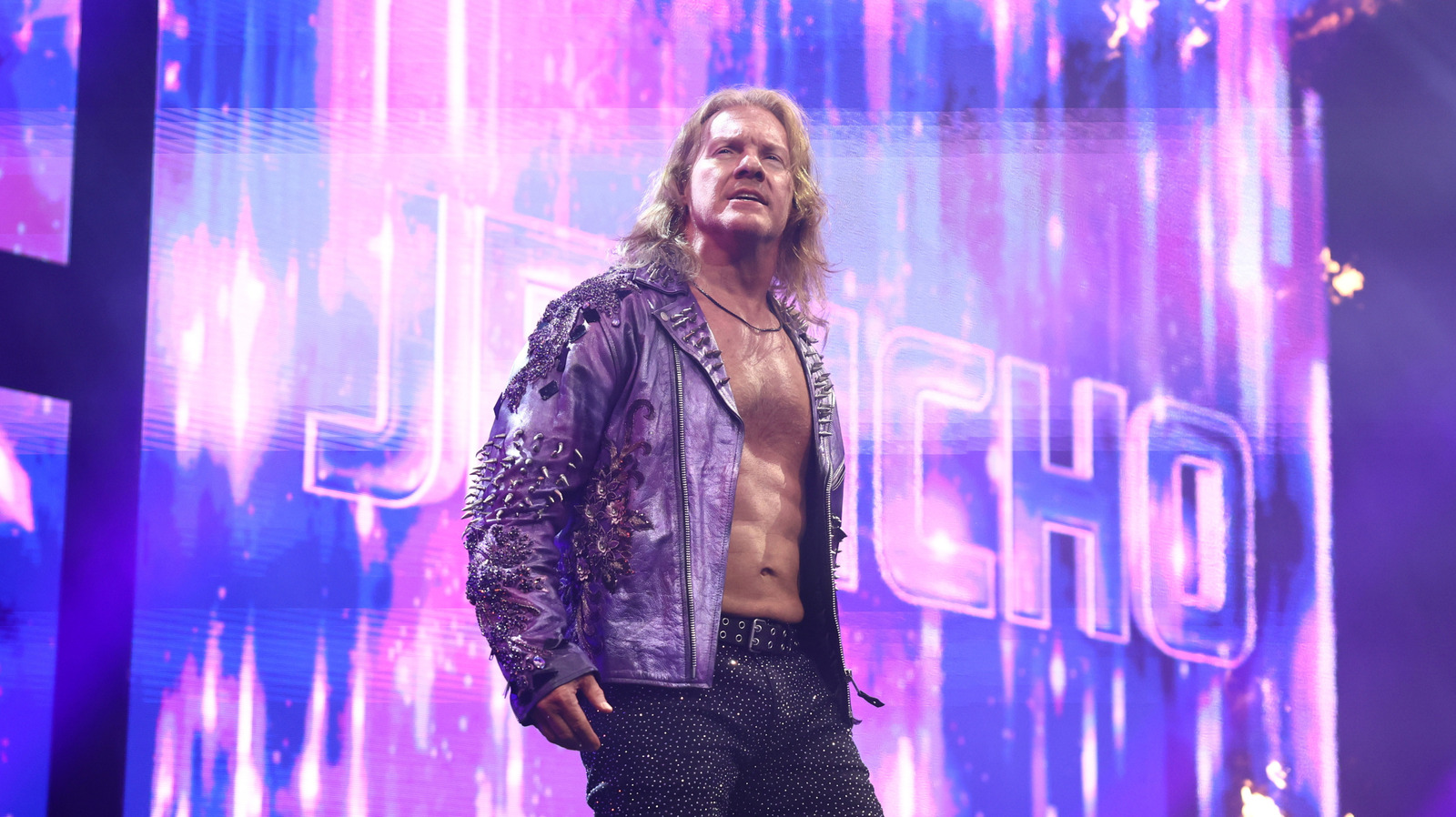
Source: Wrestling Inc.. Casualplayhub News adds summary, context, and editorial framing while linking back to the original report.
Chris Jericho has pulled back the curtain on his creative role in AEW, offering a detailed look at how he approaches his work in the company and what drives him at this stage of his career. Since his return to AEW Dynamite in April 2026, the veteran performer has been woven into numerous storylines, from a feud with Ricochet to the chaotic Stadium Stampede match at Double or Nothing, and most recently a program with TNT Champion Kevin Knight. Despite persistent rumors that he might head back to WWE before his reappearance, Jericho made it clear where his loyalties lie. In a conversation on Wrestling Observer Radio, he called himself a "company guy through and through" and stated that, contrary to popular belief, he does exactly what AEW President Tony Khan asks of him.
Jericho spoke openly about the creative process in AEW, particularly the challenge of developing younger talent in an era without house shows. "I want to work with as many people that I haven't worked with," he said. "There's a lot of young guys on the AEW roster that will never have the benefit of house shows... If you have a live match with somebody on TV, it has to be the best it can be with all the bells and whistles, because you might not get another chance to work with them. If you don't have a good one, it's going to hurt their perception. It's not going to hurt me, because I've been around long enough where you almost get kind of bulletproof." He added that he still aims for great matches and that most of the time things work out the way he wants.
Reflecting on his recent creative output, Jericho revealed that the idea to work with Kevin Knight originated with him, and he has enjoyed his matches with Ricochet and Tommaso Ciampa. "It's never about winning or losing, but those guys should be getting some good wins and good matches and getting some experience with how to do things maybe a little differently," he explained. "It really is fun for me to be back in AEW, because it is such a crazy huge roster."
Jericho believes AEW is experiencing a resurgence, generating significant buzz ahead of the All In event at Wembley Stadium. He noted that the roster is so deep with top-tier talent—names like MJF, Ricochet, and Ciampa—that he no longer needs to be at the center of the show the way he was when AEW first launched. "The roster is so massive," he said. "I could see so many matches and different combinations that you could have and guys you could work with. MJF... We had an angle that went over a year. That's pretty rare and it's pretty cool. There's guys, Ricochet and I did a couple months. Ciampa and I did a couple months. We could have done a couple months more, probably, but things move quicker now because there [aren't] house shows and we gotta keep going and keep the roster moving."
Looking ahead, Jericho listed several dream opponents he hasn't yet faced. He expressed a desire to wrestle CMLL's Hechicero and to have more matches with Andrade, whom he faced in the Stadium Stampede. He also mentioned the possibility of teaming with Ciampa or Ricochet, and continuing his work with Kevin Knight. "I could do something with Jack Perry," he said. "I could work with Mark Davis. I could work with Kyle Fletcher. I could work with the Rascalz. The Rascalz could be like my minions. You name it, that's the thing I've always said, whatever Tony wants me to do, I'm happy to do it." The interview underscores Jericho's adaptability and his commitment to elevating the next generation of AEW talent, even as he remains a key figure in the company's evolving landscape.
Article commentary
Chris Jericho's latest comments on AEW's creative process offer a revealing window into how a veteran performer navigates a promotion in transition. His assertion that he is a "company guy through and through" and follows Tony Khan's directives may surprise some fans who recall Jericho's earlier reputation for creative autonomy. Yet this stance is consistent with a wrestler who has reinvented himself multiple times over a three-decade career. By positioning himself as a utility player willing to work with anyone—from top stars like MJF to emerging names like Kevin Knight—Jericho demonstrates a rare blend of self-awareness and strategic generosity. The most striking insight from the interview is the acknowledgment of the absence of house shows and its impact on talent development. Jericho's observation that TV matches must be "the best it can be with all the bells and whistles" because there may be only one chance to work with a partner highlights a structural challenge unique to AEW and modern wrestling. Without the repetition of live events, chemistry must be built in high-pressure television slots, which can be a double-edged sword: it forces rapid innovation but also increases the risk of missteps. Jericho's willingness to take on that risk for younger talent speaks to his role as a mentor, even if he frames it in terms of his own bulletproof status. Another notable point is the shift in Jericho's position within the promotion. He openly acknowledges that he no longer needs to be at the top of the card, a luxury afforded by AEW's deep roster. This is a mature perspective from a performer who once carried the company as its first world champion. It also signals a healthy ecosystem where veterans can step back without feeling diminished, allowing new stars to rise. The mention of potential future opponents—Hechicero, Andrade, Jack Perry, Kyle Fletcher, the Rascalz—shows that Jericho is still invested in exploring fresh matchups, which keeps his character dynamic and relevant. However, some may question whether Jericho's ever-present role in storylines, even as a supporting player, could overshadow younger talent. The line between mentoring and monopolizing screen time is thin. Yet his emphasis on wins and losses being secondary suggests he is more focused on the process than the outcome. The fact that he specifically credits his feuds with Ricochet and Ciampa as mutually beneficial reinforces this. From a broader perspective, Jericho's comments reflect the ongoing evolution of AEW as it heads toward All In at Wembley. The company is attempting to recapture the momentum of its early years while navigating a larger roster and heightened expectations. Veterans like Jericho provide stability, but their willingness to adapt—and to publicly defer to Tony Khan's vision—is crucial for maintaining a cohesive creative direction. Whether AEW can sustain its resurgence will depend on how well it balances the contributions of its established stars with the development of its next generation. Jericho, for now, appears content to be a bridge between the two.