Knicks' Third Center Search Hits Snag as Moses Brown Heads to China
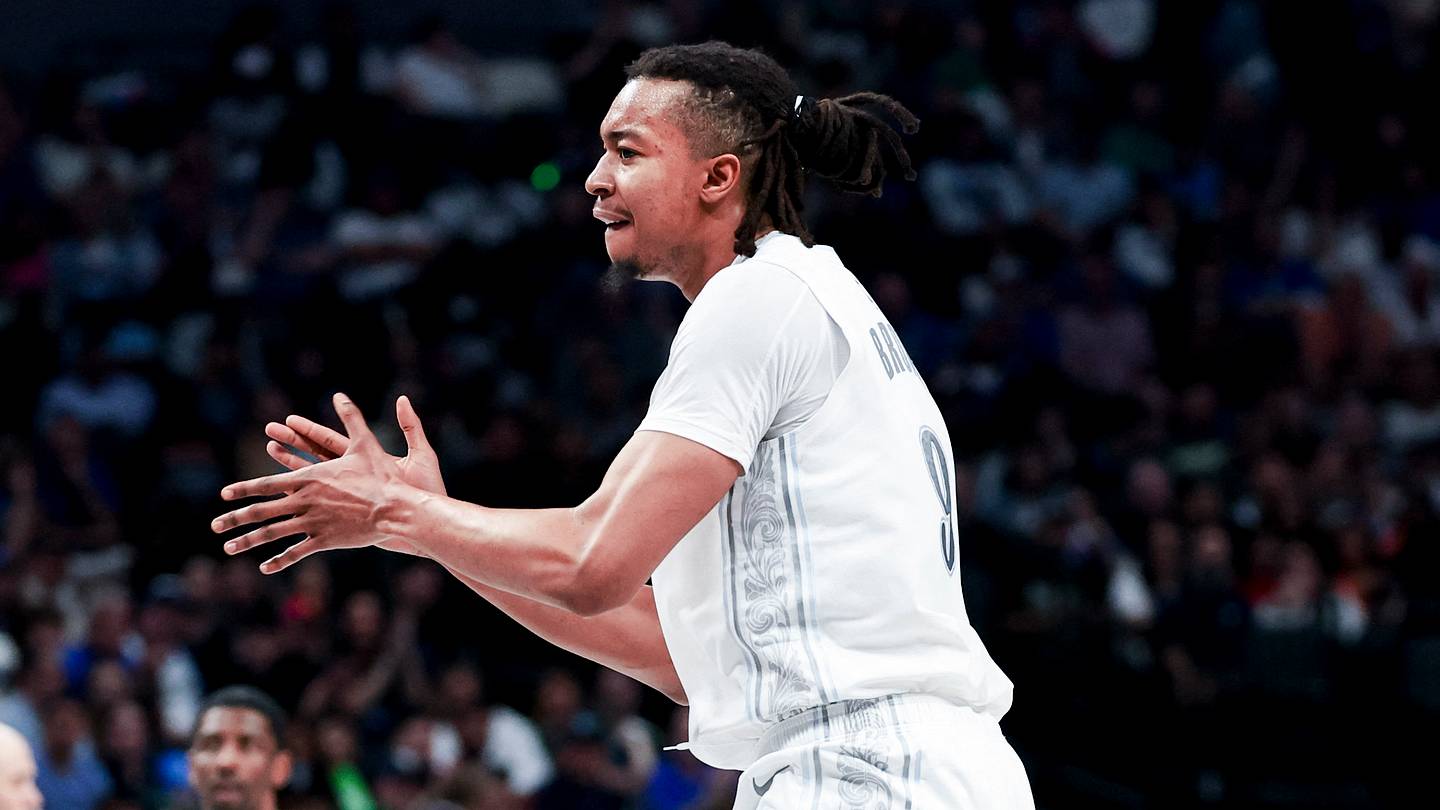
Source: SI NBA. Casualplayhub News adds summary, context, and editorial framing while linking back to the original report.
The New York Knicks entered the offseason with a clear question mark on their roster: who would fill the third center spot behind the reigning NBA champs' frontcourt tandem of Karl-Anthony Towns and Andre Drummond? Fans had hoped the team would address this through the draft—selecting a young big man—or by re-signing Ariel Hukporti, who spent time with the organization last season. Neither scenario played out. Instead, the Knicks signed Drummond as a free agent to serve as Towns' primary backup, leaving the third center role wide open.
Free agency, however, has been unkind to teams searching for big men at this stage. The pool of available centers is shallow, with names like Charles Bassey and Moses Brown representing the most realistic options—players with NBA and G League experience who could provide depth behind Drummond. But the Knicks must now cross Brown off their list. Last week, an Instagram post from ChnHoops reported that the 7-foot-2 center has inked a deal to play for Guangzhou in the Chinese Basketball Association.
For Knicks fans, the loss of Brown stings more than it might for the average team. The 26-year-old is a Queens native, having played his high school ball at Archbishop Molloy. He's no stranger to the Knicks' organization, either. Brown spent the 2024-25 season with the Knicks' G League affiliate in Westchester, New York, and also played for the franchise during the 2022-23 campaign. His recent stint with Westchester was impressive: 18.3 points and 16.8 rebounds per game across 26 contests. Those numbers, regardless of the league's level, demonstrate a rebounding prowess that could translate to a meaningful NBA role. Before heading to China, Brown was playing for Criollos de Caguas in Puerto Rico, where he averaged 17.9 points, 10.2 rebounds, and 1.6 blocks in 24.1 minutes per game.
With Brown off the board, the Knicks' front office, led by Leon Rose, must pivot to other options. One name that has been linked to the team for weeks is Nick Richards. The veteran center remains unsigned, which is a concerning sign—if he were a clear upgrade, another team would likely have snatched him up. Outside of Richards, the Knicks could explore James Wiseman, the former No. 2 overall pick whose career has yet to meet expectations. Another possibility is Liam Robbins, who showed flashes during the NBA Summer League with the Knicks last month. Robbins' size and shot-blocking ability could make him a low-risk, high-reward addition.
New York could also take a patient approach. The Los Angeles Clippers and New Orleans Pelicans are both loaded with frontcourt depth and will likely need to move a center before Opening Night. Waiting for a trade or a waiver-wire opportunity might be the most prudent path. The Knicks haven't made any two-way signings yet, which could be used to add a young big man to the roster. As training camp and the preseason draw closer, the team's decision at the third center spot will become a focal point for fans and analysts alike. Brown's departure to China may have closed one door, but others remain open—and the Knicks will need to walk through one soon.
Article commentary
The Knicks' search for a third center reveals a deeper tension in roster construction: the balance between proven talent and developmental upside. New York's championship window is open, and the front office has prioritized established names like Karl-Anthony Towns and Andre Drummond to anchor the middle. Yet the third center role, often overlooked in the regular season, becomes critical in the playoffs when foul trouble and injuries test depth. Moses Brown, despite his G League pedigree, represented a potential low-cost solution. His rebounding numbers—18.3 points and 16.8 boards per game—are impossible to ignore, even if they came in the minor leagues. His familiarity with the organization and local roots made him a sentimental favorite, but basketball is a business, and a guaranteed contract in China likely offered more financial security than a training camp invite. From a strategic standpoint, the Knicks' reluctance to sign a third center early suggests they are either waiting for a more impactful move—perhaps a trade involving a team with a surplus of bigs—or they are confident that Drummond can handle the lion's share of backup minutes. Drummond, however, has been inconsistent in recent years, and his minutes have declined. Relying on him as the sole backup to Towns is risky. The Knicks could also look internally, using two-way slots to develop a young player like Liam Robbins, who showed promise in Summer League. But rookies rarely contribute meaningfully in a playoff rotation. The broader market dynamics are also at play. Teams like the Clippers and Pelicans have multiple big men and might be forced to make a move before the season starts. If the Knicks can snag a veteran like Nick Richards on a minimum deal, they would add a proven rebounder and rim protector without sacrificing future assets. James Wiseman, on the other hand, is a wild card—his talent is undeniable, but his development has been derailed by injuries and inconsistent play. A change of scenery might unlock his potential, but expecting a reclamation project to stabilize a championship rotation is a gamble. Ultimately, the Knicks' third center search is a microcosm of a larger challenge: how to maintain depth while keeping the salary cap flexible. The team has positioned itself as a contender, but small holes in the roster can become gaping against elite competition. Brown's departure to China is a reminder that the NBA's global talent pool offers alternatives, but it also shrinks the domestic market. The Knicks would be wise to act decisively before training camp, because every missed rebound or foul-out in a key game will be traced back to this decision. Leon Rose and his staff have earned trust with their recent moves, but this particular puzzle piece remains unsolved.