FIFA Slams UEFA’s ‘Smear Campaign’ Over Failed World Cup Stake Sale
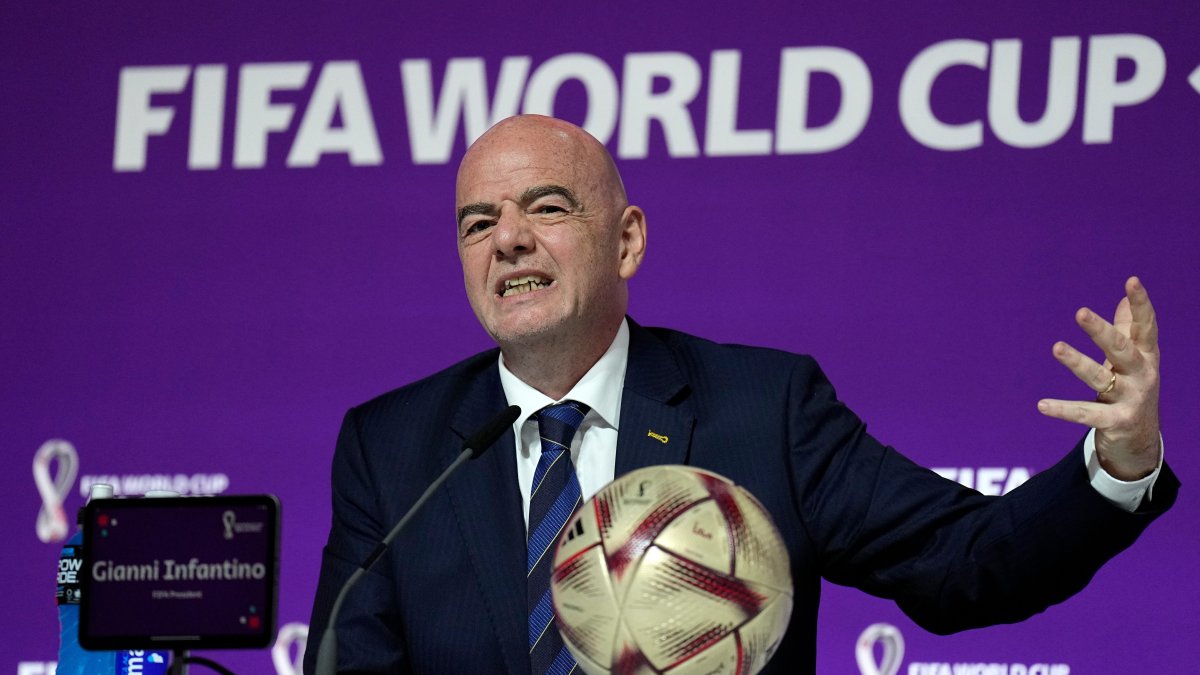
Source: NBC DFW Sports. Casualplayhub News adds summary, context, and editorial framing while linking back to the original report.
The simmering conflict between world soccer’s governing body and its European counterpart erupted into a legal battle this week, as FIFA formally accused UEFA of pursuing a “smear campaign” over a failed proposal to sell stakes in the World Cup. The accusation came in a motion filed Thursday in U.S. District Court in Colorado, where FIFA asked the court to defer or dismiss discovery requests submitted by UEFA just days earlier.
The dispute centers on a plan known as FIFA Forward Enterprise (FFE), a proposal championed by FIFA president Gianni Infantino to sell minority stakes in the World Cup and other competitions to private equity investors for $4.2 billion. The plan was made public in late July but met with immediate and fierce opposition from European football federations, leading FIFA to withdraw it on August 1.
UEFA’s legal strategy involves three separate discovery requests filed in U.S. federal courts. One, filed in the Southern District of New York, seeks documents from Josh Kushner and his investment firm Thrive Capital Management. Kushner, the younger brother of Jared Kushner—former President Donald Trump’s son-in-law—was a key player in the FFE proposal. Another request was filed in Florida, where FIFA operated its 2026 World Cup logistical base, and a third in Colorado, targeting Greg Maffei, an adviser to Infantino and former CEO of Liberty Media.
In its Thursday filing, FIFA dismissed these legal maneuvers as thinly veiled public relations efforts. “While these applications are styled as legal pleadings with captions and docket numbers, they are little more than press releases in further support of UEFA’s smear campaign against FIFA and its leadership,” the organization argued.
UEFA’s discovery requests are part of a broader push to build a criminal case against Infantino. The European body has stated in court documents that it is preparing a criminal complaint in Swiss courts, alleging possible financial mismanagement related to the FFE proposal. UEFA’s lawyers painted the plan as a self-serving venture. “Infantino claimed that the plan would ‘unleash the commercial potential and opportunity that FIFA has,’” they wrote. “In truth, it was a vehicle for Infantino and that small circle to acquire a permanent stake in and otherwise profit from FIFA’s most valuable assets to the detriment of FIFA, its members, and other parties within the football family.”
FIFA countered that UEFA’s discovery request “suffers from a fundamental defect: UEFA seeks discovery in aid of a foreign criminal proceeding that does not exist and that UEFA admittedly lacks the authority to initiate.” The organization also accused UEFA of strong-arming its member federations into opposing the FFE plan.
Josh Kushner, through a statement to Axios on Monday, defended the proposal’s intent while acknowledging the misstep. “While we stand behind the motivations of FFE, we failed to appreciate the political dynamics of global football, and the lengths some would go to,” the statement read. “Thrive has a long track record of being a partner to all constituents. Had we known what this would devolve into, we would not have gotten involved.” Kushner recently agreed to purchase the NBA’s Los Angeles Lakers alongside partner Bob Iger.
The legal clash underscores the deepening rift between FIFA and UEFA, two organizations that have often been at odds over commercial and governance issues. The outcome of the discovery requests and the potential Swiss criminal complaint could have significant implications for Infantino’s leadership and the future of FIFA’s commercial strategy.
Article commentary
The escalating legal confrontation between FIFA and UEFA over the failed World Cup stake sale reveals far more than a simple dispute about a single business deal. It lays bare the intense power struggle within global football’s governing bodies, where financial ambitions, political alliances, and personal rivalries collide. At the heart of the matter is FIFA president Gianni Infantino’s vision to transform the organization’s commercial model. The FFE proposal, which would have sold a minority stake in the World Cup to private equity for $4.2 billion, was a bold attempt to monetize the sport’s most valuable asset. But the plan was hastily conceived, poorly communicated, and ultimately doomed by the fierce opposition it sparked. Infantino’s gamble failed in part because he underestimated the political dynamics within football’s fractious family. UEFA’s reaction has been swift and aggressive. By filing discovery requests in three U.S. courts and signaling a criminal complaint in Switzerland, the European body is not merely seeking transparency—it is attempting to delegitimize Infantino and his leadership. The choice of targets is telling: Josh Kushner, a figure with deep ties to American political and financial circles, and Greg Maffei, a veteran media executive. These moves suggest UEFA is trying to expose a web of influence that stretches beyond football into the worlds of high finance and politics. FIFA’s counter-accusation of a “smear campaign” is a defensive posture that attempts to frame UEFA’s actions as politically motivated rather than legally grounded. Yet the claim that UEFA’s discovery requests are “press releases” may carry some truth—they are as much about public perception as legal procedure. The battle is being fought in courtrooms and in the court of public opinion. From a financial perspective, the FFE proposal was not inherently flawed. Private equity has become a major force in sports, and many leagues and competitions have successfully sold minority stakes. The problem was the lack of consultation with key stakeholders, particularly the powerful European federations that UEFA represents. Infantino’s attempt to centralize control and bypass traditional governance structures provoked a backlash that may have long-term consequences for FIFA’s ability to pursue similar deals. This episode also highlights the growing tension between football’s traditional governance model and the pressures of modern sports finance. The demand for rapid revenue growth often clashes with the sport’s multilayered governance structures. Infantino’s push for a more corporate FIFA may be logical from a business standpoint, but it has alienated key allies. Looking ahead, the outcome of UEFA’s discovery requests and any subsequent criminal complaint will shape the trajectory of both organizations. If UEFA succeeds in unearthing evidence of financial mismanagement, Infantino’s position could become untenable, potentially triggering a leadership crisis at FIFA. If the discovery efforts are blocked or dismissed, FIFA may feel emboldened to pursue similar commercial strategies, but with greater care to manage political sensitivities. For now, the war of words and legal filings is likely to escalate. The fans, meanwhile, watch from the sidelines as the beautiful game’s leaders engage in a messy, high-stakes battle that has little to do with football itself. The real loser in this saga may be the sport’s credibility and the trust that fans place in its governing institutions.