FIFA Labels UEFA's Legal Moves as 'Smear Campaign' in World Cup Stake Feud
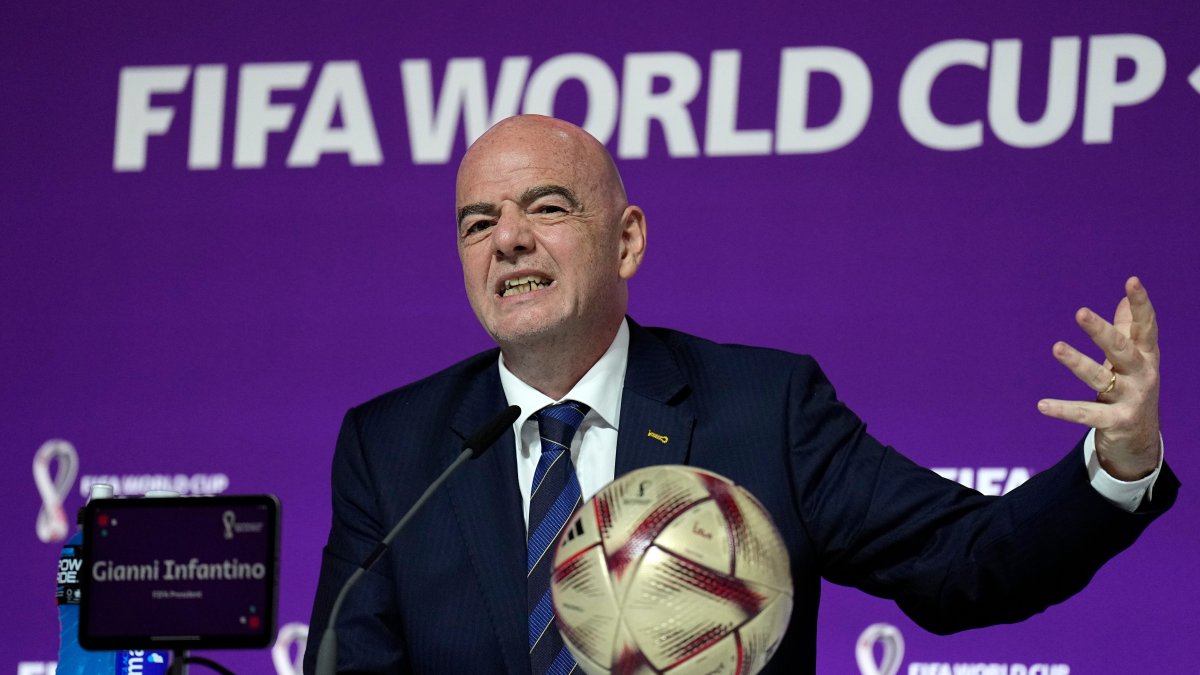
Source: NBC Chicago Sports. Casualplayhub News adds summary, context, and editorial framing while linking back to the original report.
The simmering conflict between FIFA and UEFA erupted into a legal battlefield this week, with the world football governing body accusing its European counterpart of orchestrating a “smear campaign” through a series of court filings. The accusations stem from FIFA President Gianni Infantino's abandoned plan to sell minority stakes in the World Cup and other competitions to private investors—a proposal that collapsed in early August under a wave of internal and external opposition.
On Thursday, FIFA filed a motion to intervene in the U.S. District Court in Colorado, seeking to derail or delay discovery requests lodged by UEFA just days earlier. In its filing, FIFA described the UEFA applications as “little more than press releases in further support of UEFA’s smear campaign against FIFA and its leadership.” The language was unusually sharp, reflecting the deep personal and institutional animosity between the two organizations.
UEFA’s legal push targeted three jurisdictions. One request, filed in the Southern District of New York, seeks disclosure of documents from Josh Kushner, the younger brother of Jared Kushner, and his investment firm Thrive Capital Management. Thrive was a key player in Infantino’s FIFA Forward Enterprise (FFE) plan, which aimed to raise $4.2 billion by selling stakes in the World Cup. Kushner also recently agreed to purchase the NBA’s Los Angeles Lakers alongside former Disney CEO Bob Iger, adding another layer of celebrity to the narrative.
Additional discovery requests were filed in Florida, where FIFA had its operational base for the 2026 World Cup, and in Colorado, targeting Greg Maffei, a former CEO of Liberty Media and an adviser to Infantino. Maffei’s role in the FFE proposal has drawn scrutiny, as UEFA seeks to unravel the inner workings of the deal.
Infantino’s proposal was made public in late July and immediately met with fierce resistance from European football federations, led by UEFA. The plan was withdrawn on August 1, just days after its unveiling. In a statement to Axios on Monday, Kushner defended the initiative but acknowledged a miscalculation. “While we stand behind the motivations of FFE, we failed to appreciate the political dynamics of global football, and the lengths some would go to,” he said. “Thrive has a long track record of being a partner to all constituents. Had we known what this would devolve into, we would not have gotten involved.”
UEFA’s court documents indicate the body is preparing a criminal complaint against Infantino in Swiss courts, alleging possible financial mismanagement. UEFA lawyers argued that the FFE proposal was not the commercial opportunity Infantino claimed, but rather “a vehicle for Infantino and that small circle to acquire a permanent stake in and otherwise profit from FIFA’s most valuable assets to the detriment of FIFA, its members, and other parties within the football family.”
FIFA countered that UEFA’s discovery request “suffers from a fundamental defect: UEFA seeks discovery in aid of a foreign criminal proceeding that does not exist and that UEFA admittedly lacks the authority to initiate.” The filing also accused UEFA of coercing its member federations to oppose the plan, characterizing the legal attacks as part of a broader political campaign to undermine Infantino’s leadership.
The timing of the dispute is notable. FIFA is preparing for the 2026 World Cup, which will be hosted across the United States, Canada, and Mexico, and Infantino faces a hotly contested election later this year. The FFE proposal’s collapse exposed fractures within the global football community, with many questioning the transparency and governance of FIFA’s leadership. Meanwhile, UEFA’s aggressive legal strategy suggests a determination to hold Infantino accountable, regardless of the outcome of the discovery motions.
As the legal battle unfolds, the football world watches closely. The case touches on fundamental questions about the commercialization of the sport, the balance of power between confederations, and the accountability of those at the highest levels of the game. Whether the court will allow UEFA’s discovery requests to proceed—or side with FIFA’s motion to intervene—will be a critical early test in what promises to be a protracted and high-stakes confrontation.
Article commentary
The escalating legal war between FIFA and UEFA is more than a procedural spat; it is a proxy battle for the soul of global football governance. At its core lies a fundamental tension between the centralization of power under FIFA President Gianni Infantino and the pushback from established confederations like UEFA, which sees itself as the guardian of the sport's traditional structures. Infantino’s FIFA Forward Enterprise proposal was, in many ways, a logical extension of his broader strategy to commercialize FIFA’s assets. By selling stakes in the World Cup—the most valuable property in sports—he aimed to generate a massive upfront cash infusion that could be used to fund development programs and secure his legacy. But the plan was also deeply controversial. Critics argued it would hand over long-term control of the sport’s crown jewel to private equity, potentially sidelining member associations and football’s broader ecosystem. UEFA’s response has been swift and multipronged. By filing discovery requests in U.S. courts, the European body is leveraging American legal tools to pry open the inner workings of the FFE deal. The choice of jurisdictions is strategic: New York, where financial deals are often scrutinized; Florida, where FIFA’s operational base for the 2026 World Cup was located; and Colorado, targeting Maffei. This legal offensive is not just about gathering evidence—it is a public relations campaign designed to paint Infantino as secretive and self-serving. FIFA’s counter-accusation of a “smear campaign” is a familiar rhetorical tactic. By framing UEFA’s legal actions as illegitimate and politically motivated, FIFA hopes to delegitimize the discovery process itself. The claim that UEFA lacks authority to initiate a criminal complaint in Switzerland may have legal merit, but it also underscores the procedural hurdles UEFA faces. However, the underlying allegations—of financial mismanagement and potential conflicts of interest—are serious enough to warrant scrutiny, regardless of the venue. The involvement of Josh Kushner and Thrive Capital adds a layer of political intrigue. Kushner’s ties to the Trump family through his brother Jared inevitably draw attention, even if there is no evidence of direct political influence. The fact that Kushner is also part of a group buying the Lakers raises questions about the intersection of sports ownership and investment in football assets. Yet, the core issue remains governance: Should a few individuals—including the FIFA president—be able to strike multibillion-dollar deals that affect the entire football world without broad consultation? Looking ahead, the outcome of the discovery motions will set the tone for future confrontations. If the court allows UEFA’s requests to proceed, FIFA could be forced to disclose internal documents that might reveal more about the FFE negotiations and Infantino’s role. If the motions are blocked, UEFA will have to regroup and consider alternative strategies, possibly ramping up political pressure within the FIFA Congress. This dispute also has implications for the 2026 World Cup. The tournament is already a massive logistical undertaking, and any perception of instability at the top of FIFA could unsettle sponsors, broadcasters, and host cities. Moreover, Infantino faces a re-election campaign later this year. While he has no declared opponent, the FFE debacle has weakened his standing among some member associations. UEFA’s coordinated attacks may embolden potential challengers. Ultimately, this is a power struggle that transcends the immediate legal contentions. It reflects the ongoing evolution of football from a sport governed by volunteer-led associations to a global industry driven by commercial imperatives. The question is whether the sport’s governing bodies can adapt without losing their legitimacy. As the legal filings multiply, the football world is learning that the battle for control of the beautiful game is being fought not just on the pitch, but in the courts of law and public opinion.