Billy Cannon Documentary Premieres Monday, Recalling LSU Legend's Complex Legacy
Source: Nola Sports. Casualplayhub News adds summary, context, and editorial framing while linking back to the original report.
The noise around LSU football this season has been relentless. From the controversy surrounding the new head coach to the debate over whether Jayden Daniels' old jersey number should be unretired, the Tigers have been in the headlines for all the wrong reasons. Yet amid the chatter, one figure stands immutable: Billy Cannon, the last man to wear No. 20 for LSU, and the yardstick by which every great player in program history is measured.
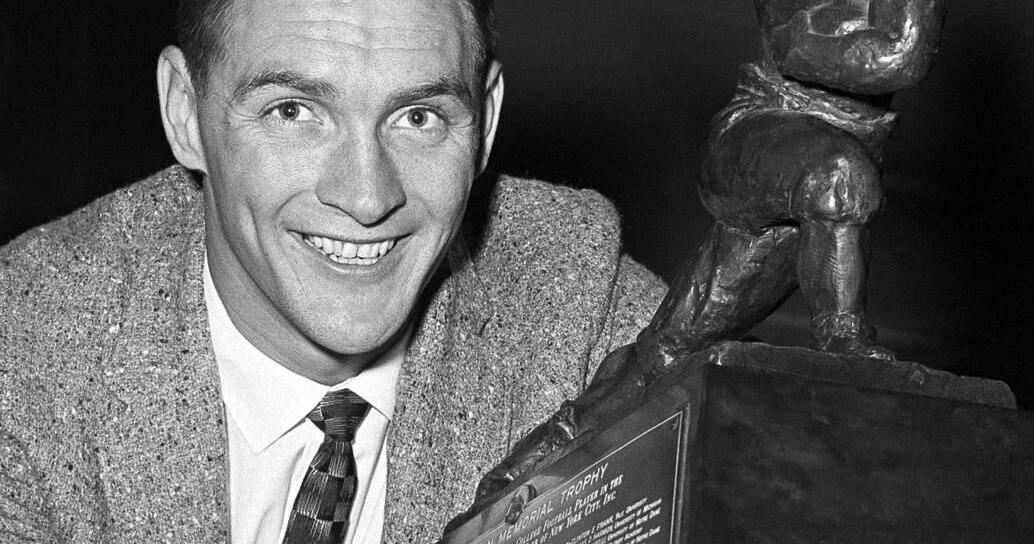
Cannon, LSU's first Heisman Trophy winner in 1959 and the only Tigers player to ever claim the award, is now the subject of a new documentary. Titled "Circles, The Life of Billy Cannon," the program debuts Monday at 7 p.m. on Louisiana Public Broadcasting. The film traces Cannon's arc from a Louisiana childhood through his legendary college career — where he led LSU to its first national championship — into the pros, and then to a stunning fall: a federal counterfeiting conviction that landed him in prison. After his release, Cannon rebuilt his life as a dentist at Angola State Penitentiary, treating inmates in the same facility where he once served time.
The documentary was spearheaded by Cannon's daughter, Bunnie Cannon. She explained the family's decision to finally open up about their father's life. "If you know our family, you know that if they ask us a question, we're just going to tell it as honest as we can," she said. "We felt that it was the time to tell it (Cannon's story)." Bunnie recalled trying to produce a documentary while her father was alive, but he resisted. "He didn't want the attention," she said. It wasn't until he published his memoir in 2015 that she saw an opening. Cannon died in 2018 at age 80.
Bunnie said the family wanted to address the many lingering questions about Cannon's life. "It's time that people truly know what took place," she said. "And there were so many questions that we always got. And if you don't know the answer, you're going to blow it up. You're going to think something else. And we just felt as a family, it was time to heal."
The documentary's release comes as LSU football enjoys a ratings surge. The Tigers' 51-10 blowout victory over Clemson last Saturday was the most-watched college football game of the weekend, averaging 5.8 million viewers on ABC with a peak of 8.7 million, according to ESPN. Auburn-Baylor trailed at 4.2 million. The win kept LSU undefeated and showcased the team's offensive firepower.
Looking ahead to Saturday's home game against Louisiana Tech, LSU's coaches have apparently posted a sign in the football complex reminding players — in colorful language — not to take the Bulldogs lightly. The warning is warranted: although LSU leads the all-time series 20-1, Tech's lone win came in 1904 by a score of 6-0. LSU hasn't lost to an in-state opponent since falling to Tulane 31-28 in 1982. The Tigers' overall record against Louisiana teams stands at 150-25-6.
As tradition dictates, LSU will wear purple jerseys and gold pants for its second home non-conference game. The contest will stream exclusively on SECNetwork+ via the WatchESPN app and ESPN.com/watch. As of Thursday, fewer than 250 tickets remained for the game, according to LSU's website.
For fans seeking more LSU sports coverage, a newsletter is available at theadvocate.com/lsunewsletter.
Article commentary
The Billy Cannon documentary, "Circles, The Life of Billy Cannon," arrives at a moment when LSU football is grappling with its identity. The program's recent controversies — a contentious coaching hire and the debate over retiring a Heisman winner's jersey number — have stirred old tensions between honoring tradition and embracing change. Cannon's story, with its dramatic highs and devastating lows, offers a powerful lens through which to examine these dynamics. Cannon remains an almost mythic figure in LSU lore. His 89-yard punt return against Ole Miss in 1959, immortalized as "The Halloween Run," is perhaps the most famous play in LSU history. But his post-football life — a conviction for counterfeiting, prison time, and then a quiet career as a prison dentist — complicates the narrative. The documentary's title, "Circles," seems apt: Cannon's journey came full circle, from a celebrated athlete to an inmate to someone who served others behind bars. The family's decision to tell the story publicly suggests a desire to reclaim the narrative from speculation and sensationalism. Bunnie Cannon's comments reveal a family torn between privacy and the need to set the record straight. She noted that when people don't know the truth, they fill in gaps with worse assumptions. This impulse toward transparency is commendable, but it also risks reopening old wounds. The documentary may force LSU fans to reconcile two images: the iconic Heisman winner frozen in bronze and the flawed man who fell from grace. That tension is not unique to Cannon; it is a recurring theme in sports, where heroes are often pedestaled until their humanity intrudes. The timing of the documentary is also notable. LSU's football culture is fiercely protective of its past — witness the uproar over Jayden Daniels wearing No. 20, a number retired since Cannon. Yet the program is also hurtling toward a new era under a new coach. Cannon's legacy serves as both a touchstone and a cautionary tale. The documentary could encourage a more nuanced understanding of what it means to be an LSU legend: not merely a winner on the field, but a person whose life included failures, redemption, and service. From a journalistic perspective, the article effectively weaves the documentary news with current LSU football updates — television ratings, game traditions, and a history lesson about Louisiana Tech. However, the transition from the Cannon story to the Clemson ratings feels abrupt, as if two separate items were stitched together. A more organic flow would have strengthened the piece. Still, the inclusion of the "colorful language" sign about Louisiana Tech adds a human touch. Ultimately, "Circles, The Life of Billy Cannon" promises to be more than a sports biography. It is a meditation on fame, fallibility, and forgiveness — themes that resonate beyond Baton Rouge. Whether it will heal old wounds or reopen them remains to be seen, but the Cannon family's willingness to share their father's full story is a gift to anyone interested in the messy, beautiful complexity of athletic greatness.