NFL Australia Game Spans Two Days for US Fans
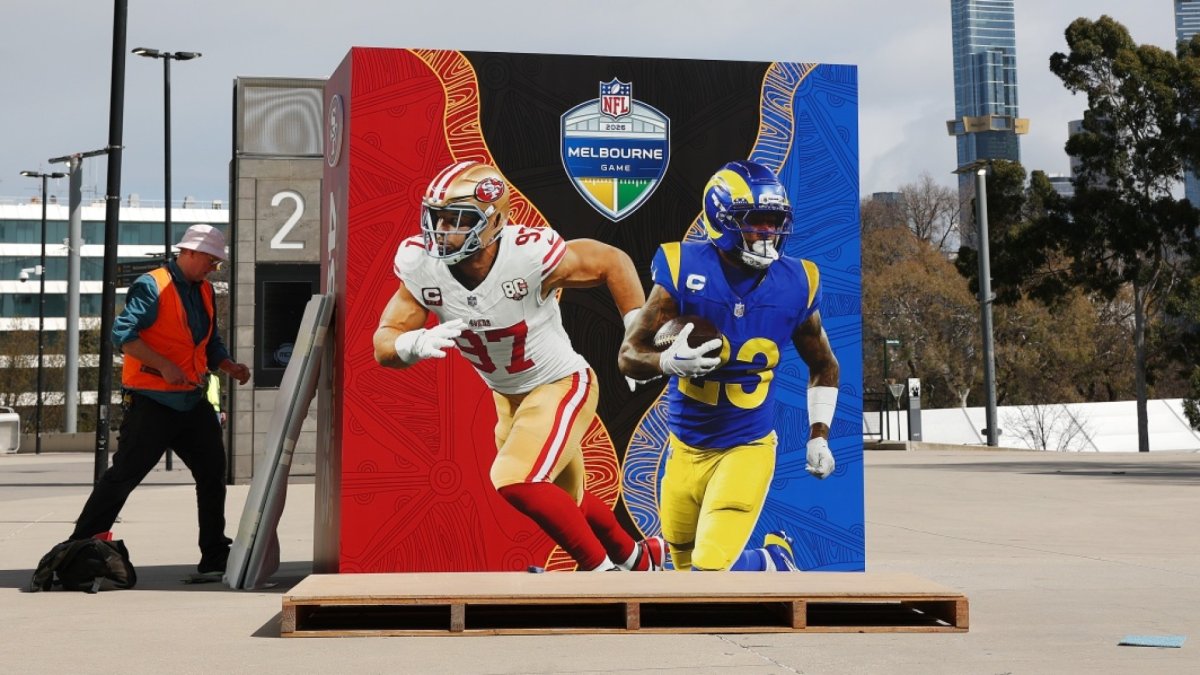
Source: NBC 5 Dallas-Fort Worth Sports. Casualplayhub News adds summary, context, and editorial framing while linking back to the original report.
Ad eligibility review: sensitive-topic
The NFL is about to test the limits of time zones. The league announced plans to stage a regular-season game in Australia, a historic first that will force American fans to grapple with a schedule that literally spans two days. Due to the 14-to-18-hour time difference between the United States and Australia, a game played on Monday afternoon in Sydney will be seen on Sunday evening in Los Angeles and Sunday morning in New York. For fans in Hawaii, the game might even feel like it belongs to Saturday night. The result: one game, two dates, and a lot of confusion over when to set the alarm.
The NFL has long pursued international growth, with regular-season games already held in London, Mexico City, Munich, and São Paulo. Australia represents the next logical step. The country has a deep appetite for American football, fueled by the success of college games played there and the popularity of the Super Bowl broadcast. Australian rules football already dominates the local sports landscape, but the NFL sees an untapped market for its own brand of gridiron action. The league has not yet confirmed the specific teams, venue, or date, though industry insiders point to Melbourne Cricket Ground or Sydney’s Accor Stadium as potential hosts. A 2026 or 2027 timeline is widely expected, as the league works through logistics with the Australian government and broadcast partners.
The time zone issue is the most immediate concern for U.S. viewers accustomed to Sunday afternoon football. A 3:00 p.m. local kickoff in eastern Australia corresponds to roughly 9:00 p.m. Saturday on the U.S. West Coast, 12:00 a.m. Sunday on the East Coast, and 3:00 p.m. Sunday in Hawaii. This creates a fragmented viewing experience: some fans will watch live on Saturday evening, others will need to stay up late Saturday night, and a few will wake up early Sunday morning to catch the action. The NFL has dealt with similar challenges during its London games, which kick off at 9:30 a.m. Eastern Time — early enough for a breakfast viewing party but disruptive to traditional tailgate rituals. The Australia game compounds that disruption by adding a calendar split.
Broadcasters will need to adjust their scheduling accordingly. In the United States, the game is likely to air on a major network like CBS or Fox, or possibly on a streaming platform such as Amazon Prime Video. Because the contest occurs on different days depending on location, the network will have to decide whether to treat it as a Saturday or Sunday window for advertising and promotional purposes. The NFL has already proven it can handle complex logistics: its Christmas Day games often fall on Wednesdays or Thursdays, and its Thanksgiving triple-header is a staple. But a game that literally straddles midnight for a large portion of the audience is a fresh puzzle.
For Australian fans, the game will be a showcase of American football at its highest level. The country has produced a handful of NFL players, most notably punter Jordan Berry and offensive lineman Jesse Sapolu, but the sport remains a niche interest compared to rugby and cricket. A regular-season game could change that, drawing curious spectators and sparking youth participation. The NFL has already invested in grassroots programs in Australia, including flag football leagues and coaching clinics. The game itself will be a spectacle, complete with halftime performances, pregame festivities, and the usual pageantry that accompanies the league’s international contests.
Player welfare is another factor. The long flight from the U.S. to Australia — roughly 15 to 18 hours from Los Angeles — challenges team routines and recovery. The NFL has experience with this: teams traveling to London often arrive a week early to acclimate, and a similar approach is expected for Australia. The league may also adjust the bye week schedule for participating teams to account for jet lag and time zone changes. The game’s placement on the calendar — likely in the middle of the regular season — will require careful planning to avoid competitive disadvantages.
Despite the logistical hurdles, the NFL is committed to global expansion. Commissioner Roger Goodell has repeatedly said the league aims to become a truly international sport, and adding Australia — a nation known for its passionate sports culture — is a natural step. The time zone puzzle is a temporary inconvenience for dedicated fans, but for the league, it is a sign of progress.
Article commentary
The NFL’s decision to stage a regular-season game in Australia represents more than just a logistical adventure — it is a calculated move to expand the league’s global footprint while testing the boundaries of its traditional American audience. The most striking element is the two-day scheduling quirk, which forces fans to reconfigure their viewing habits in ways that previous international games did not. London games, which air in the early morning on the U.S. East Coast, are a mild inconvenience. Australia games, which straddle midnight and even calendar dates, ask far more from the viewer. This time zone challenge is not merely a curiosity; it has real implications for television ratings and advertising revenue. The NFL’s domestic broadcast contracts are worth billions, and networks rely on predictable time slots to maximize viewership. A game that airs on Saturday night on the West Coast but Sunday morning on the East Coast fragments the audience and complicates Nielsen ratings. Advertisers who purchase slots during the game may find it harder to reach a unified demographic. The NFL has weathered similar fragmentation with its Thursday night and Monday night packages, but those games at least fall on the same day nationwide. The Australia game will be the first to literally split the calendar. From a strategic perspective, the move makes sense. Australia is a wealthy, English-speaking market with a growing interest in American football. The country already hosts the annual NFL International Series event — albeit in a different form — and the success of college football games in Melbourne has proven there is appetite. The time zone issue, while inconvenient for U.S. fans, actually benefits Australian viewers, who will get a prime-time slot. That is the trade-off: the league is willing to sacrifice domestic convenience for international growth. Over time, as the NFL adds more global games, fans may become accustomed to irregular schedules, much as they have with late-season Saturday games and early morning London kickoffs. There is also a cultural dimension. For decades, American football has been a Sunday ritual — a lazy afternoon of games, tailgates, and family time. The NFL’s international expansion chips away at that tradition. The Australia game will be played on Monday afternoon local time, which means it is effectively a workday event for fans on the other side of the world. That shift in timing could alter how the sport is consumed globally. In markets like the United Kingdom, the NFL has managed to build a strong following despite the early morning broadcasts. The same could happen in Australia, where the novelty of a live game might outweigh the inconvenience of a Monday afternoon time slot. Critics will argue that the NFL is prioritizing revenue over fan experience — that stretching the schedule across time zones dilutes the communal nature of football. But the league has never been shy about innovation. The introduction of Thursday Night Football, the flex scheduling system, and the expansion to 17 games all faced similar skepticism before becoming accepted norms. The Australia game is simply the next step in a long-term strategy to globalize the brand. Whether fans will embrace the two-day game or resist it remains to be seen, but one thing is certain: the NFL is betting that the world is ready for American football on Monday morning in Sydney and Sunday evening in Los Angeles.