Golden State’s Podziemski Dilemma: Learn from Poole Overpay
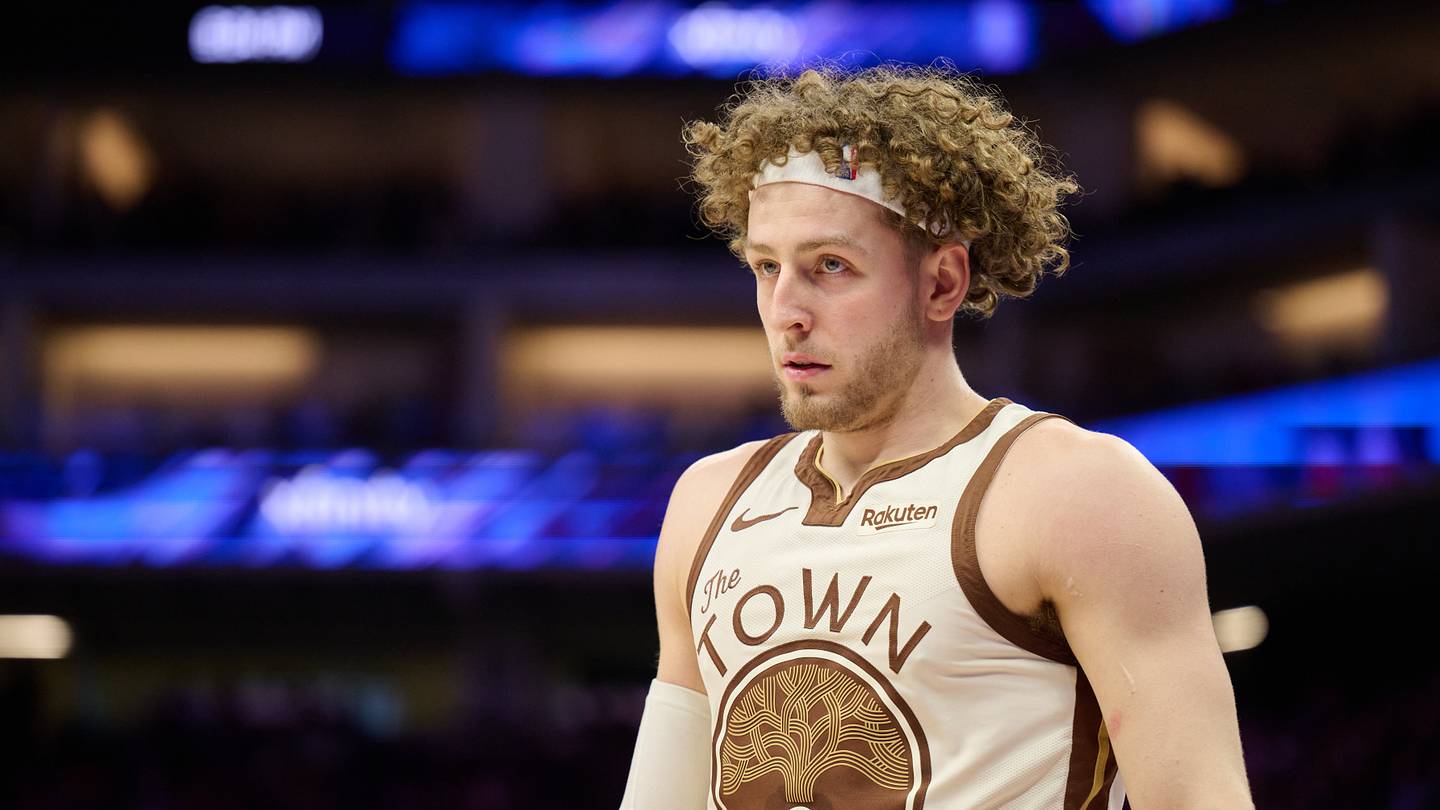
Source: SI NBA. Casualplayhub News adds summary, context, and editorial framing while linking back to the original report.
The Golden State Warriors learned a hard lesson about extending young players too quickly. After capturing the 2022 NBA championship, they had a decision on Jordan Poole: offer a contract extension immediately or wait until the 2023 offseason when he would be a restricted free agent. They chose to lock him up, signing a four-year extension worth up to $140 million. That decision became regrettable. Poole struggled in the 2022-23 season, a decline that many attribute to Draymond Green’s infamous punch but could also stem from natural statistical regression. By the end of that season, the front office realized they had overpaid. They sent Poole to Washington for Chris Paul, a salary dump that essentially netted them nothing when Paul left the following summer as a free agent.
Now Brandin Podziemski finds himself in a similar position. He is eligible for a contract extension for the next month and a half. The Warriors must tread carefully. There is no strong incentive to sign Podziemski now unless the team can secure a team-friendly deal. What does “team-friendly” mean here? An average annual value in the range of $16 million to $17 million. Anything above that carries significant risk. Committing more money now would limit the Warriors’ cap space next offseason, potentially hampering their ability to retool around Stephen Curry. They might be better off postponing both Curry’s and Podziemski’s extensions to maintain flexibility in the 2027 free agency.
There is also the possibility that Podziemski could regress, just as Poole did. If his performance dips, he would lose leverage in contract talks. But even if he breaks out, restricted free agency does not guarantee a huge payday. A rival team would need to clear significant cap space to present a large offer sheet, and that is rarely straightforward. So even if Podziemski has his best season in 2026-27, the Warriors are unlikely to be forced into a corner where they must either overpay or lose him for nothing.
From a performance standpoint, the risk of extending Podziemski now is lower than it was with Poole. Poole’s value hinged entirely on scoring; when his shot wasn’t falling, he was a liability on defense. Podziemski, on the other hand, contributes on both ends. Net rating data from Cleaning the Glass shows this clearly. Over his first three seasons, Poole’s net rating fluctuated: +0.2, -0.9, +4.2. Podziemski’s numbers: +6.2, +6.8, +2.9. The Warriors have been a better defensive team with Podziemski on the court every year of his career. All signs point to him remaining a plus defender going forward.
Where Podziemski could make a leap is offensively. He averaged 18.1 points per game over the final two months of the 2025-26 season. Expecting him to sustain that for an entire campaign is unrealistic, especially when Curry is healthy and commands the ball. But his scoring output will heavily influence contract negotiations. He might play well enough to earn a contract similar to Christian Braun’s, but the Warriors should attempt to lock him up at a lower average annual value to preserve future flexibility.
The lesson from the Poole saga is clear: patience can be a virtue. Golden State should let Podziemski prove his value over the coming season, monitor his growth, and then negotiate from a position of strength in restricted free agency. A premature extension, especially at a premium price, could saddle the franchise with another expensive mistake.
Article commentary
The Golden State Warriors are navigating a familiar tightrope with Brandin Podziemski. The Jordan Poole precedent looms large, and rightly so. Poole’s extension looked like a prudent move at the time — a reward for a key piece of a championship run. But it quickly became an albatross. The Warriors were forced to attach assets to move his contract, effectively admitting they had misjudged his market value. That experience should inform how they handle Podziemski’s extension talks. The core issue is timing. Extending a young player before his fourth season is a gamble. If the player outperforms the contract, it looks like a steal. If he stagnates or regresses, the team is stuck. The Warriors are particularly sensitive to cap constraints. With Stephen Curry’s massive salary and the need to build a competitive roster around him, every dollar matters. Committing $17 million per year to Podziemski now could limit their ability to sign a difference-maker in free agency next summer. But there is a counterargument. Podziemski is not Poole. He is a more versatile player, capable of impacting games without scoring. His defensive contributions provide a safety net; even on an off-shooting night, he can stay on the floor. Poole’s defensive shortcomings made him a one-dimensional scorer, and when that dimension faltered, he was unplayable. Podziemski’s two-way versatility reduces the risk of a complete collapse in value. Yet the financial calculus remains tricky. The restricted free agency market has become inhospitable for non-star players. Teams rarely clear cap space to poach a restricted free agent, and offer sheets are often matched or allowed to expire. Podziemski’s leverage is thus limited, even if he has a breakout year. The Warriors can afford to wait, knowing they can match any offer or let him walk if the price is too high. The real question is whether the front office can resist the temptation to lock in a young player early, a tendency that has burned them before. The Poole deal was not an isolated case; the Warriors have historically been generous with extensions for homegrown talents. But the new collective bargaining agreement harshly penalizes high-spending teams, making cap management paramount. Overpaying a role player can have cascading effects on roster construction. Ultimately, the prudent path is to delay. Let Podziemski play out the 2026-27 season, evaluate his growth, and then negotiate in restricted free agency. If he blossoms into a star, the Warriors will have the right of first refusal. If he plateaus, they can sign him at a reasonable rate or let another team overspend. The Poole mistake was rushing into an extension that hindsight proved unwise. The Warriors should not repeat that error. Patience, not impulse, should guide their approach to Podziemski’s future.