Clippers Face NBA's Severe Penalty: Echoes of Timberwolves' Past
Source: SI NBA. Casualplayhub News adds summary, context, and editorial framing while linking back to the original report.
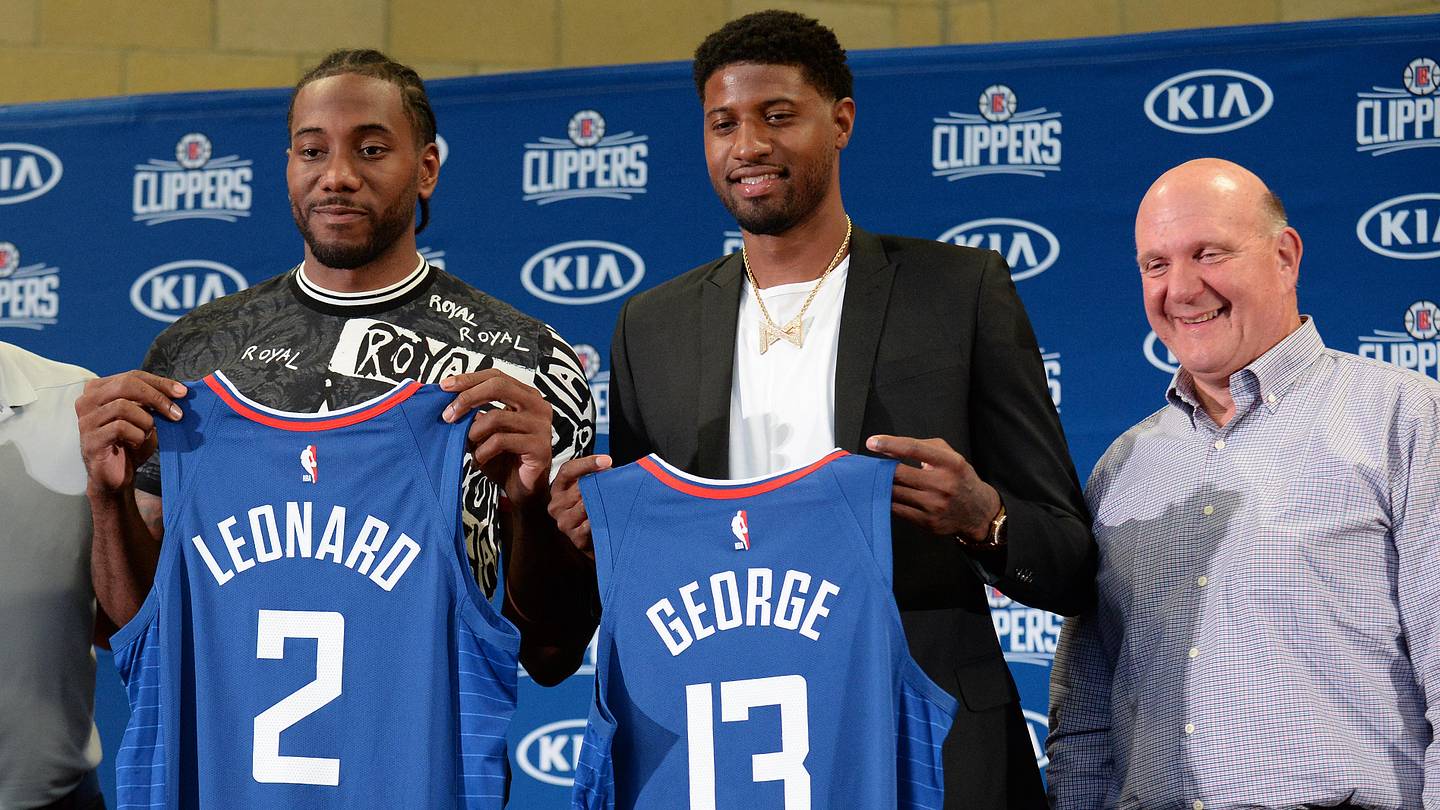
The LA Clippers' fanbase felt the ground shift beneath them on Wednesday when the NBA delivered what many consider the harshest penalty in league history. Following a year-long investigation into cap circumvention, the league found the Clippers guilty of improper dealings with star forward Kawhi Leonard. The punishment was swift and severe: the team lost five first-round draft picks—one each from 2029 through 2033. Additionally, owner Steve Ballmer, president of basketball operations Gillian Zucker, and general manager Lawrence Frank were all fined.
For a franchise that has long struggled to escape the shadow of its own history, this feels like a gut punch. Yet, as devastating as it is, the situation is not without precedent. Twenty-six years ago, the NBA handed down a nearly identical penalty to the Minnesota Timberwolves in the infamous Joe Smith scandal. That case offers a revealing lens through which to view the Clippers' current predicament and potential future.
In 2000, the Timberwolves were caught in a scheme to circumvent the salary cap. The team had promised Joe Smith—a promising young forward—a lucrative long-term contract if he signed three consecutive one-year deals at below-market value. The idea was to establish Smith's Bird rights while keeping the cap low, allowing Minnesota to make other moves to build a contender. Smith signed for $1.75 million per year for two seasons, but before he could ink the third deal in the summer of 2000, the NBA stepped in. The league voided Smith's contract, forcing him to sign with the Detroit Pistons in free agency, and stripped the Timberwolves of their first-round picks from 2001 through 2005.
For Minnesota, the punishment was a death knell. The team had just won 50 games, and Kevin Garnett—arguably the best player in the league at the time—had finished second in MVP voting. Over the next five years, the Timberwolves could not add a single rotation player through the draft. They made it out of the first round only once during Garnett's prime, and the lack of supporting talent eventually forced the franchise to trade him to the Boston Celtics in 2007.
There is, however, a silver lining for the Clippers. Unlike Smith's contract, Leonard's deal was not voided. This means the Clippers can proceed with their trade with the Toronto Raptors, which will bring back two first-round picks to help replenish the assets they just lost. That alone puts them in a better position than the Timberwolves were in 2000.
Even more encouraging for Clippers fans is the eventual outcome of the Timberwolves' penalty. The NBA later returned the 2003 and 2005 picks to Minnesota because of the team's cooperation and good behavior. This suggests that the league's primary goal was to send a strong deterrent message, not to permanently cripple a franchise. If the Clippers maintain a cooperative stance, they might similarly see some of their picks reinstated in the future.
The league's action against the Clippers is clearly about setting a precedent. By coming down hard on a high-profile team, the NBA is telling every franchise that cap circumvention will not be tolerated. The punishment accomplishes that goal regardless of whether the picks are eventually returned. For the Clippers, the immediate pain is real, but the historical precedent offers a path forward. The Timberwolves eventually recovered, though it took years. The Clippers may have a faster recovery, especially if they can leverage their existing assets and the returning picks from the Raptors trade.
In the end, the Clippers' situation is a powerful reminder of the NBA's willingness to enforce its rules, but also of its capacity for leniency. Fans should brace for a difficult few years, but hope is not lost. The Timberwolves' story shows that even the harshest penalties can be softened over time, and the Clippers' path to redemption may already be underway.
Article commentary
The NBA's decision to strip the LA Clippers of five first-round draft picks is a landmark moment in league enforcement, but its implications extend far beyond the immediate punishment. By drawing a direct parallel to the Minnesota Timberwolves' Joe Smith scandal from 2000, the league is signaling that no franchise—no matter how wealthy or influential—is above the rules. The comparison is instructive, but it also reveals critical differences that could shape the Clippers' future. First, the severity of the penalty is unmistakable. The loss of five first-round picks, even if spread over several years, effectively hamstrings a team's ability to build through the draft. For the Timberwolves, this meant a decade of mediocrity despite having Kevin Garnett in his prime. The Clippers, however, have a distinct advantage: they still have Kawhi Leonard under contract, and the league did not void his deal. This allows them to execute the trade with the Toronto Raptors, which will bring back two first-round picks. That trade effectively reduces the net loss from five to three picks, softening the blow considerably. Another key difference is the timing. The Timberwolves lost their picks in an era when the draft was the primary method of acquiring young talent. Today, teams can more easily pivot to free agency, trades, and the buyout market to build a roster. The Clippers also have the financial resources of Steve Ballmer, one of the wealthiest owners in sports, to weather the storm. They can still sign quality veterans and make strategic trades, though they will be limited by the reduced draft capital. The most intriguing aspect of the Timberwolves precedent is the eventual return of two picks. The NBA gave back the 2003 and 2005 picks because of Minnesota's cooperation and good behavior. This suggests that the league's primary objective was deterrence, not permanent punishment. If the Clippers follow a similar path—complying with the investigation, accepting the penalty without public protest, and demonstrating a commitment to rule-following—they could see some of their picks restored. That would accelerate their rebuilding timeline significantly. However, there are risks. The Clippers are a high-profile franchise in a major market, and the league may feel it needs to make an example of them to discourage other teams from similar schemes. The Timberwolves were a small-market team, and the NBA might have been more willing to show leniency. The Clippers' ownership and management have also been under scrutiny for years, and the league may be less forgiving. From a broader perspective, this punishment is a clear message to the entire league: the NBA is serious about enforcing its salary cap rules. The trend of teams finding creative ways to circumvent the cap—from sign-and-trades to salary dumps—has been a growing concern. By hitting the Clippers so hard, the league is drawing a line in the sand. Other teams will think twice before attempting similar maneuvers. For Clippers fans, the next few years will be a test of patience. The team will likely remain competitive as long as Leonard and Paul George are healthy, but the lack of draft picks will make it difficult to add young, cost-controlled talent. The front office will need to be creative in the draft and in trade negotiations. The good news is that the Clippers have a track record of finding undrafted gems and late-round steals. If they can keep that up, the penalty may not be as devastating as it first appears. Ultimately, the Clippers' story is still being written. The Timberwolves' ordeal took years to fully play out, and the same will be true for LA. The league's punishment is harsh, but it is not a death sentence. With smart management and a bit of luck, the Clippers can emerge from this stronger and more resilient. The key now is to avoid further missteps and to cooperate fully with the league. The path to redemption is clear, even if it is long and winding.