Failed Navy Pilot Eye Test, Built $1M/Day Firm, Now Top Gun Stunt Pilot
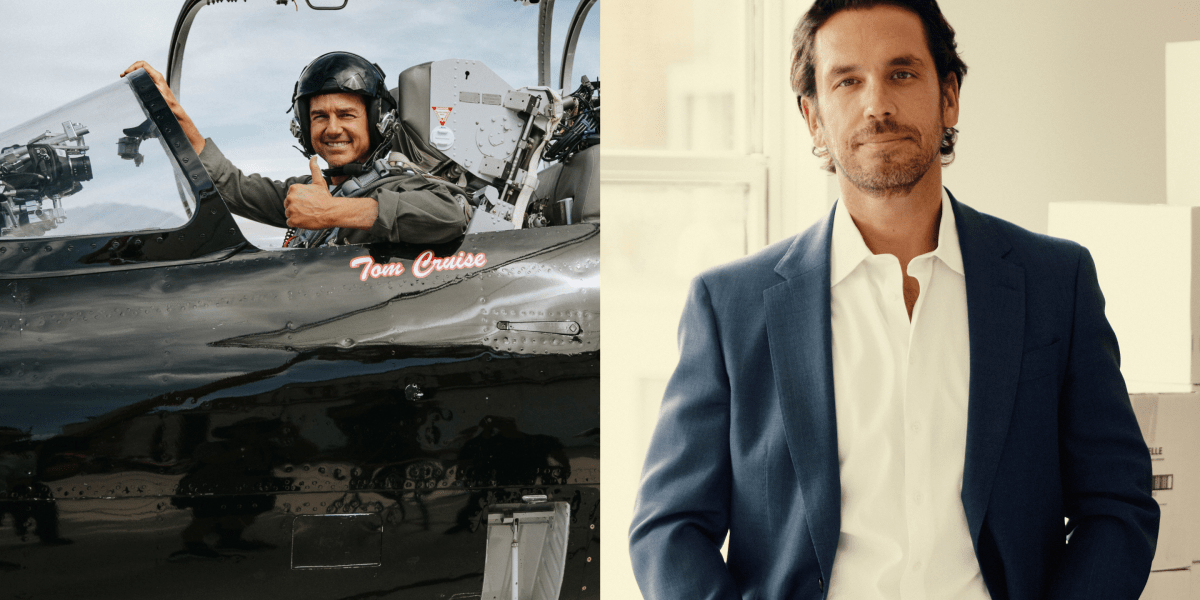
Source: Fortune. Casualplayhub News adds summary, context, and editorial framing while linking back to the original report.
Ad eligibility review: sensitive-topic
As a boy, Jonathan Spano would hang model airplanes from his bedroom ceiling, dreaming of one day flying fighter jets for the U.S. Navy. The release of the original Top Gun only intensified that obsession. But by the time he learned the Navy required better than 20/20 vision, he knew his eyesight—which had him wearing glasses since childhood—would never clear that bar. Instead of giving up on aviation entirely, Spano, now 48, took a different path.
Growing up in a blue-collar California family, he and his brother started doing traffic control work as teenagers, setting out cones and barricades for a crane company. They spotted a gap in the market: some companies rented equipment but wouldn't deploy it, while others handled permits but not the full service. In 1995, they launched a side hustle offering everything—rental barricades, cones, signs, and 24/7 emergency dispatch—under one roof. The operation began in their great-grandmother's garage. "The plan was never to build a national company," Spano told Fortune. "It was really a way to just make some money, and it just continued to grow."
Grow it did. Thirty years later, Traffic Management Inc. spans more than 50 locations across the United States. Spano calls it the largest privately held traffic control company in the country, pulling in over $1 million in revenue each day. That business quietly bankrolled his path to the sky. Two decades into running the company, its finance chief suggested buying a small plane as a tax write-off and a faster way to reach expanding offices. "It had never occurred to me that I would maybe be able to fulfill that dream as a pilot," Spano said. He bought a Cessna, learned to fly, and began using it to save hours of driving across California. One plane led to another, bigger and faster, eventually a private jet costing a few hundred thousand dollars each step.
As his aviation skills grew, Spano pursued a second childhood passion: filmmaking. He bought a helicopter for about $2 million and teamed up with Fred North, a Hollywood aerial coordinator, to mount camera rigs for commercial shoots. North then dropped a life-changing idea: "They're making another Top Gun film. You should try to modify your jet to carry the same cameras that we do on the helicopter. If you can pull it off, you could fly your airplane in this next Top Gun movie."
Spano spent roughly 18 months and well into seven figures modifying his Embraer Phenom 300 to carry two camera systems, earning FAA certification. He made the deadline. Flying alongside veteran film pilot Kevin LaRosa Jr., Spano piloted "a large portion of the jet-to-jet aerial sequences, including all of the aircraft carrier sequences" in Top Gun: Maverick. The work earned the team a Screen Actors Guild Award for stunts. Paramount has since greenlit a third Top Gun film, expected to begin production in 2027, and Spano is already in talks with the director. "Considering we have the only platform in the world that is capable of what it is capable of," he said, "I’m optimistic that we will be participating in that project."
Beyond Top Gun, his camera-equipped jet has been used for commercials with NetJets, FlexJet, Gulfstream, Embraer, and Delta, plus work for the U.S. Air Force. He also contributed to National Geographic's America the Beautiful, capturing aerial footage of the Northern Lights over Alaska, which earned an Emmy nomination. Reflecting on his journey, Spano said, "I’m living proof that anything is possible. You have to make your dreams reality." His advice: "Be bold, take risks, but you also have to put in the hard work and dedication." He recalls studying at 11 p.m. while his family slept, then waking at 6 a.m. for his day job. "If I had to say what was fundamental in me being successful, I picked the things I wanted to achieve, and I was just fearless in pushing for them. I stuck to it, I believed I was going to get there, and I just overcame whatever obstacle was in my way."
Article commentary
Jonathan Spano's story is a compelling case study in how entrepreneurial success can resurrect a seemingly lost dream. The narrative is not merely about a wealthy businessman buying his way into Hollywood; it underscores the power of a diversified skill set and relentless persistence. His eyesight failure was a dead end for a military career, but it became a detour into business, which eventually provided the resources to approach aviation from a different angle—not as a military pilot, but as a civilian stunt aviator. What stands out is the organic evolution of his business. Traffic Management Inc. wasn't born from a grand vision; it grew from a teenage side hustle that filled a market gap. The company's growth was gradual, and aviation entered as a pragmatic tool for efficiency, not as a luxury. This pragmatic approach allowed Spano to scale his business while simultaneously building his flying skills. The decision to buy a camera-equipped helicopter and later modify his jet shows a willingness to invest in niche capabilities, a move that many entrepreneurs might shy away from due to risk and cost. From a cinematic perspective, Spano's modified Phenom 300 has become a unique asset in aerial filmmaking. Traditional helicopter-mounted cameras are agile but limited in speed and altitude. A jet platform offers higher speeds, longer endurance, and the ability to capture realistic jet-to-jet footage without CGI. This innovation filled a gap in the industry, and Top Gun: Maverick benefited immensely from the authenticity it provided. The Screen Actors Guild Award is a testament to the stunt team's work, but it also highlights a broader trend: the convergence of private aviation and film production, where wealthy enthusiasts can become valuable contributors to Hollywood blockbusters. However, Spano's journey raises questions about accessibility. His story is inspirational, but it relies on an enormous financial cushion—millions of dollars in aircraft, modifications, and training. The average person cannot replicate this path. Yet the core lesson is not about money; it's about adaptability. When one door closed, Spano didn't abandon his passion; he built a different door. He used his business not as an end but as a means to an end. Many entrepreneurs lose sight of their original motivations, but Spano kept his childhood dream alive, even if it took decades to realize. His commentary on hard work is not just a platitude. The hours of training, the late-night study sessions, and the balancing act with a full-time job demonstrate that financial success alone does not guarantee skill acquisition. He earned his expertise the hard way. This duality—being both a CEO and a pilot—requires discipline and a willingness to be a perpetual student. For aspiring aviators or entrepreneurs, Spano's example suggests that a setback can be a setup for a different kind of success, provided you are willing to pivot, invest in yourself, and remain patient. The next Top Gun film will likely showcase his work again, cementing his legacy as a man who flew not despite his limitations, but because of the path they forced him to take.