TCU Football Signs 11-Year-Old Cancer Survivor in Heartwarming Recruit
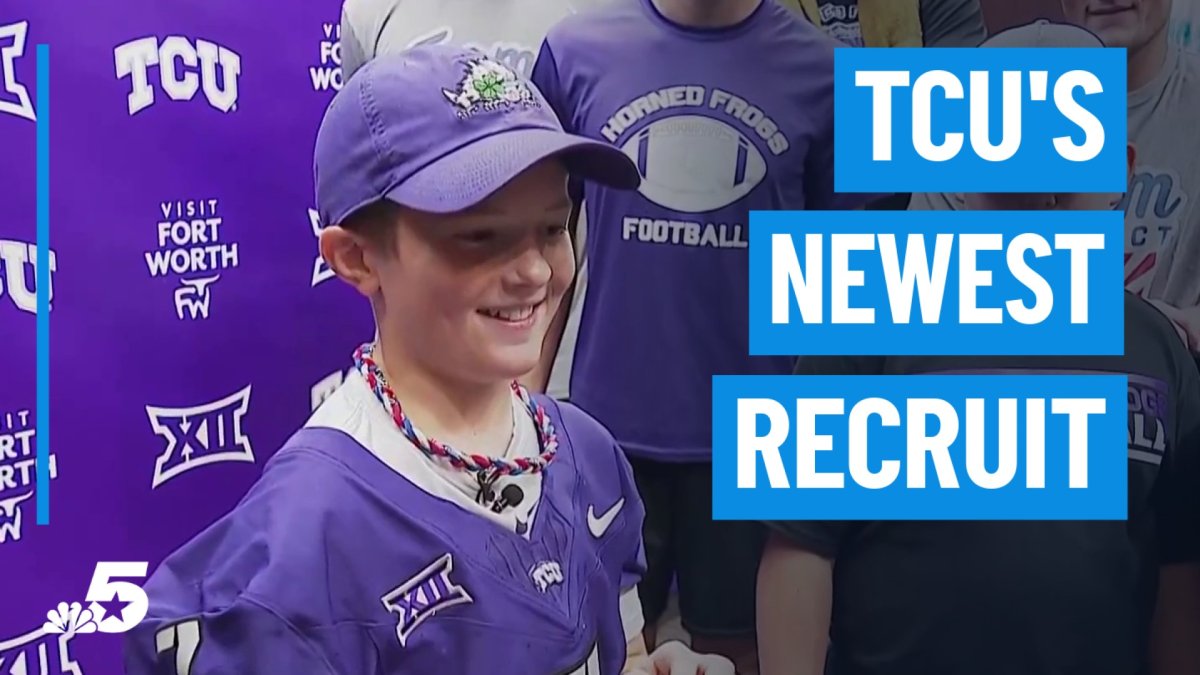
Source: NBC 5 Dallas-Fort Worth Sports. Casualplayhub News adds summary, context, and editorial framing while linking back to the original report.
FORT WORTH, Texas — In a memorable scene at the TCU football complex, an 11-year-old boy stood before a crowd of coaches, players, and family members, holding a pen with a quiet confidence that belied his age. He had just signed a ceremonial letter of intent, becoming the newest—and youngest—recruit of the Horned Frogs. But this was no ordinary signing day. The boy, a cancer survivor, had fought a battle far tougher than any opponent on the gridiron.
Diagnosed with a rare form of cancer at age 8, he endured months of chemotherapy, hospital stays, and countless setbacks. Through it all, he held onto one dream: to be part of a college football team. TCU made that dream come true. The signing, organized by the team in partnership with the Make-A-Wish Foundation and local community groups, turned the practice facility into a celebration of life.
As the boy put pen to paper, the room erupted in applause. Players lifted him onto their shoulders, coaches hugged him, and his mother wiped away tears. “He never gave up, even when the doctors said it would be hard,” she said. “This moment means everything to him—and to us.” The head coach, speaking after the ceremony, called it one of the most important signings in his career. “We recruit players for their talent, but today we recruited someone for their spirit,” he said. “This young man is a true Horned Frog.”
The boy will not be on the field for games, but he is now an honorary member of the team. He received a personalized jersey, a locker with his nameplate, and a season pass to all home games. The team plans to have him attend practices, meet with players, and serve as a constant reminder of the resilience that defines the sport.
NBC 5’s Tahera Rahman captured the emotional event, interviewing the boy and his family afterward. The young recruit, smiling broadly, said his favorite part was “meeting all the big guys and seeing the locker room.” He added, “I always wanted to be a football player. Now I am one.”
This story resonates far beyond Fort Worth. It underscores the role of college athletics in building community and providing hope. For a child who faced a life-threatening illness, the simple act of being welcomed into a team can be a powerful medicine. TCU’s gesture is not unique—many programs have similar initiatives—but each one carries a unique weight. The bond formed between the boy and the players is expected to last a lifetime, with many of them vowing to stay in touch.
As the ceremony ended, the boy ran onto the field, throwing a football with a few players. He was laughing, and for a moment, there was no cancer, no hospital, no fear—just a kid doing what he loved. TCU football gained a new fan, but more importantly, it gained a symbol of courage.
Article commentary
This heartwarming story of an 11-year-old cancer survivor signing with TCU football is a powerful reminder of the human element that often gets lost in the high-stakes world of college athletics. While the sport is driven by competition, recruiting rankings, and million-dollar contracts, moments like these strip away the business layer and reveal the core of what sports can offer: community, belonging, and inspiration. From a journalistic perspective, the coverage by NBC 5’s Tahera Rahman is a textbook example of how local news can elevate a simple human-interest story into a broader narrative of hope. The signing ceremony itself is not a new concept—many teams have honorary recruits—but the emotional depth here lies in the boy’s personal journey. His battle with cancer is a universal struggle, and his triumph resonates with anyone who has faced adversity. The story avoids sentimentality by focusing on the genuine reactions of the family and team, making it both uplifting and authentic. Objectively, the gesture by TCU serves multiple purposes. It builds goodwill within the community, strengthens the team’s brand as a compassionate organization, and provides a morale boost for players and staff. However, the true value is intangible: the boy’s experience of being celebrated and supported can have lasting psychological benefits. Research shows that positive social connections and goal-setting can improve outcomes for pediatric cancer patients. By giving him a role within the team, TCU has offered more than a moment of joy—it has provided a framework for continued resilience. Yet, one must also consider the broader context. College sports, particularly football, are increasingly scrutinized for commercialization, player exploitation, and the immense pressure on young athletes. Stories like this can sometimes be used as a counter-narrative, deflecting criticism away from systemic issues. That is not to say the gesture is insincere—it clearly is not—but it is worth noting that feel-good stories often coexist with deeper problems. The challenge for media is to cover such moments without losing sight of the larger picture. Another angle is the role of the Make-A-Wish Foundation and similar organizations. These groups facilitate life-changing experiences for children with serious illnesses, and their work deserves recognition. The signing day is a collaboration between the foundation, the hospital, and the university, highlighting how multiple stakeholders can come together for a single cause. The media coverage amplifies this impact, potentially inspiring other institutions to create similar programs. Ultimately, the story of the 11-year-old recruit is a testament to the power of kindness. It reminds us that behind the helmets and statistics are real people with real struggles. For the boy, the Horned Frogs became family. For the rest of us, it is a reminder that sports, at their best, can heal.