AI Land Rush: Universities Sell Campuses to Data Centers, Sparking Brain Drain Fears
Source: Fortune. Casualplayhub News adds summary, context, and editorial framing while linking back to the original report.
The AI boom is placing unprecedented pressure on American universities, but the threat is no longer just about classroom debates or academic integrity policies. It has become a physical one: data centers hungry for vast tracts of land with reliable power, water, and fiber connectivity are driving a real estate rush that is reshaping campus landscapes. Universities, often large landowners, find themselves sitting on property that can fetch far higher prices as AI infrastructure than as classrooms, laboratories, or research spaces.
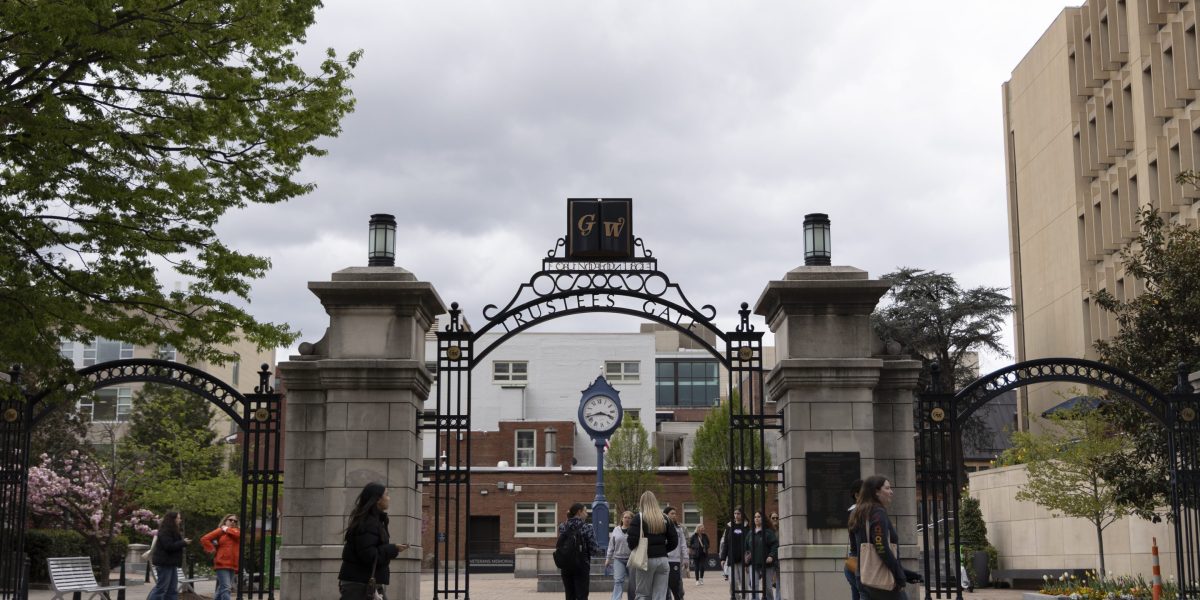
The George Washington University’s sale of its Virginia campus to Amazon Data Services illustrates the trend vividly. In February, GW announced it had sold its roughly 120-acre Virginia Science and Technology Campus in Ashburn, Virginia, a property nestled in Loudoun County, the heart of Northern Virginia’s Data Center Alley, one of the world’s densest clusters of data centers. The buyer, later identified as Amazon Data Services, paid $427 million. GW said the sale would strengthen its long-term financial position, with a significant portion of proceeds placed into a new endowment and eligible faculty and staff receiving one-time bonuses of $2,500 for full-time benefits-eligible faculty and $1,250 for part-time faculty.
But the transaction blindsided many on campus. Ellen Scully-Russ, a former professor who worked at the Ashburn campus from 2009, described the announcement as sudden and opaque. “It just came as a sudden announcement one day that they had sold the property, and that they couldn’t disclose the buyer because there was some kind of a confidentiality agreement,” she told Fortune. The student newspaper quickly uncovered the details, but the damage was done. Scully-Russ noted that the university never fully integrated the Ashburn campus into its core strategy. “It never really got any legs, in my opinion,” she said. Over five or six years, resources eroded gradually—faculty lost through attrition, teaching assistants eliminated due to budget cuts—and the community was never consulted about the sale. “There was no transparency. The faculty, the student body, as far as I know, were not even aware that there was a discussion about selling to anybody, let alone to Amazon,” she explained.
GW defended the move as a necessary financial step, citing declining federal research funding, changes affecting international students, and broader challenges in higher education. The university held town halls after the sale to discuss transition plans, but for Scully-Russ, the consultation came too late. “It’s kind of like, do you really care? Did you care what I thought before you made this decision? Did you care to let me know that this was in the works?” she asked.
The professor sees the sale as symptomatic of a larger problem: universities chipping away at their own educational resources to fuel an AI infrastructure boom without accountability or thoughtful progression. “We’re just one technological leap away from having those huge ugly buildings being obsolete. Then what happens?” she warned, calling the data center boom a short-term bubble.
Across the country, the University of Michigan is taking a different approach: building its own massive computing center rather than selling land. Together with Los Alamos National Laboratory, it is planning a $1.25 billion research computing center in Ypsilanti Township, designed to handle enormous computational workloads for research in medicine, materials science, clean energy, engineering, and national security. The university insists this is not a commercial data center but a “specialized research hub” dedicated to high-performance computing for scientific research, not cloud computing, streaming, or e-commerce. The facility will start at 50 megawatts of power and eventually reach 100 megawatts.
Yet, like GW’s sale, this project has drawn opposition. The Ypsilanti Township Board of Trustees unanimously passed a resolution opposing the facility, citing strong and unequivocal concerns. The University of Michigan did not immediately respond to a request for comment. The administration has been acquiring land for the project, including purchases of 19.82 acres and 6.03 acres in 2024, and authorization to buy roughly 124.7 acres on Textile Road in 2025.
These two cases highlight the tension universities face: financial pressures push them toward monetizing land for AI infrastructure, while critics argue that such moves undermine the academic mission and risk long-term consequences. As the AI boom accelerates, the question of what universities should do with their property—and who gets a say—becomes ever more urgent.
Article commentary
The intersection of higher education and the AI infrastructure boom is a sobering lens through which to examine the shifting priorities of American universities. The George Washington University’s sale of its Virginia campus to Amazon Data Services and the University of Michigan’s ambitious computing center project are not isolated incidents; they are harbingers of a broader trend where land-rich universities become prime targets for data center developers. This dynamic raises critical questions about transparency, mission drift, and the long-term sustainability of such transactions. On one level, the financial logic is compelling. Universities across the country face mounting budget pressures: declining federal research funding, volatile enrollment, and rising operational costs. Selling underutilized land for hundreds of millions of dollars provides a quick infusion of cash that can shore up endowments, pay down debt, or fund new initiatives. GW’s $427 million deal, for instance, is framed as a strategic move to strengthen its financial position and invest in its academic mission. That is not an unreasonable argument, especially when the campus in question had struggled to find its footing for years. Yet the lack of transparency in such deals is troubling. Faculty and students at GW were kept in the dark until the sale was a fait accompli. The professor’s account of a “drip, drip, drip” erosion of resources—lost faculty, eliminated teaching assistants—suggests a campus that was gradually being starved, making the sale a self-fulfilling prophecy. When communities are not consulted, trust erodes. Higher education institutions pride themselves on shared governance, but these transactions often bypass that principle entirely. If universities are to sell off their physical assets, they owe their stakeholders a genuine conversation about the trade-offs. There is also a deeper concern about mission. Universities exist to educate, to conduct research, and to serve the public good. Selling land to data center operators—or building massive computing centers themselves—shifts the emphasis from human capital to computational power. The University of Michigan’s careful distinction between a “research computing center” and a “commercial data center” tries to preserve the academic narrative, but the facility’s 100-megawatt appetite and local opposition suggest that the line is blurry. The Ypsilanti Township Board’s unanimous resolution underscores that communities are not always convinced that these projects serve their interests. Moreover, the speculative nature of the AI boom adds risk. As Scully-Russ points out, the data center infrastructure could become obsolete with the next technological leap. What happens to those massive, energy-hungry buildings? Universities that have sold their land may find themselves without the space to expand their own research or teaching. Those that have built their own centers may be left with stranded assets. The short-term financial gain may not outweigh the long-term cost of losing academic autonomy and physical capacity. Finally, the trend reflects a broader commodification of higher education. Land is being valued not for its potential to foster learning, but for its utility to AI. This is not inherently wrong, but it demands a more deliberate and inclusive decision-making process. Universities should not simply be passive players in a land grab; they should actively shape how their resources are used. The GW and UMich cases offer cautionary tales: one where transparency failed, and another where community opposition is mounting. The AI brain drain is not just about talent leaving academia—it is about the physical spaces of academia being repurposed for the machines that may one day replace that talent. That is a conversation worth having, before the last classroom becomes a server room.