Rybakina Rallies Past Gauff, Sets Up Swiatek Showdown in Toronto
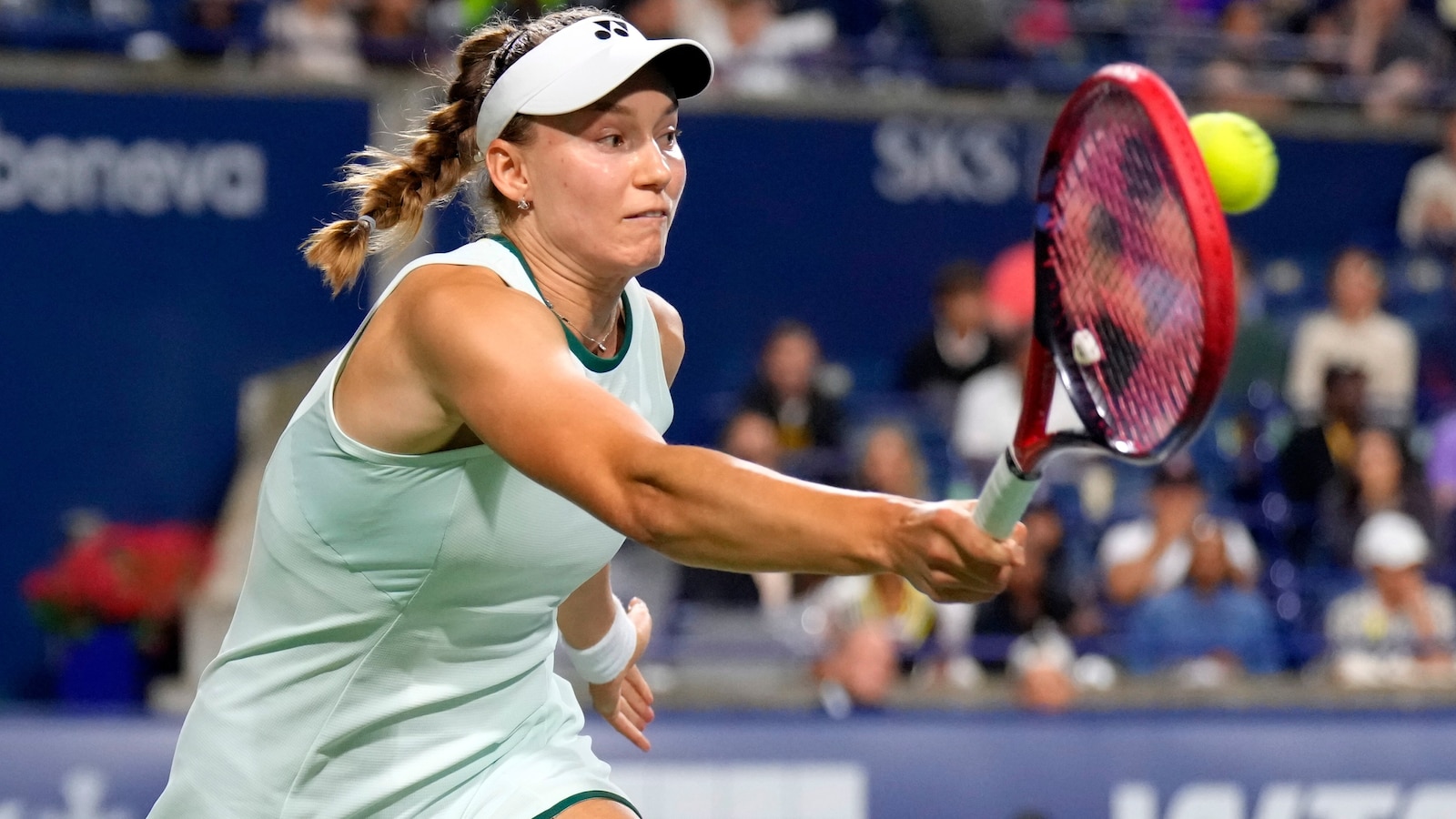
Source: ABC News Sports. Casualplayhub News adds summary, context, and editorial framing while linking back to the original report.
Ad eligibility review: sensitive-topic
The night air in Toronto carried a chill well past midnight, but on the court at Sobeys Stadium, the temperature was rising. Elena Rybakina, the 6-foot tall Kazakhstani with a serve that can crack the sound barrier, found herself in a familiar fight: down a set, facing a younger, faster opponent, and running out of time. She had been here before—at the Australian Open, at Stuttgart—and each time, she had found a way. This time, against Coco Gauff, the fourth-seeded American who had already beaten her twice in their previous meetings, the path was no different. Rybakina dropped the opening set 5-7, then roared back to claim the next two 6-2, 6-2, punching her ticket to the National Bank Open final.
The match, originally scheduled for the evening session, was delayed by rain for over an hour. When play finally began, Gauff came out with the energy that has made her one of the most exciting players on tour. She broke Rybakina early, but the Kazakhstani fought back, leveling the first set at 3-3. The momentum swung again, and Gauff grabbed the set with a late break, winning 7-5. Yet Rybakina, known for her calm demeanor under pressure, did not panic. She adjusted her return position, began to read Gauff’s serve more effectively, and started to dictate rallies with her heavy groundstrokes. The second set was a clinic: Rybakina broke Gauff twice, lost only two games, and sent a message that this match was far from over.
The third set followed a similar script. Gauff, who had struggled with her first-serve percentage throughout the night, found herself pinned behind the baseline as Rybakina’s forehand crosscourt winners kept finding the lines. The Kazakhstani broke early and never looked back, closing out the match just before 1 a.m. as the sparse but loyal crowd roared. It was the latest finish of the tournament, a testament to the endurance required not just to win points, but to survive the delays and the mental toll of a grinding match.
Rybakina’s victory was her 13th career title, a number that includes her breakthrough Grand Slam at Melbourne Park in 2023 and a Stuttgart crown earlier this season. Her power game, built around a booming serve and flat, penetrating groundstrokes, has proven effective on hard courts, making her a formidable opponent in any condition. She will need every weapon in her arsenal against Iga Swiatek, who advanced to the final by outlasting Elina Svitolina in a three-set battle that also saw rain interruptions.
Swiatek, the seventh seed, struggled early against Svitolina’s crafty defense and net play. The Polish star dropped the second set 1-6 after winning the first, but regrouped in the decider. With the score tied at 3-3, Swiatek broke Svitolina’s serve at love, then raced to a 40-0 lead in the next game, converting her second match point to close out a 6-3, 1-6, 6-3 victory. The match began about an hour late due to rain, but Swiatek’s resilience—a hallmark of her 25 career titles—shone through.
Thursday night’s final will be the first meeting between Rybakina and Swiatek since Wimbledon 2023, where Rybakina won in straight sets. But Swiatek has since reclaimed the world No. 1 ranking and has shown remarkable consistency on hard courts. The matchup promises contrasting styles: Rybakina’s raw power and first-strike tennis against Swiatek’s relentless topspin, defensive prowess, and tactical intelligence. Both players have had to navigate unpredictable weather and late-night matches, adding an extra layer of unpredictability to the showdown.
As the sun rises over Toronto, both women will be preparing for what could be the most significant final of the tournament. Rybakina, who has already beaten Swiatek twice in their four meetings, will look to make it three. Swiatek, who has won the last two of their encounters, will aim to extend her edge. The stage is set for a classic.
Article commentary
Elena Rybakina’s comeback victory over Coco Gauff in the National Bank Open semifinals was a masterclass in adaptability and mental fortitude. The Kazakhstani, who had lost her two previous matches against Gauff, demonstrated a critical ability to adjust her game plan mid-match, a skill that separates elite players from the merely good. After dropping the first set, Rybakina began stepping into the court more aggressively, taking Gauff’s serve earlier and redirecting the ball with greater pace. This tactical shift disrupted Gauff’s rhythm, forcing the American into errors on her usually reliable backhand side. Gauff, for her part, showed flashes of brilliance, particularly in the first set, where she moved well and used her speed to extend rallies. But her serve—a weapon that has improved dramatically over the past two years—deserted her at critical moments. In the second and third sets, her first-serve percentage dipped below 50%, and she double-faulted five times in the final set alone. Against a player of Rybakina’s caliber, such lapses are fatal. The American will need to find greater consistency if she hopes to challenge for Grand Slam titles in the coming years, though her youth and work ethic suggest she will. The upcoming final between Rybakina and Iga Swiatek is a tantalizing prospect. Their head-to-head record is evenly split at 2-2, with Rybakina winning their last encounter on grass and Swiatek prevailing on clay. On hard courts, the surface in Toronto, the edge may be slight. Rybakina’s serve is a game-changer; she can hold serve with relative ease, putting pressure on Swiatek to produce break points. Swiatek, however, is the best returner on tour, with an ability to neutralize even the biggest serves by reading the ball early and redirecting it with topspin. Another factor is the weather. Both players have had to contend with rain delays, which can disrupt rhythm and energy levels. Rybakina’s match ended after midnight, while Swiatek’s finished earlier, giving her a slight recovery advantage. But Rybakina has shown remarkable stamina throughout the tournament, suggesting she can handle the quick turnaround. From a broader perspective, this final underscores the depth of women’s tennis. Rybakina, Swiatek, and Gauff represent the new generation of stars who are reshaping the landscape. The absence of Serena Williams and the gradual decline of other veterans has opened the door for a more diverse group of champions. Rybakina’s journey from Kazakhstan to the top of the game is a testament to the global nature of the sport, while Swiatek’s dominance on clay and growing prowess on hard courts cement her as a versatile contender. For the tournament itself, a Rybakina-Swiatek final is a fitting climax. Both players have been tested—by opponents, by weather, by the clock—and both have emerged stronger. Whether it is Rybakina’s power or Swiatek’s precision that triumphs, the match will likely be a high-quality affair that showcases the best of modern tennis. The winner will not only claim the title but also gain valuable momentum heading into the US Open, where either could emerge as a favorite.