Shelton, Nakashima Set Up All-American Final in Montreal
Source: ABC News Sports. Casualplayhub News adds summary, context, and editorial framing while linking back to the original report.
Ad eligibility review: sensitive-topic
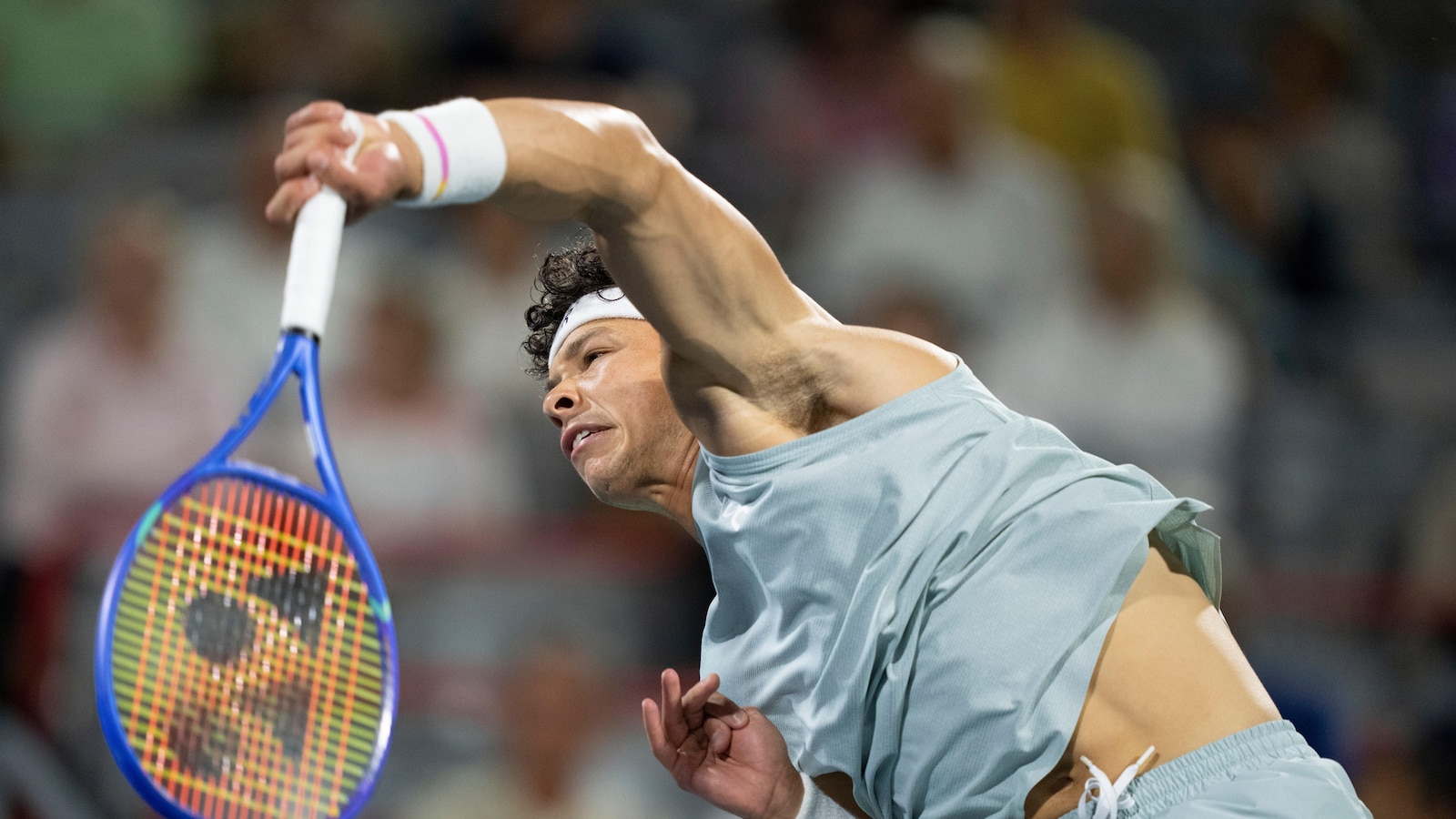
MONTREAL -- The National Bank Open is set for an all-American final after Ben Shelton and Brandon Nakashima powered through their semifinal matches on Wednesday night at IGA Stadium.
Shelton, the defending champion and fifth seed, delivered a commanding performance against 20-year-old compatriot Learner Tien, winning 6-2, 6-3 in just over an hour. The 23-year-old left-hander broke Tien's serve early in both sets, dictating play with heavy groundstrokes and a booming serve that kept the 12th seed off balance. Tien, who had upset several higher-ranked players during the week, struggled to find rhythm against Shelton's relentless aggression.
"Super happy with the performance," Shelton said after the match. "Learner is a guy who presents me with a lot of problems in my game. A tough challenge to overcome. To get a win over him in the fashion that I did, I'm super pleased with that."
Shelton's victory extends his winning streak at the tournament to nine matches, dating back to his title run last year. He has now reached his third Masters 1000 final, having previously won in Montreal in 2025 and reached the final in Cincinnati last season. The Florida native has been a force on hard courts, capturing three titles in 2026 alone -- Dallas, Munich, and Stuttgart -- and has climbed to a career-high ranking of No. 4 in the world.
Earlier in the evening, Brandon Nakashima punched his ticket to the biggest final of his career. The 28th seed from San Diego edged out Spanish teenager Rafael Jodar 7-6 (3), 6-4 in a tense semifinal that lasted nearly two hours. Nakashima, 24, relied on his precise serve-and-volley game and steady baseline rallies to counter Jodar's explosive power. After saving a set point in the first set, Nakashima dominated the tiebreak and then secured a crucial break early in the second set to take control.
"Going into the tournament, I knew I was playing at a really high level, so I knew that I could get a go on a deep run here," Nakashima said. "Obviously, wasn't thinking about the final or anything."
This is Nakashima's first ATP Masters 1000 final, and his first title match at any level since winning his lone tour title in San Diego in 2022. He has shown remarkable consistency in Montreal, defeating three seeded players en route to the final, including a quarterfinal upset of second seed Daniil Medvedev.
The final will be only the second all-American championship match in the history of the National Bank Open, and the first since 1995 when Andre Agassi defeated Pete Sampras. Shelton enters as the favorite, having won their only previous meeting in the 2023 Atlanta Open, but Nakashima has been improving rapidly on hard courts this season.
Both players bring contrasting styles: Shelton's power and aggression against Nakashima's tactical precision and variety. The match is scheduled for Thursday evening, with the winner earning 1,000 ATP ranking points and a substantial prize purse.
The tournament has also been notable for the emergence of young American talent. In addition to Shelton and Nakashima, Tien's run to the semifinals was a breakout performance, and the 20-year-old is expected to crack the top 50 for the first time next week. The depth of American men's tennis is on full display in Montreal, where three of the four semifinalists were from the United States.
Shelton's path to the final included straight-sets wins over Alexander Bublik, Jannik Sinner, and now Tien. Nakashima, meanwhile, has dropped only one set all week, coming in his quarterfinal against Medvedev. The stage is set for a captivating showdown between two of America's brightest stars.
Article commentary
The all-American final at the National Bank Open is more than just a moment of national pride; it represents a significant shift in the landscape of men's tennis. For years, American men have been searching for consistent contenders at the Masters 1000 level, and the emergence of players like Ben Shelton and Brandon Nakashima signals a new era of depth and competitiveness. Shelton's rapid ascent is no surprise. Since bursting onto the scene with a semifinal run at the 2023 US Open, he has developed into a genuine top-five talent. His serve is arguably the best in the game, and his ability to dictate rallies with his forehand makes him a nightmare matchup on hard courts. What's most impressive about Shelton's run in Montreal is his composure. As defending champion, he carried the pressure of expectations and still managed to dispatch opponents with minimal fuss. His straight-sets victory over Learner Tien, a player who had been in stellar form, demonstrated maturity beyond his years. Nakashima's journey, however, is the true storyline. Often overshadowed by his more flamboyant compatriots, the 24-year-old has quietly built a game suited for the modern tour. His serve-and-volley tactics, combined with clean groundstrokes, make him a versatile opponent. Reaching his first Masters 1000 final is a breakthrough that could propel him into the top 20. His victory over Rafael Jodar, a rising Spanish star, was a testament to his mental toughness. Saving a set point in the first set and then closing out the match without panic showed a level of poise that bodes well for his future. This final also raises questions about the depth of American tennis. With Taylor Fritz, Frances Tiafoe, and Tommy Paul also in the top 20, the United States now boasts a formidable contingent. The fact that three of the four semifinalists in Montreal were American -- Shelton, Nakashima, and Tien -- underscores a golden generation. The challenge will be converting this depth into Grand Slam success. Shelton has already reached a major semifinal, but the ultimate prize remains elusive. Nakashima has yet to advance past the fourth round of a Slam, but this week could be a springboard. From a tactical perspective, the final promises a fascinating contrast. Shelton's power game is predicated on first-strike tennis, while Nakashima excels at extending rallies and using variety. The key for Nakashima will be to neutralize Shelton's serve and force him to play more defensive points. If Nakashima can return effectively and mix in his own serve-and-volley patterns, he can disrupt Shelton's rhythm. Conversely, if Shelton serves well and dictates from the baseline, he will be difficult to beat. Looking ahead, this tournament could be a defining moment for both players. For Shelton, a second consecutive Montreal title would cement his status as a hard-court specialist and a legitimate contender for the US Open. For Nakashima, even a runner-up finish would be a career highlight, giving him the confidence to challenge for bigger titles. The broader implication for American tennis is clear: the future is bright, and it's arriving faster than many expected. The Montreal final is not just a celebration of today's talent but a preview of what lies ahead for the next decade of the sport. One cannot ignore the historical context either. The last all-American Masters 1000 final in Canada was in 1995, when Andre Agassi defeated Pete Sampras. That era produced multiple Grand Slam champions. If Shelton and Nakashima can sustain this level, they could follow in those hallowed footsteps. The sport is watching, and Montreal is providing the stage.