Tulane's Mardi Gras Uniforms Spark National Craze
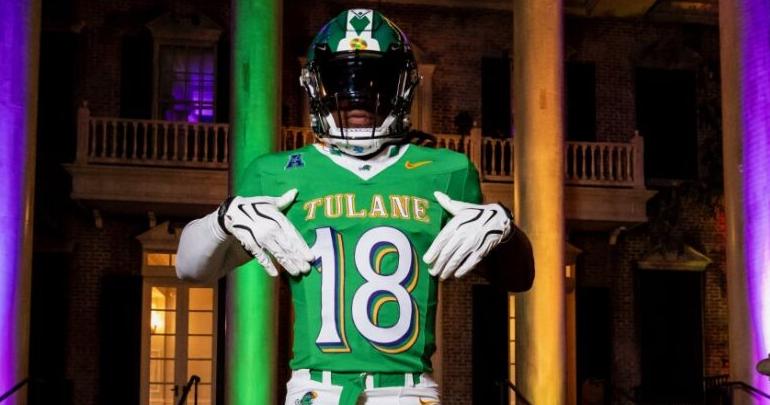
Source: Nola Sports. Casualplayhub News adds summary, context, and editorial framing while linking back to the original report.
Ad eligibility review: sensitive-topic
Tulane University's football program unleashed a tidal wave of excitement with the unveiling of its Mardi Gras-inspired City Edition uniforms, a design that blends the spirit of New Orleans' most iconic celebration with the gridiron grit of the Green Wave. The reaction was immediate and explosive. Within hours of the Wednesday noon release, social media exploded with praise, the uniforms trended nationally on X, and the limited supply of game-worn jerseys vanished. By Thursday morning, associate director of new media Parker Peltier reported that the initial post and follow-ups had generated roughly 6 million impressions on the Tulane football account, with total impressions nearing 10 million.
The jerseys, priced at $504 apiece, sold out completely in less than 24 hours through the Wave Wearhouse. The helmets, which come with a $2,500 price tag, have also been in high demand. All proceeds from helmet sales go directly to the Green Wave Talent Fund, which fuels name, image, and likeness (NIL) opportunities for Tulane athletes.
Gabe Delatte, the primary designer behind the uniforms, admitted to feeling a mix of excitement and trepidation leading up to the reveal. "It's incredibly gratifying, especially with the Mardi Gras pieces and the sensitivities people have around here about Mardi Gras," Delatte said. "The fact that it's so well received really helps me sleep at night. I definitely had some anxiety there."
The design itself is a feast for the eyes. The kelly green jerseys feature white numbers with a triple drop shadow in purple, green, and gold—a signature nod to the colors of Mardi Gras. The first and last letter of each player's name are adorned with tiny Mardi Gras beads. A jester Angry Wave icon appears on the right hip of the pants and the collar. The helmet, hand-painted by artist Armando Villareal, boasts a kelly green base with an Angry Wave on each side rendered in the style of a Mardi Gras float prop. Down the center runs an argyle pattern stripe in purple, green, and gold, alternating between solid and bead-outline diamonds, with scattered beads adding texture.
Delatte's journey to this design was not straightforward. He had previously created Mardi Gras uniforms for Tulane's men's basketball team starting in 2017, but initially resisted doing the same for football because the season does not coincide with the carnival season. That changed when he saw South Alabama on the 2026 schedule. The Jaguars, who played at Yulman Stadium in 2023, had released a uniform that included a sticker referencing "the home of Mardi Gras"—a provocative claim by Mobile, Alabama, which contends it celebrated the holiday before New Orleans. Although South Alabama didn't wear the sticker on game day, they substituted a Mardi Gras crest on their helmets. That was enough to ignite Delatte's competitive spirit. "Game on," he said.
After debuting an award-winning baby-blue City Edition uniform with wrought-iron fence designs for homecoming against Florida Atlantic last November, Tulane turned its attention to the Mardi Gras concept. The execution required months of meticulous work with Nike and a nameplate and number vendor. "There's a school up river that has two of the (Mardi Gras) colors, so you have to be careful with that," Delatte said, a sly reference to LSU's purple and gold. "Probably what took the longest was making sure we get it right and still capture the feeling of Mardi Gras. It's hard to see it up front. You have to play around."
The numbers, with their elaborate triple drop shadow, drew the most buzz on social media. Peltier recalled a comment: "There was a guy who said the triple dropshot number is preposterous, but somehow he loved it. It's like, yeah, Mardi Gras is preposterous. That's why it works."
Armando Villareal, the helmet artist, lives in the tiny town of Imperial, Nebraska (population 2,068), but he has a close connection to Tulane equipment manager Cody Heidbreder. The two bonded over shared family histories in World War II and previously collaborated on a special USS Salt Lake City battleship helmet and uniform for the University of Utah, where Heidbreder worked before joining Tulane in spring 2023. The Mardi Gras helmet is Villareal's second for Tulane and his seventh collaboration with Heidbreder. He visited New Orleans for the home finale against Texas-San Antonio in November 2023 to soak in the city's atmosphere, ensuring he was ready for future projects. "That way whenever it was time for us to pull the trigger, he was ready," Heidbreder said. "As soon as last year wrapped up, we started working on this year's, and he's still going. They are not finished yet. We will have them in hand in the next week and a half."
In other team news, Tulane finished Friday's light workout at its indoor practice facility, escaping the heat before Saturday morning's scrimmage after a two-minute drill at Yulman Stadium. Defensive end Jordan McAllister, a New Hampshire transfer who missed the latter part of spring practice, is no longer listed on the roster. Head coach Jonathon Hall said both absences were due to the same undisclosed personal issue that needs resolution before a potential return, adding that he hopes McAllister will be "back with us one day."
Article commentary
Tulane's Mardi Gras City Edition uniforms represent more than a clever marketing stunt—they are a masterclass in cultural branding, rivalry psychology, and fan engagement. The design taps into the deep emotional resonance of Mardi Gras in New Orleans, a celebration that defines the city's identity. But the story behind the uniforms reveals a layered strategy that goes beyond aesthetics. At its core, the uniform release is a response to a perceived slight. South Alabama's claim to be the "home of Mardi Gras"—a historical dispute that Mobile has long promoted—lit a fire under Delatte. By turning a regional rivalry into a design narrative, Tulane created a unifying symbol for its fan base. The uniforms are not just clothes; they are a statement of ownership and pride. This is a classic example of how sports teams leverage cultural touchpoints to build brand loyalty, especially in a city as fiercely proud of its traditions as New Orleans. The commercial success is staggering. Selling out 120 jerseys at $504 each within 24 hours, and generating millions in impressions, demonstrates the power of scarcity and exclusivity. The deliberate use of NIL proceeds from helmet sales also aligns with the current landscape of college athletics, where athletes are increasingly able to profit from their own brands. Tulane's decision to funnel those funds into the Green Wave Talent Fund is a smart move that reinforces the program's commitment to player welfare, while also generating goodwill. From a design perspective, the uniforms walk a fine line between festivity and garishness. The triple drop shadow numbers, the bead accents, and the argyle helmet stripe could easily tip into visual chaos. But the designers have executed a cohesive look that feels both celebratory and athletic. The reaction from fans—who called the numbers "preposterous" yet loved them—suggests the design achieves its intended effect: mimicking the exuberance of Mardi Gras itself. The collaboration with Armando Villareal adds an artisanal dimension that is rare in modern sports apparel. Hand-painted helmets are a departure from the mass-produced norm, and the backstory of Villareal's connection to Cody Heidbreder humanizes the process. It also highlights how small-town artisans can find a global stage through personal relationships and niche expertise. One potential criticism is the price point. At $2,500 for a helmet and $504 for a jersey, these items are clearly aimed at affluent collectors and die-hard fans, not the average student. However, the limited edition model ensures that the market will bear the cost, and the charitable component mitigates some of the elitism. The broader lesson is that college sports programs are increasingly treating merchandise as high-end luxury goods, a trend that mirrors the NFL's approach. Finally, the uniform saga serves as a reminder of the enduring power of college football rivalries. The South Alabama provocation, though minor, gave Tulane a narrative hook that elevated the release from a simple seasonal promotion to a cultural event. In an era where fans crave authenticity and stories, the Mardi Gras uniforms deliver on both fronts. They are a testament to how sports can amplify local culture, stoke friendly competition, and create lasting memories—all while moving merchandise at a blistering pace.