Athletics' Justin Sterner Sidelined for Season After Knee Surgery
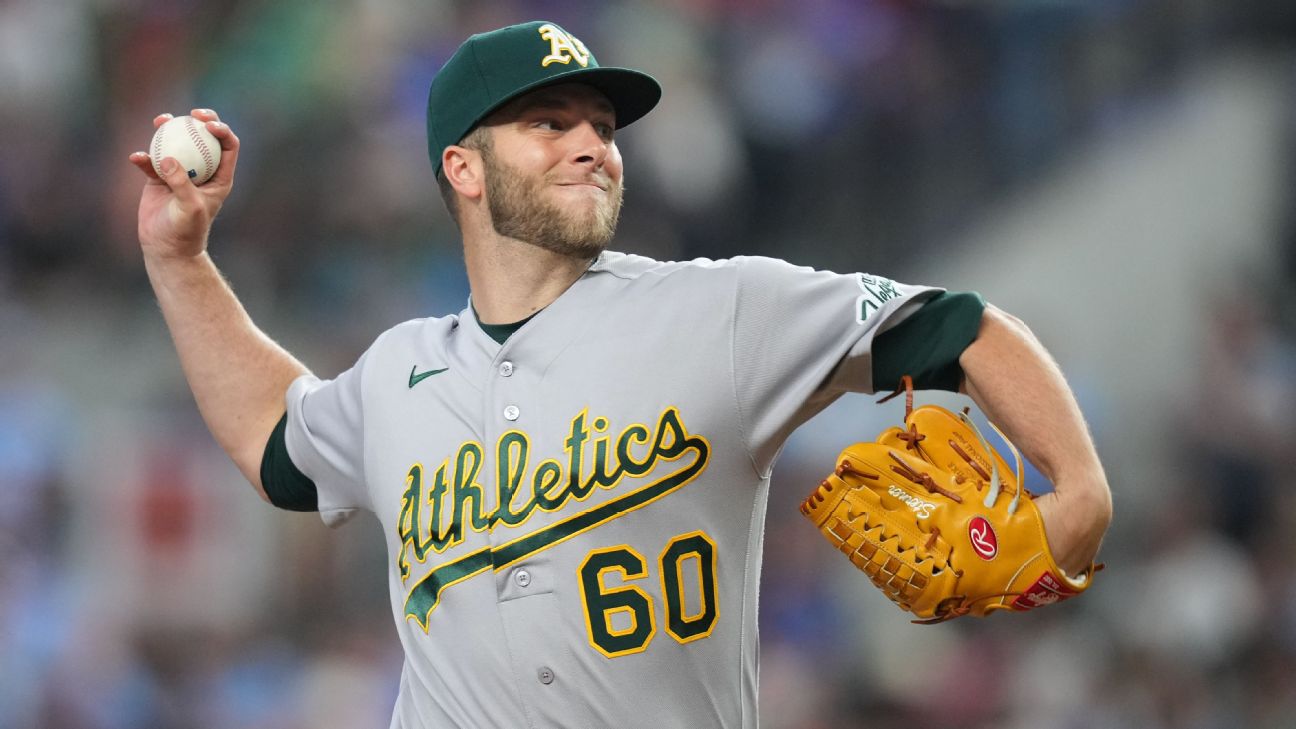
Source: ABC30 Fresno Sports. Casualplayhub News adds summary, context, and editorial framing while linking back to the original report.
The Oakland Athletics' bullpen took another hit this week as right-hander Justin Sterner was ruled out for the rest of the season following knee surgery. The procedure, performed Thursday in Los Angeles by Dr. Mike Banffy at Cedars-Sinai Orthopedic Center, addressed an issue on the inside part of Sterner's right knee. The arthroscopic surgery was accompanied by a platelet-rich plasma injection, a treatment aimed at accelerating healing and reducing inflammation.
Sterner returned to Sacramento on Friday to begin his rehabilitation process, but the timeline leaves no hope for a return in 2026. The 29-year-old reliever had been on the sidelines since July 17, initially nursing the knee problem before the decision was made to go under the knife. His absence extends a frustrating season for both the player and the franchise.
On the mound, Sterner struggled to find consistency. In 42 2/3 innings of work, he compiled a 6.12 ERA and a 2-3 record. While his strikeout rate hinted at potential, command issues and a tendency to give up hard contact plagued his outings. The Athletics, in the midst of a roster overhaul, had been relying on Sterner to provide depth in a young bullpen. His injury now forces the team to look elsewhere for innings in the final stretch of the season.
The surgery, specifically targeting the medial compartment of the knee, is a common procedure for pitchers who put significant torque on their lower body during delivery. The addition of a PRP injection suggests an effort to stimulate tissue repair and possibly prevent future problems. Sterner's age—29—means he still has time to recover fully and contribute in 2027, but the upcoming offseason will be crucial for his rehabilitation.
For the Athletics, this news is another setback in a season already defined by injuries and rebuilding. The team's front office will likely continue to audition young arms in the bullpen, looking for building blocks for the future. Sterner, who was acquired via trade or minor league free agency in recent years, had shown flashes of effectiveness but never sustained it. His absence leaves a gap in the middle innings, a role that will now be filled by less experienced options.
Sterner's recovery timeline is typical for arthroscopic knee procedures—usually four to six months of rest and gradual strengthening before throwing resumes. That means he should be ready for spring training next year, assuming no complications. The PRP injection, while not a guarantee, has become a standard adjunct to such surgeries, particularly for athletes.
As the Athletics look ahead, the focus will be on building a durable roster. Sterner's injury serves as a reminder of the physical toll on pitchers and the importance of medical staff in managing workloads. For now, the team will move forward without him, hoping that his rehabilitation goes smoothly and that he can return to form in 2027.
Article commentary
Justin Sterner's season-ending knee surgery is a sobering development for the Athletics, but it also fits a broader pattern of injury woes that have plagued the franchise. The 29-year-old reliever was never a cornerstone piece, yet his absence underscores the fragility of a pitching staff in transition. With a 6.12 ERA over 42 2/3 innings, Sterner's performance was far from elite, but his role as a middle-inning arm provided a buffer for a bullpen that has been overworked due to a thin rotation. From a medical standpoint, the arthroscopic procedure targeting the medial knee is relatively routine, but for a pitcher, any lower-body surgery carries risks. The torque generated during a fastball delivery places immense stress on the knee, and recovery requires patience. The inclusion of a platelet-rich plasma injection suggests the medical team is taking a proactive approach to enhance healing, which could reduce the odds of recurrence. Still, the recovery timeline—typically four to six months—means Sterner will be in a race to be ready for spring training. If he falls behind, his 2027 season could be compromised. For the Athletics, this injury is more than just a personnel loss. It adds to a growing list of setbacks that have hindered the team's ability to evaluate young talent. Sterner, who had been given a chance to prove himself in a low-leverage role, now becomes a question mark for the future. The front office will need to decide whether to tender him a contract for 2027 or move on, but given the low cost of a reliever with his track record, the likely outcome is a one-year deal with incentives. Looking at the broader picture, the Athletics are in the midst of a rebuild, and injuries to marginal players like Sterner rarely alter the trajectory. However, the cumulative effect of lost arms—whether from trades or injuries—can thin out depth. The club will likely turn to younger arms like Zach Jackson or Dany Jimenez for innings, which could be a silver lining if those pitchers seize the opportunity. Objectively, Sterner's season was a disappointment, and the surgery may actually give him a chance to reset. A 6.12 ERA in this era of baseball is not sustainable, and the knee issue might have been affecting his mechanics. The injection and rehab could address the underlying problem, allowing him to return with better command. If he can regain his pre-injury form—when he posted a 3.80 ERA in Triple-A—the Athletics could benefit. In the end, this is a minor note in the broader narrative of the 2026 Athletics season. The team is not competing for a playoff spot, so the focus is on development. Sterner's injury is a reminder that health is a variable that can derail even the best-laid plans. For the pitcher, it's a test of resilience. For the franchise, it's another opportunity to see what the next wave of arms can do.