Carter Bryant's Welcome to the NBA: A Lesson from Devin Vassell
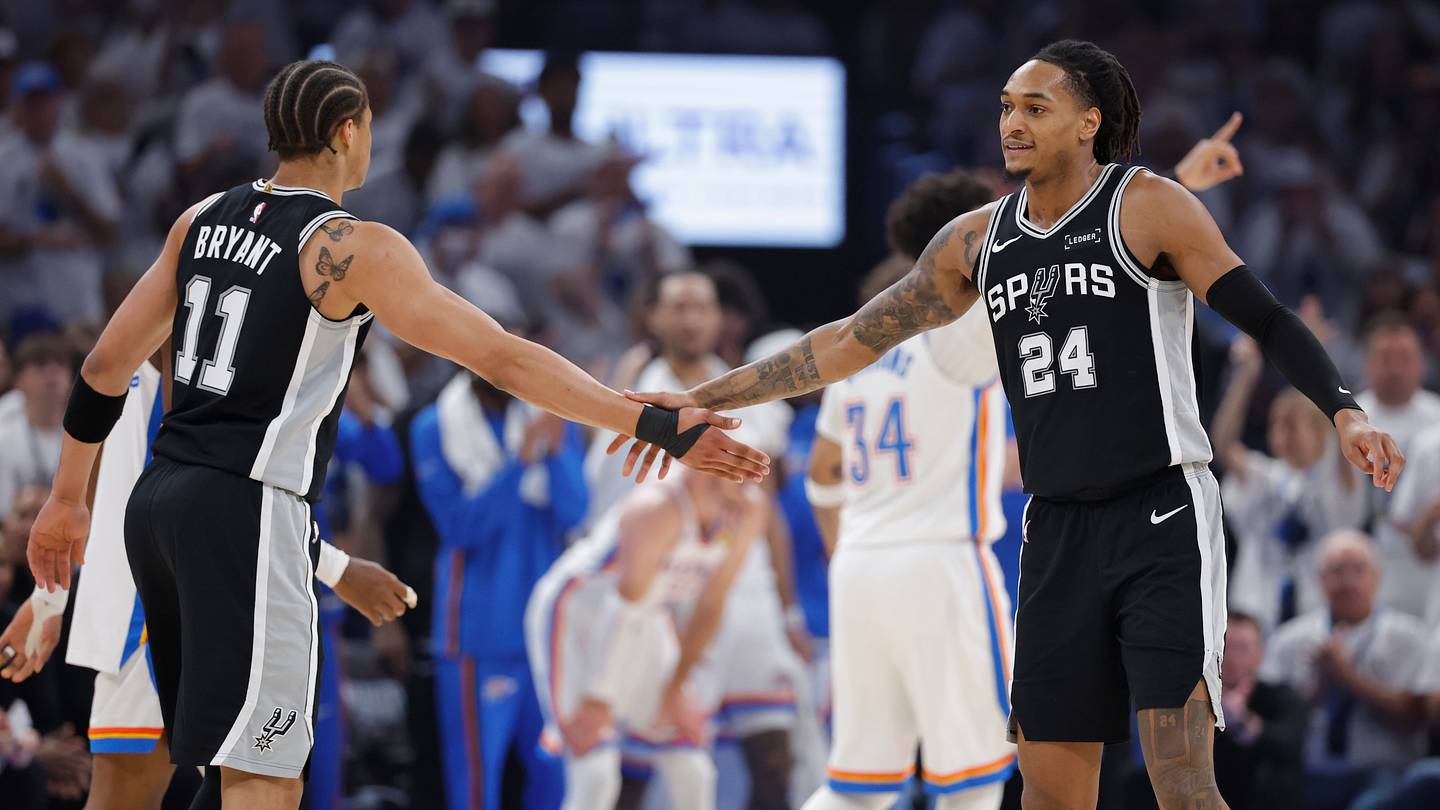
Source: SI NBA. Casualplayhub News adds summary, context, and editorial framing while linking back to the original report.
SAN ANTONIO — When the San Antonio Spurs selected Carter Bryant with the 14th pick in the 2025 NBA Draft, the organization’s general manager, Brian Wright, could barely contain his excitement. “I actually tried to make some moves to potentially go and get him,” Wright said after the selection. “Things just kind of break sometimes.” The reality of Bryant’s new life hit fast. Within days, the forward and Rutgers standout Dylan Harper flew from Brooklyn to San Antonio, meeting with team brass and coaches. Then came the work. Spurs shooting coach Jimmy Baron wasted no time. On Day 2 of practice, Bryant was tasked with guarding Devin Vassell. “I’ll never forget it,” Bryant said, laughing during a July appearance on the “Road Trippin’ Show” while in Las Vegas for NBA Summer League 2026. “I’ve never seen a human being hit that many contested shots. I promise you, he probably hit 18 shots in a row.” That onslaught, paired with two weeks of being bullied in the post by newly acquired veteran center Kelly Olynyk, sent Bryant into a spiral. “I should not have put my name in the draft,” he recalled thinking. “I am not ready to be here. This is bad. I don’t belong here.” Vassell, who emerged as one of the most consistent shooters for coach Mitch Johnson, helped lead the Spurs to their first NBA Finals appearance since 2014. Across 23 playoff games, the shooting guard averaged 13 points, 5.3 rebounds, 2.7 assists and 1.3 steals, shooting 43 percent from the field and 38 percent from three—second on the roster behind Julian Champagnie. But Bryant’s initial shock turned into admiration. Instead of shrinking, he began studying Vassell’s every move. “I sit there and watch him shoot for 15-20 minutes,” Bryant said. “As much as he’s my teammate, he’s one of my favorite players to watch. He’s electric when he gets hot.” That extra study paid dividends. After hitting a pair of clutch threes in a late-season game against the Portland Trail Blazers, Johnson made it clear Bryant would have a postseason role. In limited minutes, Bryant delivered, shooting 41 percent from distance while averaging just under 10 minutes per game. “His drive to want to get better and learn more has been off the charts,” veteran forward Keldon Johnson said during the Finals. “He’s so locked in. He’s taking notes. He’s energetic, doing everything we ask him to do. It’s been good to see C.B. and how far he’s come this season.” Added Johnson: “Carter has been as coachable as anybody.” Though the Spurs ultimately fell short of a championship, Bryant views the experience as a launchpad. “I think I showed flashes of what I’m capable of in the future,” he said, “but there’s a lot of work I have to do if I’m going to be one of the best players in the world.” These days, he likely fares much better against Vassell in practice, a testament to how far a rookie can come when he embraces the game’s hard lessons.
Article commentary
Carter Bryant’s early NBA baptism by fire—guarding a red-hot Devin Vassell—offers a compelling window into the psychological rigors of professional basketball. The moment crystallizes a truth often overlooked in draft hype: talent alone does not guarantee readiness. Bryant’s initial crisis of confidence, where he questioned his decision to enter the draft, reflects a universal rookie experience. Yet his response—turning humiliation into a study session—speaks to the Spurs’ developmental culture. San Antonio has long prided itself on building players through patience and process, and Bryant’s trajectory embodies that ethos. The decision to assign him to guard Vassell on Day 2 was no accident. It was a deliberate stress test, designed to reveal not just Bryant’s skill gaps but his character. The Spurs’ front office, led by Brian Wright, clearly saw potential in Bryant’s resilience. Wright’s admission that he tried to trade up for Bryant indicates the organization’s belief in his long-term value. Vassell’s role in this story is equally instructive. The 25-year-old shooting guard, who averaged 13 points on 38 percent three-point shooting in the playoffs, has evolved into a steady two-way presence. His ability to hit 18 contested shots in a row is a reminder of the relentless consistency required at the highest level. For Bryant, watching that display up close became a benchmark. The rookie’s subsequent improvement—shooting 41 percent from deep in the playoffs—suggests he absorbed the lesson. The Keldon Johnson and Mitch Johnson quotes underscore the team-first environment that helped Bryant thrive. The Spurs’ coaching staff clearly managed his minutes carefully, integrating him without overwhelming him. This approach mirrors the franchise’s historical success with late-first-round picks, from Tony Parker to Manu Ginobili. Bryant’s story, however, also raises questions about the mental toll of such hazing. Not every rookie rebounds from an identity crisis. The Spurs’ ability to pair high-pressure moments with supportive mentorship is a delicate balance. For Bryant, the payoff came in the form of postseason experience and a renewed sense of purpose. But the broader lesson is that the NBA’s “welcome” moments—whether they come from a teammate’s hot streak or a veteran’s post moves—are not just tests of skill. They are assessments of will. Bryant passed his first exam, but the league will keep administering them. As he himself noted, “there’s a lot of work I have to do.” That humility, combined with a demonstrated capacity for growth, bodes well for his future—and for a Spurs team that values patience over instant gratification.