Julius Randle Lands Last in Atlantic Division Power Forward Rankings
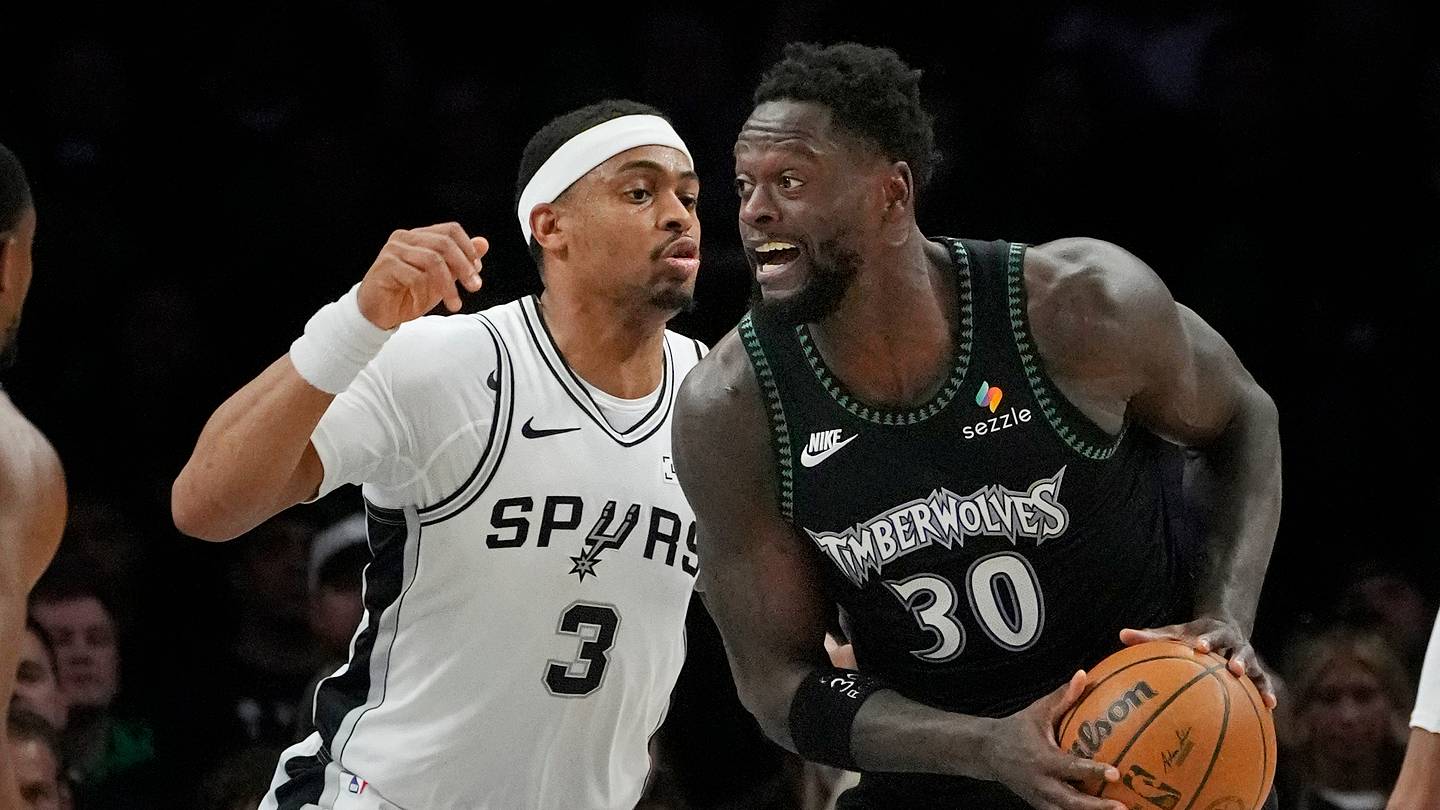
Source: SI NBA. Casualplayhub News adds summary, context, and editorial framing while linking back to the original report.
The Brooklyn Nets made one of the biggest splashes of the NBA offseason by engineering a three-team trade that sent longtime center Nic Claxton and a package of picks to the Timberwolves in exchange for Julius Randle. It was a move that reshaped the Nets’ identity and signaled a pivot toward immediate competitiveness. Randle comes to Brooklyn with a narrative that is far from straightforward. On paper, he produces the kind of numbers that lead to wins: 21.1 points, 6.7 rebounds, and 5.0 assists per game last season with Minnesota, shooting 48.1% from the field. He can score at all three levels, crash the glass, and create for teammates. His three-point shooting can be a game-changer when he’s hot, and he holds his own defensively in stretches. Yet the flaws are well-documented—inconsistent effort, defensive lapses, and a tendency to stall in high-pressure moments. Many in Minnesota were ready to see him leave after repeated playoff disappointments. Now, with a lower bar for success in Brooklyn, there is reason to believe Randle can have a big year. The Nets are chasing a play-in spot, and Randle is the type of floor-raiser who can elevate a roster. But how does he stack up against the other power forwards in the Atlantic Division? A recent ranking places him at the bottom of a deep group.
At number four is LeBron James, now with the Philadelphia 76ers after signing in the offseason. The 21-year veteran remains one of the greatest players in NBA history. Last season with the Lakers, he averaged 20.9 points, 6.1 rebounds, and 7.2 assists while shooting 51.5% from the field. He has spent over two decades being the best player on the court on both ends of the floor. But in Philadelphia, his role shifts. He will be more of a complementary piece during the regular season, allowing Joel Embiid and others to take the lead. That contextual change is why he lands lower on this list. Make no mistake—James can still take over games, especially in the playoffs, but his regular-season usage and responsibility are different now.
Third place goes to Scottie Barnes of the Toronto Raptors. Last season marked his true breakout. Barnes averaged 18.1 points, 7.5 rebounds, 5.9 assists, 1.4 steals, and 1.5 blocks per game, shooting 50.7% from the field. He reached his defensive ceiling, earning All-NBA recognition for his ability to guard multiple positions. Offensively, he showed improved playmaking and a more aggressive approach to attacking the rim. The remaining question is his three-point shot. If Barnes can continue to develop that part of his game, the sky is the limit for his long-term potential.
At number two is OG Anunoby of the New York Knicks. Last season, he averaged 16.7 points, 5.2 rebounds, 2.2 steals, and 1.6 blocks per game, shooting 48.4% from the field. Anunoby has long been regarded as one of the best two-way wings in the league. His defense is elite, but his offensive game has grown significantly over the past few years. He was dominant in the playoffs, delivering clutch moments that helped the Knicks capture the championship. Still in his prime, Anunoby is a key reason the Knicks have a chance to repeat.
Topping the list is Jayson Tatum of the Boston Celtics. After returning from an ACL injury late last season, Tatum quickly found his rhythm. He averaged 21.8 points, 10.0 rebounds, 5.3 assists, and 1.4 steals per game, shooting 41.1% from the field. His return helped Boston secure the two-seed in the Eastern Conference. With Jaylen Brown now gone, the Celtics will lean on Tatum as the undisputed alpha. The five-time All-NBA forward has the talent to carry that load. He will look to stay healthy and fully regain his peak form this season.
Photo credits: Jesse Johnson-Imagn Images (Randle), Gary A. Vasquez-Imagn Images (James), Stephen Lew-Imagn Images (Barnes), Wendell Cruz-Imagn Images (Anunoby), Bill Streicher-Imagn Images (Tatum). Published by Zach Hiney, covering the Brooklyn Nets for On SI.
Article commentary
This ranking of Atlantic Division power forwards offers a snapshot of how the position has evolved across the conference, but it also raises questions about the criteria used. Julius Randle, despite being placed last, has a statistical profile that surpasses some of the players above him. His 21.1 points and 5.0 assists per game are higher than Anunoby’s 16.7 and 2.2, and his rebounding is comparable to Barnes’s. Yet the ranking clearly prioritizes playoff performance and defensive impact. Randle’s repeated postseason failures in Minnesota—where his efficiency dropped and his decision-making faltered—weigh heavily. In a division that includes a championship-caliber defender in Anunoby and a defensive ace in Barnes, Randle’s weaknesses become more glaring. His placement may be fair, but it also reflects a market that values reliability over raw production. LeBron James’s fourth-place spot is intriguing. At 41 years old, he is still a top-10 player in the league, but his new role in Philadelphia diminishes his regular-season counting stats. The ranking acknowledges his ability to dominate in the playoffs but lowers him because of a reduced workload. That logic makes sense, but it also risks underestimating his impact. Even in a complementary role, LeBron’s presence alters defensive schemes and creates spacing. He could easily outperform this ranking if the 76ers manage his minutes wisely. Scottie Barnes at number three is a testament to his defensive growth. His All-NBA defensive recognition is well-deserved, and his offensive numbers are solid. However, his three-point shooting remains a question mark. If he can improve that aspect, he has the potential to challenge for the top spot. His age and trajectory give him a higher ceiling than Randle or James. OG Anunoby at number two is a reflection of his championship pedigree. He is the ultimate two-way player, capable of guarding the opponent’s best scorer while also contributing offensively. His clutch moments in the playoffs elevated his value. Yet his offensive numbers are not as flashy as Tatum’s or Randle’s. The ranking suggests that two-way consistency and playoff success outweigh raw stats. Jayson Tatum’s top spot is almost unquestioned. Despite a slow return from an ACL injury, he proved he is still elite. His ability to rebound, score, and defend at a high level makes him the clear leader. With Jaylen Brown gone, Tatum will face even more defensive attention. If he stays healthy, he could cement himself as the best power forward in the division—and perhaps the league. Overall, this ranking underscores the Atlantic Division’s depth at the power forward position. From Tatum’s superstar status to Randle’s floor-raising ability, each player brings a distinct flavor. The Nets’ decision to bet on Randle is a gamble that could pay off if he embraces a lower-pressure role. But as the ranking shows, he has a long way to go to catch the elite company in his division.