Falcons' QB Depth Tested After Tagovailoa's Rocky Start
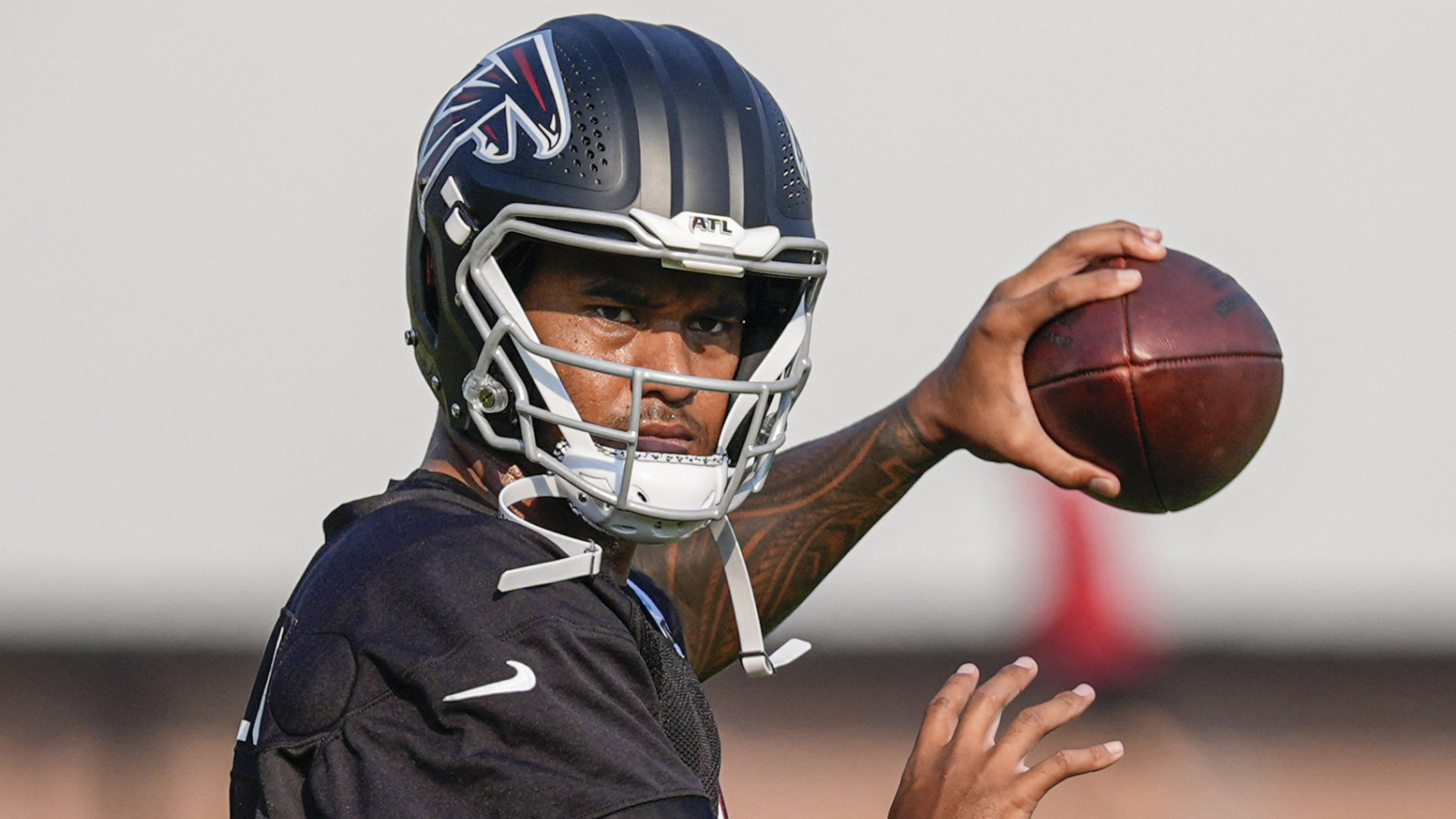
Source: Yard Barker. Casualplayhub News adds summary, context, and editorial framing while linking back to the original report.
Ad eligibility review: sensitive-topic
The Atlanta Falcons entered the offseason with a clear plan: build around Michael Penix Jr., the rookie quarterback they selected in the first round of the 2024 draft. To hedge against his injury history, they signed Tua Tagovailoa, a former Pro Bowler with his own medical concerns. That strategy now looks precarious after Tagovailoa's uninspiring debut in the preseason opener against the Denver Broncos. Penix remains sidelined, recovering from a partially torn ACL suffered in November 2025, and has not participated in contact drills. That forced Tagovailoa into the starting role, but his performance did little to inspire confidence. On his first snap, he fumbled the exchange from center, a jarring start that set the tone for the evening. Tagovailoa finished 3-for-5 for 22 yards with no touchdowns or interceptions. While those statistics seem average, the eye test was far less forgiving. He appeared hesitant, often holding the ball too long, and was consistently pressured by Denver's aggressive front seven. One throw in particular—a short pass that fell well short of its intended target—highlighted the lack of rhythm in the offense. The Falcons' first-team unit managed only a few first downs before leaving the field, and the offense felt stagnant throughout their time on the field. Social media posts captured the moment: "Kyle Pitts was targeted on 4 of the 5 attempts," a telling sign of limited reads. It is fair to offer Tagovailoa some leeway. He spent four seasons in Mike McDaniel's intricate system in Miami, and learning a new playbook takes time. But the broader concern is the fragility of the quarterback room. Tagovailoa's own concussion history—multiple head injuries that sidelined him during his time with the Dolphins—raises questions about his durability. Meanwhile, Penix's ACL recovery leaves him in a holding pattern. The competition for the starting job, which was supposed to be a healthy battle, has barely begun because Penix cannot yet absorb contact in practice. The Falcons have built a roster that appears ready to compete. Their defense ranks among the league's best, and offensive playmakers like running back Bijan Robinson provide a dynamic weapon. Yet all of that potential hinges on consistent quarterback play. The performance against Denver was just one preseason game, but it amplified doubts about whether either Tagovailoa or Penix can stay healthy and effective enough to lead the team. For now, the Falcons are not in panic mode, but the cracks in their quarterback foundation are becoming harder to ignore.
Article commentary
The Atlanta Falcons find themselves in a familiar predicament: a roster built to win now, yet tethered to quarterbacks with significant health risks. The decision to sign Tua Tagovailoa as insurance for Michael Penix Jr. was logical on paper, but the execution has exposed the inherent fragility of the plan. Tagovailoa's preseason debut was not disastrous statistically, but the manner in which he played—tentative, off-balance, and under duress—suggests that the transition from Mike McDaniel's offense to a new system will take time. This is not a surprise; learning a new playbook mid-career is challenging, especially for a quarterback whose game relies on quick processing and timing. However, the larger issue is the cumulative risk. The Falcons now have two quarterbacks who have missed significant time due to injury. Penix's partially torn ACL, sustained in November 2025, is a serious concern for a player who was drafted to be the long-term answer. Even if his recovery proceeds smoothly, the injury history raises questions about his ability to withstand the rigors of an NFL season. Tagovailoa, meanwhile, carries the weight of multiple concussions, and any future head trauma could end his career. The team's offseason strategy effectively bet that at least one of these two would stay healthy and perform. Early returns suggest that hope is a thin foundation. The offensive struggles against Denver were not solely Tagovailoa's fault—the protection was uneven, and the game plan was likely vanilla—but the lack of rhythm was palpable. The Falcons' strength lies in their defense and running game, which can mask average quarterback play. But in a conference with elite signal-callers like Jalen Hurts, Brock Purdy, and Dak Prescott, average may not be enough. The best-case scenario is that Tagovailoa settles in and Penix returns healthy, creating a legitimate competition. The worst case is that injuries derail both, leaving Atlanta scrambling for a stopgap. The front office must now consider whether to explore other options, such as signing a veteran free agent or making a trade, but that would require admitting their current plan has flaws. For now, the Falcons are in a holding pattern, hoping that time and practice will resolve the uncertainties. The preseason is a time for experimentation, but the cracks in the quarterback room are already visible. Whether they deepen into a crisis depends on health, development, and a bit of luck. The NFC South is winnable, but the margin for error is thin.