Harvard Endowment Reveals $2.2B SpaceX Stake
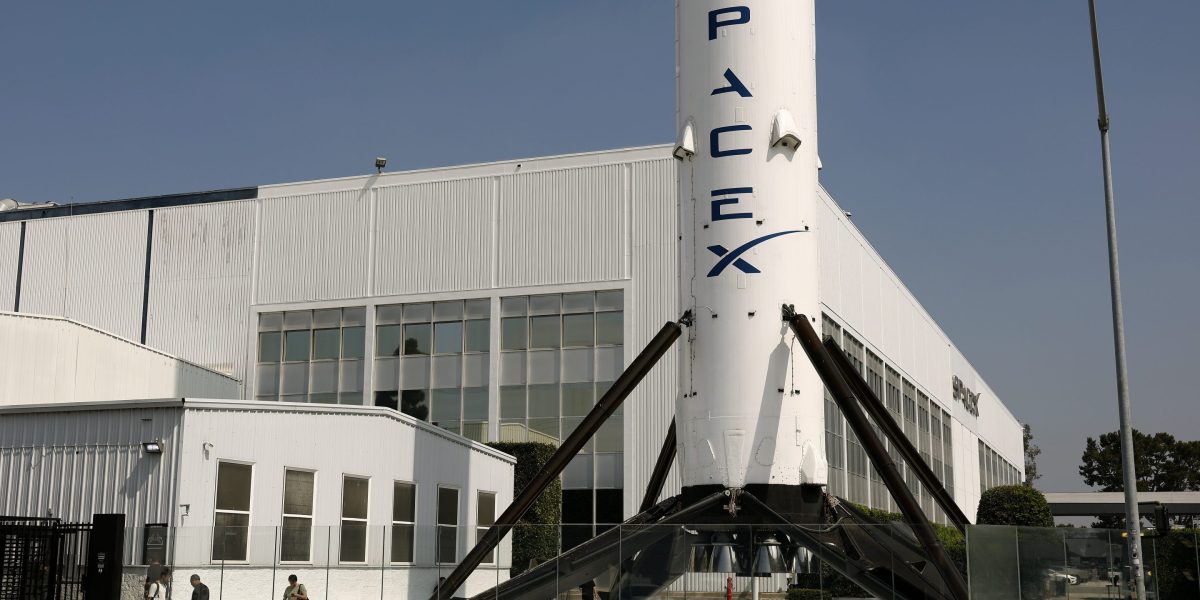
Source: Fortune. Casualplayhub News adds summary, context, and editorial framing while linking back to the original report.
Harvard Management Co. has laid bare a $2.2 billion bet on SpaceX, signaling how the university’s endowment reaped rewards from an early wager on Elon Musk’s rocket enterprise. The stake was revealed in a 13F filing on Friday, positioning Harvard as one of the largest endowment holders of Space Exploration Technologies Corp. Within the filing, which listed $4.3 billion in total U.S. equities, SpaceX emerged as the single largest stock holding. Harvard’s overall endowment stood at $57 billion as of June 2025, the most recent publicly available figure.
SpaceX’s blockbuster initial public offering in June 2025 sent ripples through the world of university finance. Endowments that had funneled capital into the company through venture capital vehicles, sometimes more than a decade ago, suddenly found themselves sitting on outsized gains. The University of California’s investment arm reported a position worth about $1 billion in a separate filing this week. The University of North Carolina and Washington University in St. Louis also disclosed holdings, underscoring a broader trend of academic institutions benefiting from the space economy’s rise.
Harvard’s reported stake likely reflects a combination of directly owned shares and distributions from private funds, according to industry observers. Patrick McKiernan, a spokesman for Harvard Management, declined to comment on individual investments. The timing of the disclosure is notable. U.S. universities face a tightening financial environment: threats to federal research funding, a shrinking pool of college-age students due to demographic shifts, and muted returns from private equity have all weighed on budgets. The windfall from SpaceX, which now boasts a valuation exceeding $1.8 trillion, provides a welcome cushion.
Data from Wilshire Trust Universe Comparison Service shows that endowment funds with more than $500 million returned a median of 18.9% before fees in the year ending June 2025. SpaceX’s stock performance, however, has been volatile since its debut at $135 per share. On Friday, shares slipped 0.9% to close at $140. The 13F filing requirement applies to money managers overseeing more than $100 million in U.S. equities; they must submit the form within 45 days after each quarter ends. This mechanism offers a rare window into how large institutional investors allocate capital, though it often lags behind actual trading activity.
The Harvard disclosure underscores the growing intersection of venture capital and public markets. SpaceX’s transition from private darling to publicly traded giant has unlocked liquidity for early backers, but it also exposes endowments to market swings. For universities juggling budgetary pressures, such positions can be both a lifeline and a risk. As the space race intensifies, other institutions may follow suit, hoping to replicate Harvard’s success. Yet the path from early-stage investment to public offering is long and uncertain, and not every bet will yield a $2.2 billion payoff.
Article commentary
Harvard’s $2.2 billion SpaceX stake is a striking illustration of how elite university endowments have leveraged venture capital to generate outsized returns. The disclosure, made through a routine 13F filing, reveals a strategy that goes beyond traditional stock picking: it reflects years of patient capital invested in a company that was once considered a moonshot. For Harvard, the payoff is substantial, but the broader implications for the endowment model are worth examining. First, the timing is critical. Universities are navigating a trifecta of headwinds: federal research funding faces political uncertainty, the demographic cliff means fewer tuition-paying students, and private equity markets have delivered lackluster returns. Against this backdrop, a single blockbuster investment like SpaceX can buoy an entire portfolio. Harvard’s $57 billion endowment is one of the largest globally, but even it feels the pressure. The 18.9% median return for large endowments, while solid, masks wide dispersion. Those with early access to high-growth private companies are pulling ahead. Second, the reliance on venture capital raises questions about risk and transparency. 13F filings only capture publicly traded securities, so Harvard’s reported stake likely includes shares received from private fund distributions. The actual exposure to SpaceX could be larger or smaller, depending on how the endowment categorizes its holdings. For smaller institutions without the same access, this creates an asymmetry. The University of California’s $1 billion stake is impressive, but it is a fraction of Harvard’s. The gap between the haves and have-nots in endowment investing may widen. Third, the SpaceX IPO itself was a watershed moment. At a $1.8 trillion valuation, the company now rivals the largest corporations in the world. Yet its stock has already shown volatility, dropping from the IPO price of $135 to recent levels around $140. For endowments that hold large positions, such swings can affect overall portfolio stability. Harvard’s long-term horizon may cushion short-term fluctuations, but the concentration risk is undeniable. A single stock representing more than half of the equity portfolio is a bet that could backfire. Finally, the commentary from Harvard Management—or lack thereof—is telling. The spokesman’s refusal to discuss individual investments is standard practice, but it highlights the opacity that often surrounds endowment strategies. Donors, students, and faculty may question how such bets align with the university’s mission. SpaceX’s growth is tied to government contracts and space exploration, which some may view as a public good, but others might criticize as benefiting from taxpayer-funded research. In the end, Harvard’s SpaceX stake is a case study in the power of early-stage investing and the risks of concentration. It also underscores the growing importance of venture capital in university endowments, a trend that is likely to continue. As other institutions scramble to find the next SpaceX, they would do well to remember that not every rocket launches successfully.