Airbnb CEO: AI writes 60% of code, founder mode crucial
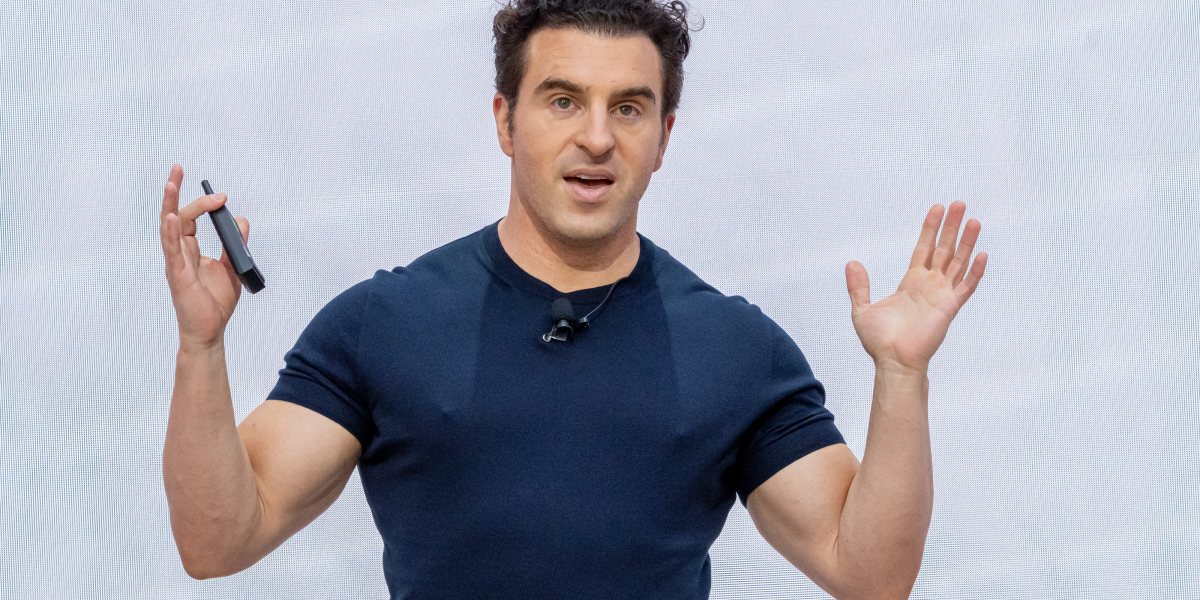
Source: Fortune. Casualplayhub News adds summary, context, and editorial framing while linking back to the original report.
Airbnb CEO Brian Chesky has never left what he calls 'founder mode' — a hands-on leadership style that prioritizes trust, attention to detail, and organizational cohesion. In the age of AI, he argues that companies must adopt this mindset and move like startups to succeed. 'The winners of AI are going to be the companies that embrace transformation,' Chesky told CNBC last week. 'You might call it founder mode, not manager mode.'
Chesky has long insisted that CEOs should stay immersed in the details. Now, with AI writing 60% of Airbnb’s new code and dramatically speeding up product development, he sees this approach as a way to keep his Fortune 500 giant agile. He personally monitors employees’ progress on AI initiatives, token usage, and output, ensuring the company pioneers consumer AI platforms. 'AI is the best thing to ever happen to Airbnb,' Chesky told investors on the company’s earnings call on August 6. 'Today, we’re building, testing, and iterating faster than we could just a year ago.'
Earlier this year, Chesky revealed that AI helped ship new improvements faster, reducing the time from concept to launch by as much as 60%. After a second-quarter earnings beat with $3.6 billion in revenue, Chesky announced plans to spend even more on AI tokens this year, aiming to transform Airbnb into an 'AI-native company.' During the earnings call, he highlighted the efficiency of an AI-powered customer service tool that resolved 45% of user inquiries without human intervention. He also confirmed that Airbnb plans to test AI-powered search. 'AI is accelerating this work across search, sign-up, checkout, and payments,' he said. 'By reducing friction across the guest journey, we are converting more traffic into bookings, and that’s become one of the biggest drivers of our growth.'
The concept of founder mode captured widespread attention in 2024 after Y Combinator cofounder Paul Graham published an essay dismantling conventional Silicon Valley management, inspired by a talk Chesky gave at a Y Combinator event. 'When I started Airbnb, I was a founder. I ran it the way a founder runs the company,' Chesky told Fortune’s Ruth Umoh. 'I was in the details. I knew everything going on. I was the chief product officer of the company.' As Airbnb grew into a $110 billion giant, Chesky evolved his leadership style, delegating more and trusting his team to carry out his vision. 'We should start in the details, develop trust, develop muscle memory, and then let go,' he said. 'Great leadership is presence, not absence.'
Today, Airbnb has about 8,200 employees, yet Chesky still manages the company like a small startup. 'It’s such a fallacy in modern corporate America,' he said of running companies as autonomous structures. 'Companies are organizations, organization quite literally means we organize people to work together.' Chesky is not alone among Fortune 500 CEOs who are also founders: Dell Technologies, BlackRock, Meta, and Nvidia are among those still led by their visionaries. According to Fortune’s calculations, 26 of the 2026 Fortune 500 companies were founder-led.
Chesky is so bullish on AI that he is launching his own lab. While details remain scarce, he is excited about the technology’s potential. 'I think we’re in the beginning of a thousand-year journey on AI, so to speak,' he said in a recent interview with Yahoo Finance. 'I think we’ve barely scratched the surface of what’s possible with AI.' In the meantime, Chesky is working to transform Airbnb into a one-stop shop for travel and vacationing, a move that could boost revenue by $1 billion, according to sources close to the matter. 'There’s been very little progress on consumer AI,' Chesky said. 'I think the current construction of agents has been pretty limited. And I think that’s why daily life hasn’t really changed. You’re going to see a renaissance around consumer AI that is going to begin to change daily life.' Chesky predicted it could take up to 18 months for the new AI software to debut, acknowledging the journey will be a 'very, very tall mountain.' He believes the future of vacation planning lies in AI chatbot technology. 'I think a year from now, you’re going to see it be very AI-native,' he said. 'I can’t speak for the rest of the industry, but I would assume that they’re all going to have to follow.'
Article commentary
Brian Chesky’s insistence on maintaining 'founder mode' as Airbnb scales offers a compelling counterpoint to the conventional wisdom that large companies must adopt bureaucratic, manager-led structures. His argument that AI is accelerating the need for startups to move fast and stay close to the details resonates in an era where technology is reshaping industries at an unprecedented pace. By attributing 60% of Airbnb’s new code to AI, Chesky highlights a significant shift in how software development is done — automation is not just a tool for efficiency but a core driver of innovation. This raises important questions about the future of work, especially for engineers and product managers, as AI takes on more coding responsibilities. Chesky’s emphasis on 'founder mode' is not merely nostalgic; it reflects a strategic choice to maintain agility and alignment. In a company of 8,200 employees, his hands-on monitoring of AI initiatives and token usage suggests a deliberate effort to avoid the silos and sluggishness that often plague large organizations. The success of such an approach, however, depends on the CEO’s ability to balance deep involvement with delegation — a skill Chesky claims to have refined over time. His quote, 'Great leadership is presence, not absence,' encapsulates a philosophy that challenges the hands-off management style popularized by some Silicon Valley leaders. The financial results underscore the effectiveness of this strategy. Airbnb’s $3.6 billion in quarterly revenue and the 45% AI-driven resolution of customer inquiries demonstrate tangible benefits. Yet, the broader implications for consumer AI are more complex. Chesky’s prediction of a 'renaissance' in consumer AI within the next 18 months is ambitious, especially given the mixed track record of AI chatbots in travel planning. Privacy concerns, user trust, and the need for seamless integration with existing systems are significant hurdles. Moreover, the idea of becoming an 'AI-native company' raises questions about data dependency and algorithmic bias. Chesky’s announcement of a personal AI lab signals a long-term commitment to research, but the details remain vague. The potential $1 billion revenue boost from a one-stop travel platform is intriguing, but it also invites competition from other tech giants and startups. The travel industry is notoriously fragmented, and AI might not be a silver bullet for all its friction points. Still, Chesky’s track record of disrupting the hospitality sector gives his vision credibility. The fact that 26 of the 2026 Fortune 500 companies are founder-led suggests that the 'founder mode' approach may be gaining traction, but it remains to be seen whether it can scale indefinitely without sacrificing the very agility it seeks to preserve. Ultimately, the article presents a nuanced view of leadership in the AI age. Chesky’s blend of founder mentality and AI adoption offers a roadmap for other CEOs, but it also underscores the challenges of balancing innovation with operational discipline. The next year will be critical in determining whether Airbnb’s AI-native strategy can sustain its growth and redefine consumer travel experiences.