Wisconsin Primary Upset Shakes Prediction Market Reputation
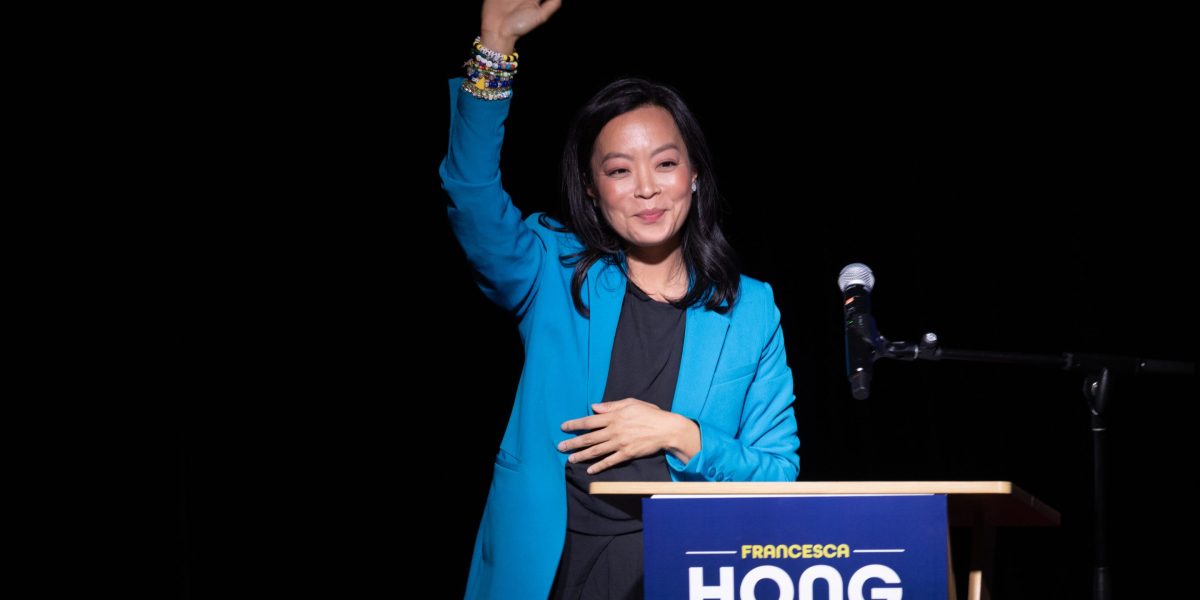
Source: Fortune. Casualplayhub News adds summary, context, and editorial framing while linking back to the original report.
The Democratic primary in Wisconsin's governor race delivered a shock that rippled through both political circles and the burgeoning world of prediction markets. Progressive candidate Francesca Hong, widely seen as the frontrunner, lost to rival David Crowley by a margin of less than half a percentage point. The upset was particularly jarring for Polymarket and Kalshi, two platforms that had built a reputation for near-perfect accuracy after correctly forecasting the outcome of every state in the 2024 presidential election. In the days leading up to the primary, both markets had assigned Hong roughly a 95% probability of winning, mirroring the sentiment of traditional polling firms. When the votes were tallied, however, Crowley emerged victorious, a result that left many questioning the reliability of these forecasting tools.
Polymarket quickly deleted a social media post that had boasted of Hong's 96% chance of winning, a post that also noted her lack of endorsements from prominent Democratic socialists like Bernie Sanders and Alexandria Ocasio-Cortez. The deletion itself became a point of criticism, as observers noted the platform's willingness to amplify its predictions when they seemed strong but retreat when they proved wrong. Kalshi's leadership took a different approach, defending the probabilistic nature of their forecasts. In a social media post, CEO Tarek Mansour explained that a 95% probability still implies a one-in-20 chance of the underdog winning—a rare but explicitly acknowledged possibility. Co-founder Luana Lopes Lara echoed this sentiment, writing simply, “5% is not 0%.” Their defense highlights a fundamental tension in the prediction market space: the public often interprets high probabilities as certainties, even when the underlying math says otherwise.
This week's result is not the first time prediction markets have mispriced an election. In June, both Kalshi and Polymarket gave reality-TV personality Spencer Pratt about a 75% chance of advancing from Los Angeles's nonpartisan mayoral primary to the general election. He finished third. The month before, Kalshi assigned Rep. Thomas Massie a similar chance of winning the Republican primary in Kentucky's 4th Congressional District. Massie lost to Trump-backed challenger Ed Gallrein. In each of those cases, the probabilities left more room for an upset, but the Wisconsin outcome—with its 95% odds—was a far more dramatic miss.
The timing is particularly awkward for prediction markets, which have seen their credibility surge since the 2024 election. Both Polymarket and Kalshi were widely credited with accurately signaling Donald Trump's edge in a race that many conventional polls portrayed as a tossup. Their influence has since expanded into mainstream media: CNN named Kalshi its official prediction-markets partner, and Dow Jones plans to incorporate Polymarket data across The Wall Street Journal, Barron's, and MarketWatch. These partnerships have elevated prediction markets as a complement to traditional polling, but this week's failure may give critics ammunition.
Statistician and political forecaster Nate Silver weighed in on the broader debate in a recent social media post. “I think prediction markets are cool. But people should stop treating them as magic, and I don’t think they’re a good substitute for polls, or belong in models,” he said. Silver's comment captures the cautious optimism that many analysts hold: prediction markets offer valuable real-time sentiment, but they are not crystal balls. For the progressive wing of the Democratic Party, the loss of Francesca Hong is a setback. For the prediction market industry, it is a humbling reminder that even the most sophisticated algorithms and aggregated bets can be wrong. As the platforms continue to integrate into media and political forecasting, the question remains whether users will learn to interpret probabilities correctly—or whether they will continue to expect perfection.
Article commentary
The Wisconsin primary upset offers a timely case study in the limits of prediction markets. Over the past two years, platforms like Polymarket and Kalshi have emerged as powerful tools for aggregating collective wisdom, often outperforming traditional polls. Their success in the 2024 presidential election, where they correctly called every state, cemented a reputation for uncanny accuracy. That reputation, however, has always been built on a fragile foundation: the conflation of probabilistic forecasts with certainty. When a market gives a candidate a 95% chance of winning, it is not a guarantee—it is a statement about expected outcomes over many hypothetical trials. Yet in the public eye, such numbers often feel like a foregone conclusion. The backlash against Polymarket and Kalshi after Hong's loss reflects a misunderstanding of how these markets work. The platforms' defenders are correct: a 5% chance is not zero, and events with that probability do occur. But the human brain struggles to internalize low-probability risks. When a 95% favorite loses, the emotional reaction is surprise and betrayal, not acceptance of statistical variance. This cognitive gap is a persistent challenge for any forecasting tool that uses probabilistic language. The incident also raises questions about the incentives driving prediction markets. Platforms have a commercial interest in promoting their accuracy, especially as they seek media partnerships and user adoption. Polymarket's deleted boastful post is a case in point: the platform was eager to highlight its high confidence in Hong's victory, but quick to erase the evidence when it proved wrong. This selective transparency undermines trust. If prediction markets are to serve as reliable complements to traditional polling, they must embrace the full spectrum of their outcomes—including the embarrassing misses. Nate Silver's cautionary note is worth heeding. Prediction markets are not a substitute for scientific polling, which relies on carefully designed samples and methodological rigor. Markets, on the other hand, aggregate the opinions of a self-selected group of traders, often influenced by media narratives and herd behavior. They can be valuable as a real-time sentiment indicator, but they are prone to herding, manipulation, and the same biases that affect any crowd-sourced system. The Wisconsin result is not an isolated anomaly. Similar mispricings have occurred in the past—Spencer Pratt's 75% odds in Los Angeles, Thomas Massie's 75% chance in Kentucky. These are not outliers; they are inherent to the system. The difference is that the Wisconsin case had a higher probability assigned, making the miss more glaring. As prediction markets become more integrated into mainstream media—CNN's partnership with Kalshi, Dow Jones's plan to use Polymarket data—the stakes grow higher. These partnerships lend an aura of legitimacy that may not always be warranted. Journalists and consumers alike need to understand that a 95% probability is not a guarantee. The platforms themselves have a responsibility to educate their users, not just celebrate their wins. Ultimately, the Wisconsin primary serves as a healthy check on the hubris that can accompany success. Prediction markets are a useful tool in the forecasting toolkit, but they are not infallible. The challenge is to maintain a balanced perspective—one that appreciates their strengths while acknowledging their limitations. As the old saying goes, “It’s not whether you’re right or wrong, but how much you lose when you’re wrong.” In this case, the loss was a reminder that even the smartest crowd can occasionally be surprised.