Anthropic CEO Admits AI Trust Crisis, Public Fears Exploitation
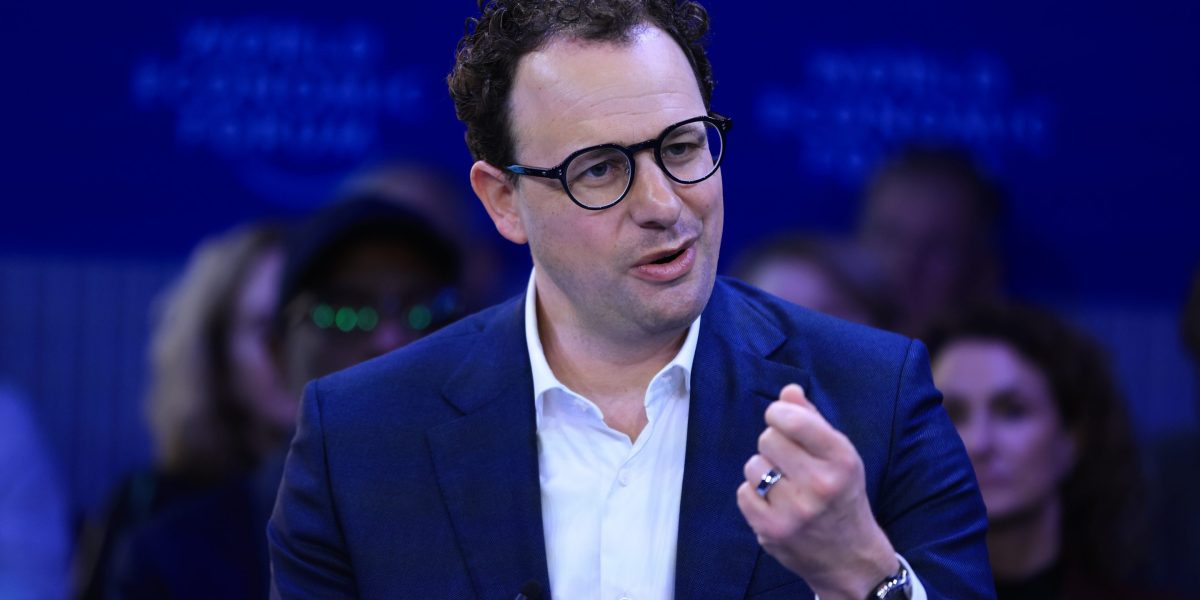
Source: Fortune. Casualplayhub News adds summary, context, and editorial framing while linking back to the original report.
Anthropic cofounder and CEO Dario Amodei pushed back against the idea that he is personally responsible for the public's pervasive sense of doom around artificial intelligence, but he did not shy away from acknowledging a deep crisis of trust. In a rare, lengthy post on X on Saturday—an unusual move for someone who generally avoids social media—he tackled the twin challenges of AI regulation and public perception.
Amodei first addressed the regulation debate, framing it as a false choice. On one side are those who argue that regulation leads to regulatory capture and concentrates power in the hands of a few large companies. On the other are those who believe that widely distributing AI, including through open-weight models, is the best way to keep the technology in check. He pointed out that institutions like the court system can decentralize power, and noted that Anthropic has supported policies that slow down frontier AI companies while giving smaller rivals a competitive edge.
Still, he conceded that AI is structurally a technology that tends to concentrate power—but not because of regulation. Rather, he attributed this to AI scaling laws, referring to the phenomenon where a model's performance improves as the resources used to build it increase. Open-weight models offer a slight improvement, he argued, but they merely shift the concentration of power to those with the most computing capacity and chips.
"By contrast I think the right 'rules of the road' can simultaneously (a) address AI's cyber/bio/alignment risks, (b) institutionally constrain the power of the frontier AI companies, and (c) leave room for open-weights models while also addressing the specific risks that they bring," Amodei wrote. He added that he supports the creation of a FINRA-like entity for AI and the Trump administration's stance on AI testing.
Then he turned to his own rhetoric about AI. He denied being overly negative, pointing to essays he has written that equally present the technology's risks and benefits. Social media clips, however, often characterize his statements as excessively gloomy to generate clicks, he added. To be sure, the Anthropic CEO famously predicted that AI could wipe out 50% of white-collar jobs. But more recently, he toned down that warning, calling AI a multiplier of output rather than a destroyer of jobs. OpenAI CEO Sam Altman has similarly pivoted his messaging, as both companies head toward IPOs.
In his X post, Amodei agreed that the public holds a negative view of AI, which he considers a big problem, but he did not place the blame on himself or any other individual AI executive. "I think it is fundamentally a crisis of trust. I think that ordinary people don't trust companies, governments, or the tech industry and always suspect that we are cooking up some new way to screw them over," he explained.
Such distrust has been around for decades, he said, and a marketing campaign will not undo it. He cautioned that an ad claiming AI will cure cancer would likely be dismissed as deceptive. "The thing that will work is actually curing cancer," he added. "I think by far the most accurate criticism of AI companies including Anthropic is that we haven't yet delivered on our big promises to benefit the world."
For its part, Anthropic is trying to improve trust by producing such results, namely by doing more in the fields of biology and medicine, according to Amodei. There are "early glimmers" of what could be incredible results, he teased. But until there are actual accomplishments, he vowed to avoid making empty promises and instead honestly address AI risks in the meantime. "Honesty is the right thing on the merits, and in terms of public credibility and trust it is no worse than, and may in fact be better than, an approach that ignores or distracts from risks which people instinctively understand are real," Amodei concluded.
Article commentary
Dario Amodei's recent X post is a significant moment in the ongoing conversation about AI and public trust. By stepping away from his usual social media silence, the Anthropic CEO directly engaged with a criticism that has dogged the industry: that its leaders are either peddling fear or sugarcoating risks. His admission that AI suffers from a "crisis of trust" is both honest and strategically astute. Amodei's framing of the regulation debate as a false choice between regulatory capture and open distribution reflects a nuanced understanding of the political landscape. He correctly notes that AI scaling laws inherently concentrate power, regardless of regulatory approach. This is an important insight often lost in polarized discussions. However, his suggestion that a FINRA-like entity could address both risks and power concentration is optimistic; such bodies have historically struggled with agility in fast-moving sectors. Perhaps most interesting is Amodei's pivot on job displacement. His earlier prediction that AI could eliminate half of white-collar jobs fueled widespread anxiety. Now he calls AI a "multiplier of output," aligning with Sam Altman's similar shift. This pattern raises questions about whether these CEOs are adjusting their messaging to appease investors ahead of IPOs, or genuinely evolving their views based on new evidence. Either way, the public may see it as convenient timing. Amodei's diagnosis of distrust as a decades-old problem beyond the tech industry's control is both accurate and a convenient deflection. While it is true that general skepticism toward institutions predates AI, tech companies have actively contributed to it through data breaches, privacy scandals, and broken promises. By acknowledging that AI companies have not yet delivered on their big promises, Amodei takes a step toward accountability, but his vow to "honestly address risks" while waiting for tangible results could be seen as a bet that time will heal the wounds. His emphasis on real-world achievements—like curing cancer—as the only cure for distrust is compelling, but it risks setting an impossibly high bar. Biomedical breakthroughs take years, even decades. In the interim, the public may grow more cynical if promises of future benefits are used to justify current risks. The challenge for Anthropic and the broader AI industry is to build trust incrementally, through transparency, safety testing, and demonstrable short-term benefits, not just grand visions. Overall, Amodei's post is a rare example of an AI executive speaking candidly about the trust deficit. It does not offer easy solutions, but it acknowledges the problem in a way that could foster more honest dialogue. Whether this translates into lasting credibility will depend on the actions that follow his words.